Explore by topic, question, or idea. Find articles, reflections, videos, puzzles, and curiosity pathways gathered across the site.
Press Enter or select Search. A newly typed query starts globally; filters are applied only through the visible rail.
226 results for “trees that drink the sky how certain species shape water and land in south india”
- The Perpetually Curious! › Canonical › Environment & SustainabilityArticle
🕸️ Ghost Nets, Silent Drifters: How Lost Fishing Gear Haunts the Ocean
From section: 🐢 Ghost fishing: how lost gear continues to catch lifeThe same durability that allows a net to linger beyond its purpose also allows ghost fishing to continue. Once a lost net keeps its shape in the water, persistence becomes more than a material problem. It becomes a biological one.
- The Perpetually Curious! › Canonical › Cosmic ExplorationArticle
🌑 Shadows Across the Solar System: How Eclipses Unfold Beyond Earth
From section: 🌞 Solar eclipses across the Solar SystemJupiter’s four large moons, Io, Europa, Ganymede, and Callisto, are large enough to cover the Sun’s disk from certain vantage points. Jupiter orbits the Sun at about 484 million miles (about 778 million kilometers), so the Sun appears smaller in its sky.
- The Perpetually Curious! › Canonical › Biology & HealthArticle
🌿 Why We Stretch When We Wake: The Quiet Reflex that Resets the Body
A quiet rise moves through the body as it returns to itself.The first motion after stillness carries the memory of rest and the promise of readiness.In that small awakening, the shape of being alive becomes clear again.
- The Perpetually Curious! › Canonical › Engineering & TechnologyArticle
🧪 The Making of Toothpaste: The Subtle Science Behind a Daily Ritual
From section: 🧪 What lives inside the tube and why each ingredient mattersHumectants such as sorbitol or glycerin help the paste retain moisture and maintain a smooth texture. Water is also present and acts as a solvent and dispersion medium. …
- The Perpetually Curious! › Canonical › Wilderness & Homestead CreaturesArticle
🌍 African Wild Dogs: Painted Wolves of the Savanna
From section: 🦌 What African wild dogs eatSeasonal changes can influence prey availability. During wetter periods, some prey species may disperse more widely, while dry seasons may concentrate animals near water sources. Wild dogs adjust their movements accordingly.
- The Perpetually Curious! › Canonical › Cosmic ExplorationArticle
The Cosmic Recipe: Understanding the Physical Criteria for Star Formation 🌟
From section: ⚡ External triggers and feedback: the cosmic spark… In some regions that feedback prepares dense pockets for later collapse; in others it interrupts the process. Stellar death can help shape future stellar birth, but it does not guarantee it.
- The Perpetually Curious! › Archives › Botanical WondersArticle
🌳 The Sacred Peepal Tree (Ficus religiosa): Global Significance in Science, Nature, and Spirit
Few trees can match the cultural, scientific, and spiritual legacy of the Peepal tree (Ficus religiosa). More than just a botanical wonder, it is a living bridge between ecology, history, and faith.
- The Perpetually Curious! › Archives › Botanical WondersArticle
The Riverbank Architect: Discovering the Remarkable Arjuna Tree 🌊
Stand beneath an ancient Arjuna tree during monsoon season and you'll understand why riverside communities have revered these giants for millennia. Water droplets cascade from leaves that shimmer like green glass, while the smooth bark releases a subtle earthy fragrance after rain.
- The Perpetually Curious! › Archives › Wilderness & Homestead CreaturesArticle
🐻 Eight faces of the bear: A journey through the Ursidae family
From section: 🌍 IntroductionEight living species are found across North America, South America, Europe, and Asia, each with its own habitats, behaviors, and survival stories.
- The Perpetually Curious! › Archives › Wilderness & Homestead CreaturesArticle
🧪 Animal Chemical Encounters: When Molecules Shape Behavior
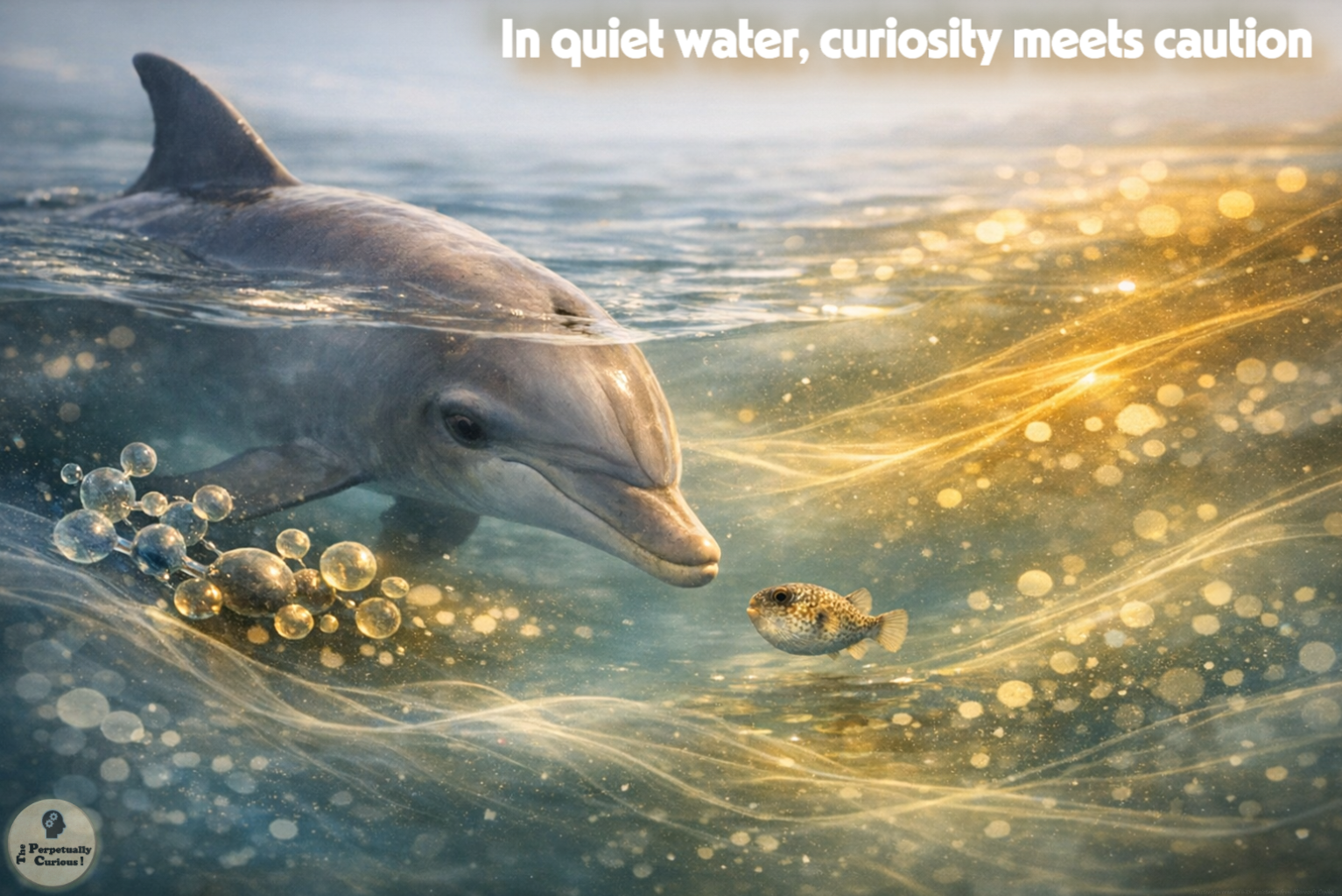
In the sea, a chemical encounter can begin before a chase, a bite, or a sound. A molecule released from skin, mucus, food, or water can change what an animal notices, how it moves, and whether it keeps investigating. To human eyes, the moment may look like simple curiosity.