Explore by topic, question, or idea. Find articles, reflections, videos, puzzles, and curiosity pathways gathered across the site.
Press Enter or select Search. A newly typed query starts globally; filters are applied only through the visible rail.
10 results for “understanding the world traditional medicine systems a cultural and historical perspective”
- The Perpetually Curious! › Archives › History, Arts, and CultureArticle
🌍 Understanding the World's Traditional Medicine Systems: A Cultural and Historical Perspective
From section: The Ancient Roots of Healing Wisdom 🌿This exploration offers a window into these traditional systems, examining their historical foundations, core principles, and place within our modern understanding of healthcare.Read more »
- The Perpetually Curious! › Canonical › History, Arts, and CultureArticle
🌍 Vertical Worlds: The 14 Lokas in Ancient Indian Cosmology
From section: 🌺 Share the wider mapNote: This article offers a historical and cultural exploration of ideas about a layered cosmos for general informational purposes.
- The Perpetually Curious! › Archives › History, Arts, and CultureArticle
The Living Colors of Tradition: Where Chemistry Meets Cultural Wisdom in Natural Dyes 🎨
The transformation of white cloth into vibrant color represents one of humanity's oldest intersections between science and culture. Long before chemists understood molecular structures and electron orbitals, traditional dyers around the world were conducting sophisticated…
- The Perpetually Curious! › Canonical › History, Arts, and CultureArticle
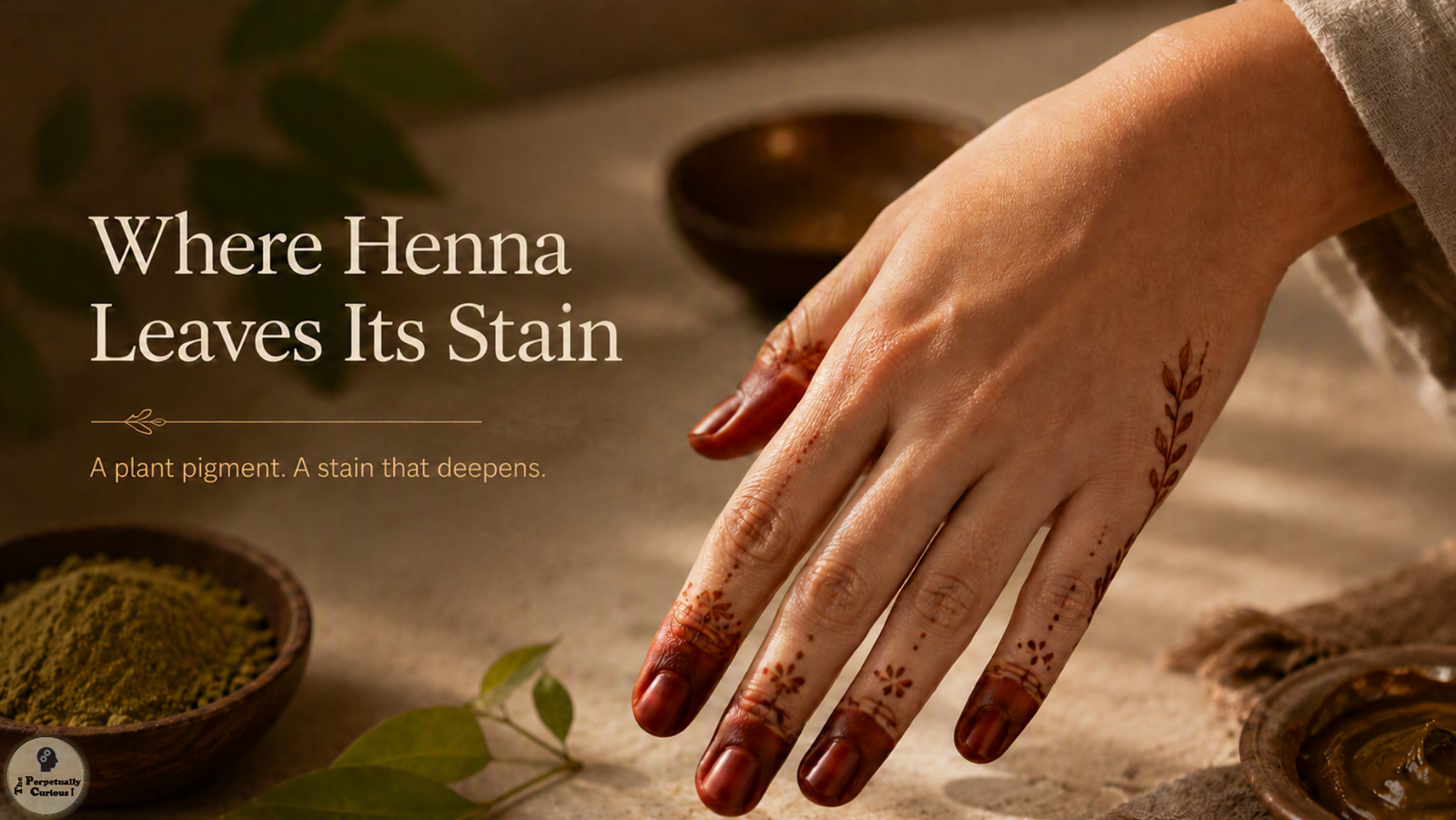
🌿 When Color Touches Skin: The Story of Henna on the Fingertips
From section: 🧭 Where science and symbolism meet on the fingertipsThe interaction between lawsone and keratin explains why the stain appears and why it lasts. Cultural histories explain why stained hands may be understood as festive, blessed, protective, beautiful, or simply personal, depending on the community and occasion. No single meaning belongs to every design or every wearer.
- The Perpetually Curious! › Archives › History, Arts, and CultureArticle
📅 A Cultural Journey Through the Week: Tracing the Ancient Origins of the Seven Days
From section: 🌞 Sunday: The Day of the SunIn many cultures, the Sun was viewed not only as a symbol of divinity and kingship, but as a deity whose presence was believed to sustain the world.
- The Perpetually Curious! › Archives › History, Arts, and CultureArticle
⏳ Through the Ages: The Naming of the Months in Our Calendar 📅
💡 Did you know that the names of our months are like a time capsule, preserving stories from ancient civilizations? Each one carries echoes of gods, festivals, emperors, and cultural exchanges that shaped human history. Let’s delve into their intriguing origins together.
- The Perpetually Curious! › Archives › History, Arts, and CultureArticle
Vertical Worlds: Ancient Indian Models of Cosmic Architecture 🌍
Every culture faces the same profound question: what happens to consciousness after death? Where do our beloved ancestors dwell? Are they simply gone, or do they inhabit some unseen realm?
- The Perpetually Curious! › Archives › History, Arts, and CultureArticle
The Algorithm of Ancient Wisdom: How Tamil Poetry Became Humanity's Most Elegant Ethical Code 📜
Thiruvalluvar, whose name is often understood as combining "Thiru" (sacred) with "Valluvar" (a traditional title), compressed an entire moral philosophy into 1,330 couplets so precisely structured that they survived over fifteen centuries through oral recitation, manuscript copying, print reproduction, and now digital…
- The Perpetually Curious! › Archives › History, Arts, and CultureArticle
🌿 Why Henna Stains Fingertips More Deeply Than Other Skin
The change is especially striking on the parts of the hand that touch, grip, and press against the world most often.
- The Perpetually Curious! › Videos & Podcasts › History, Arts, and CulturePodcast
📅 Days of the Week: Names, Origins & Etymology | | History, Arts & Culture Podcast | TPC8
Along the way, we examine how language, mythology, astronomy, religion, and cultural exchange became embedded in the calendar we use every day.