Explore by topic, question, or idea. Find articles, reflections, videos, puzzles, and curiosity pathways gathered across the site.
Press Enter or select Search. A newly typed query starts globally; filters are applied only through the visible rail.
23 results for “when leaves let go why autumn colors turn red gold and brown”
- The Perpetually Curious! › Canonical › Botanical WondersArticle
🌿 Trees That Drink the Sky: How Certain Species Shape Water and Land in South India
This article follows that group, not to praise or criticize, but to understand how roots, leaves, and water are linked in the landscapes of South India. By beginning with the broader story of water and then moving into specific species, the narrative remains grounded in ecology rather than controversy. …
- The Perpetually Curious! › Canonical › Botanical WondersArticle
🌿 When One Tree Remembered a Greener Sahara: The Quiet Story of the Tree of Ténéré
From section: 🌍 From legend to landscape… The Tree of Ténéré, standing alone in a sea of sand, invites that kind of imaginative leap. It is easy to see why people might turn such a tree into a symbol of continents, forests, and hope.
- The Perpetually Curious! › Canonical › Botanical WondersArticle
🍃 Pirandai (Cissus quadrangularis): Tradition, Botany, and Quiet Scientific Curiosity
From section: 🌿 A vine of angles and quiet resilienceThe leaves are simple, broadly ovate to reniform, and sometimes shallowly three-lobed, appearing intermittently along the stem. Small greenish-white to yellowish flowers can develop into berries that shift toward reddish or purplish tones when mature. …
- The Perpetually Curious! › Archives › Botanical WondersArticle
🌲 The Wood Wide Web: How Trees Whisper Beneath Our Feet
When you walk through a forest, you might first notice the crunch of leaves underfoot, the shafts of sunlight filtering through the canopy, or the rich scent of earth in the air. Yet beneath your feet lies another world, an unseen network as alive and dynamic as any city.
- The Perpetually Curious! › Archives › Botanical WondersArticle
When Plants Became Predators: The Evolutionary Marvel of Carnivorous Flora 🌿
Picture the Venus flytrap's jaw-like leaves snapping shut, the sundew's glistening tentacles slowly curling around trapped prey, or the pitcher plant's elegant vase concealing a pool of digestive enzymes.
- The Perpetually Curious! › Archives › Botanical WondersArticle
From Garden to Glass: The Five Transformations of Tea 🍃
In the misty mountains of Asia, a single species of plant undergoes a remarkable metamorphosis. Camellia sinensis, the tea plant, holds within its emerald leaves the potential for countless flavors.
- The Perpetually Curious! › Archives › Botanical WondersArticle
The Riverbank Architect: Discovering the Remarkable Arjuna Tree 🌊
Stand beneath an ancient Arjuna tree during monsoon season and you'll understand why riverside communities have revered these giants for millennia. Water droplets cascade from leaves that shimmer like green glass, while the smooth bark releases a subtle earthy fragrance after rain.
- The Perpetually Curious! › Archives › Botanical WondersArticle
🌿 The Neem Tree: Nature’s Evergreen Healer
🌳 A Living Landmark The neem tree (Azadirachta indica) is an evergreen native to the Indian subcontinent, instantly recognizable by its wide, spreading canopy, rough gray bark, and delicate, serrated leaves. It typically grows 15–25 meters tall and can occasionally reach 30 meters.
- The Perpetually Curious! › Archives › Botanical WondersArticle
🍊 Citrus Family Tree: How Ancient Lineages Became Familiar Fruits
A fruit bowl can make oranges, lemons, limes, mandarins, and grapefruit look like separate botanical inventions. Their colors, flavors, and shapes seem distinct enough to suggest separate origins. The citrus family is more intertwined than that.
- The Perpetually Curious! › Archives › Botanical WondersArticle
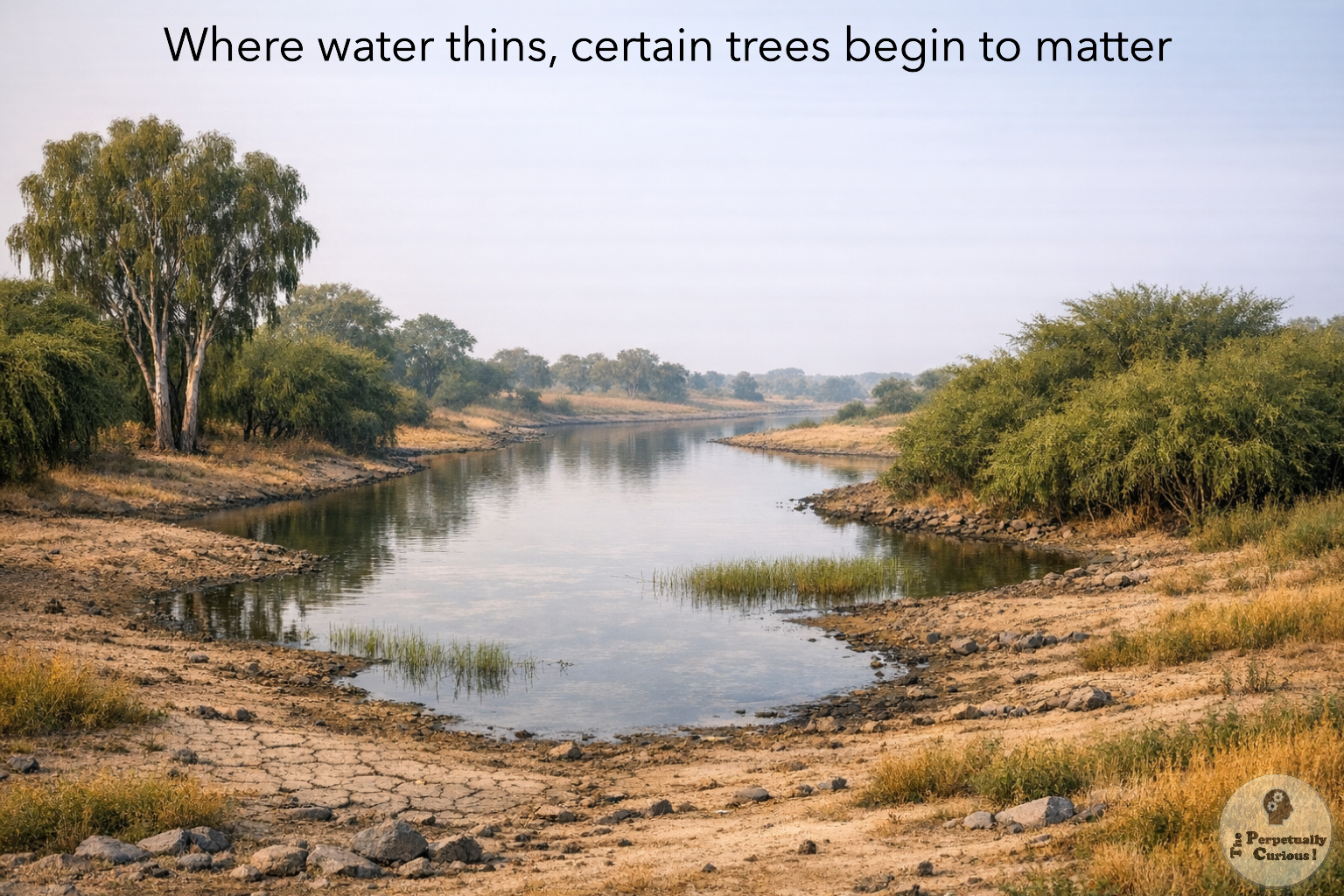
💧 Seasonal Ponds and Root Depth in South India
Seasonal ponds often look still from a distance, yet their edges can hold some of the most active negotiations in a dry landscape. In parts of South India, stored rainwater, shallow aquifers, dry soil, and plant roots meet in a narrow zone where each season leaves its mark.