Explore by topic, question, or idea. Find articles, reflections, videos, puzzles, and curiosity pathways gathered across the site.
Press Enter or select Search. A newly typed query starts globally; filters are applied only through the visible rail.
241 results for “when worlds shine why some planets outglow others in our night sky”
- The Perpetually Curious! › Archives › Cosmic ExplorationArticle
🌌 Planetary Names Explained: From Ancient Gods to Modern Science
💡 Have you ever wondered why the planets in our solar system bear such distinctive names? From swift Mercury to majestic Jupiter, these names reflect ancient traditions that connect cultural understanding with the science of the skies. Read more »
- The Perpetually Curious! › Archives › PhysicsArticle
🚀⚡ Pioneering Power in Deep Space: The Essential Role of Radioisotope Thermoelectric Generators (RTGs)
Far beyond the reach of strong sunlight, some of humanity’s greatest explorers rely on one of the most dependable power sources ever built: Radioisotope Thermoelectric Generators (RTGs).
- The Perpetually Curious! › Archives › Wilderness & Homestead CreaturesArticle
🕊️ Soaring Beyond Horizons: The Remarkable Albatross
Across the vast oceans, where winds sweep unbroken for thousands of miles, one bird reigns supreme: the albatross. Belonging to the family Diomedeidae, these seabirds have evolved into some of Earth’s most extraordinary long-distance travelers.
- The Perpetually Curious! › Archives › Planet EarthArticle
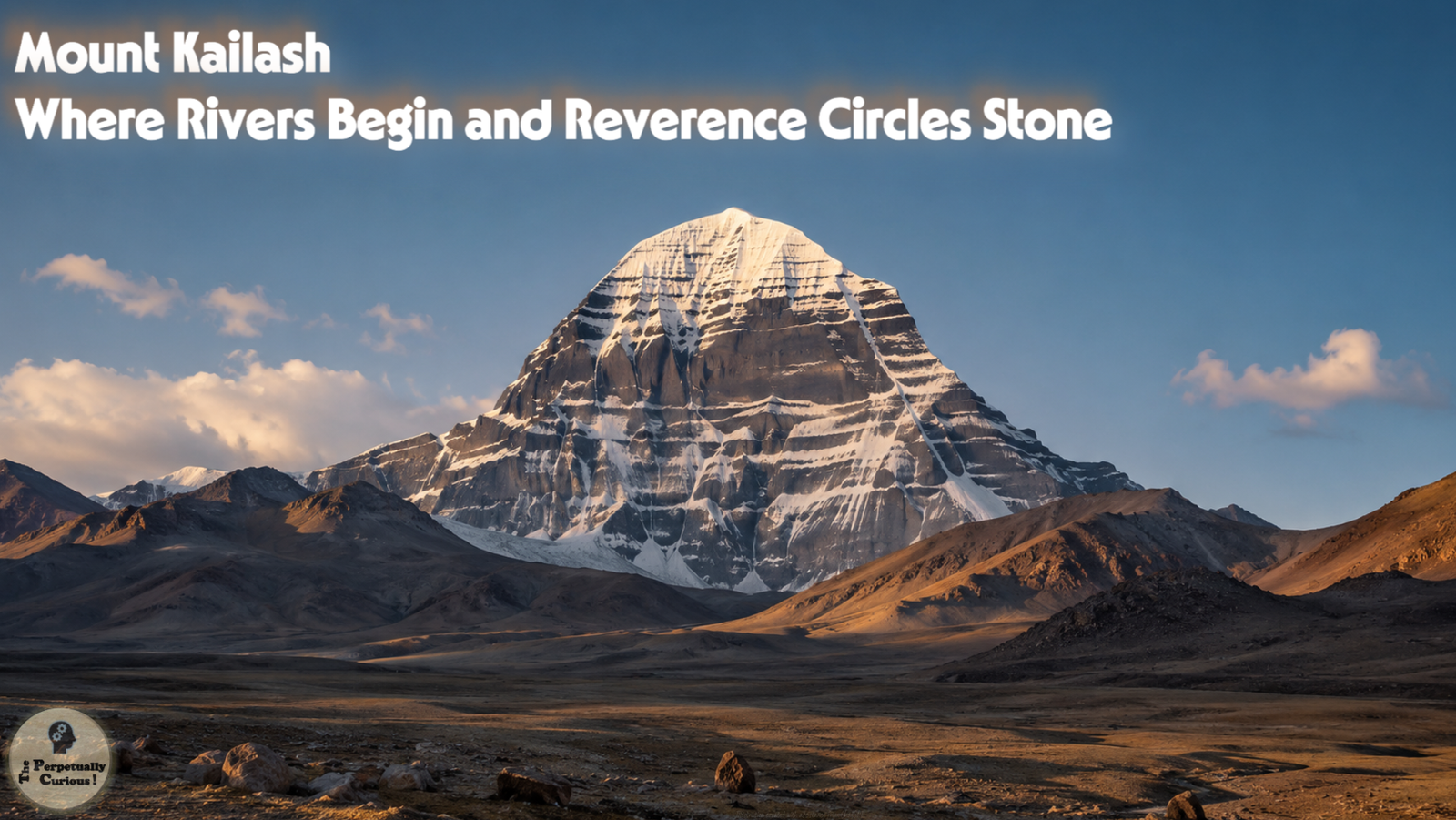
🏔️ Mount Kailash: Why a Sacred Summit Is Circled, Not Climbed
Mount Kailash is often described through reverence, but its power begins with geography. On the western Tibetan Plateau, the mountain rises as a sharply recognizable summit of snow, dark rock, and open sky. It is high, about 21,778 feet (6,638 meters), yet its significance does…
- The Perpetually Curious! › CanonicalGateway
🌑🌕 At the Turning Points of Light: Why New and Full Moons Became Cultural Markers
The astronomical new Moon itself is normally invisible from Earth because the Moon lies near the Sun in our sky and its night side faces Earth. That creates an important distinction between astronomy and calendrical practice. …
- The Perpetually Curious! › CanonicalReflection
The Way a River Travels
👁️ A river travels by changing shape. It turns when the land turns, not to avoid resistance but to move through it. Its direction holds not through straightness, but through uninterrupted movement. Water that stays remains contained; water that moves continues onward.
- The Perpetually Curious! › Archives › Wilderness & Homestead CreaturesArticle
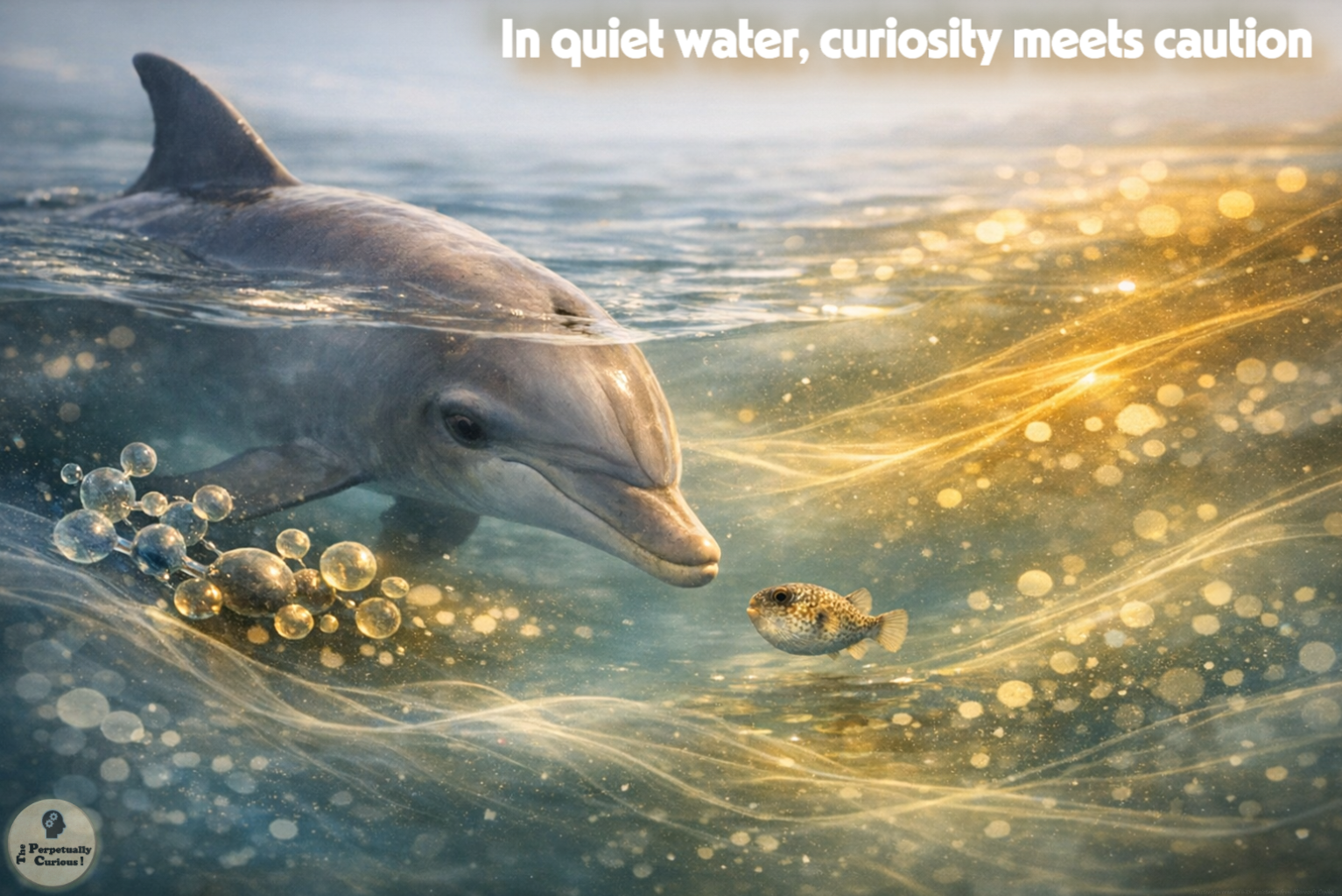
🧪 Animal Chemical Encounters: When Molecules Shape Behavior
In trace exposure, some observers have wondered whether it might produce mild sensory effects, especially if contact occurred through the mouth.
- The Perpetually Curious! › CanonicalGateway
🌍 Planet Earth | ✍️ Articles
From section: 🌬️ Atmosphere, Climate & Weather SystemsWhen the Sky Becomes a Painting: Why Clouds Glow Red and Orange at Sunset on Earth
- The Perpetually Curious! › Archives › Planet EarthArticle
The Science of Snow Whiteness: A Journey Through Light and Ice ❄️
Introduction ❄️ Fresh snow transforms familiar landscapes into brilliant white canvases, whether from gentle flurries or powerful nor'easters, yet individual ice crystals begin as clear structures.
- The Perpetually Curious! › Archives › Cosmic ExplorationArticle
🪐 HD 100546 b: Unraveling a Cosmic Mystery
Astronomy enthusiasts may find HD 100546 b especially compelling: a candidate gas giant located about 359 light‑years away in the constellation Musca, identified through Gaia DR3 measurements.