Explore by topic, question, or idea. Find articles, reflections, videos, puzzles, and curiosity pathways gathered across the site.
Press Enter or select Search. A newly typed query starts globally; filters are applied only through the visible rail.
39 results for “why space looks dark in a universe filled with light understanding the quiet cosmos”
- The Perpetually Curious! › Canonical › Cosmic ExplorationArticle
🌟 Brown Dwarfs: Between Giant Planets and the Smallest Stars
A brown dwarf drifts through the long night, carrying the quiet memory of a star that never came to be.Its light softens with age, yet its presence endures, a patient witness to the slow turning of the galaxy.In its fading glow, the boundary between what almost was and what still is becomes a gentle place to rest.
- The Perpetually Curious! › Canonical › Cosmic ExplorationArticle
🌌 Borrowing the Orbits of Giants: How Gravity Assists Carry Spacecraft into the Deep
On certain nights, the planets appear as quiet lanterns suspended in the dark, drifting along their ancient paths. To the eye, they seem serene and still. Yet each one is a massive world in motion, circling the Sun with tremendous momentum. For spacecraft, these worlds are not only destinations.
- The Perpetually Curious! › Canonical › Cosmic ExplorationArticle
🌑 Shadows Across the Solar System: How Eclipses Unfold Beyond Earth
Shadows move across distant worlds with a patience that belongs to the cosmos.Light bends, fades, and gathers again, shaping moments that unfold in silence.Across the Solar System, every eclipse becomes a brief reminder of how gently the universe turns.
- The Perpetually Curious! › Archives › Cosmic ExplorationArticle
The Cosmic Journey: Understanding Our Galactic Year 🌌
This is our galactic year, and understanding it transforms everything we thought we knew about time, permanence, and our place in the universe.Read more »
- The Perpetually Curious! › Archives › Cosmic ExplorationArticle
🌌 The Silent Storm Above: Understanding Our Orbital Debris Challenge
This growing constellation of space junk represents one of the most pressing challenges for humanity's continued exploration of the cosmos.Read more »
- The Perpetually Curious! › Archives › Cosmic ExplorationArticle
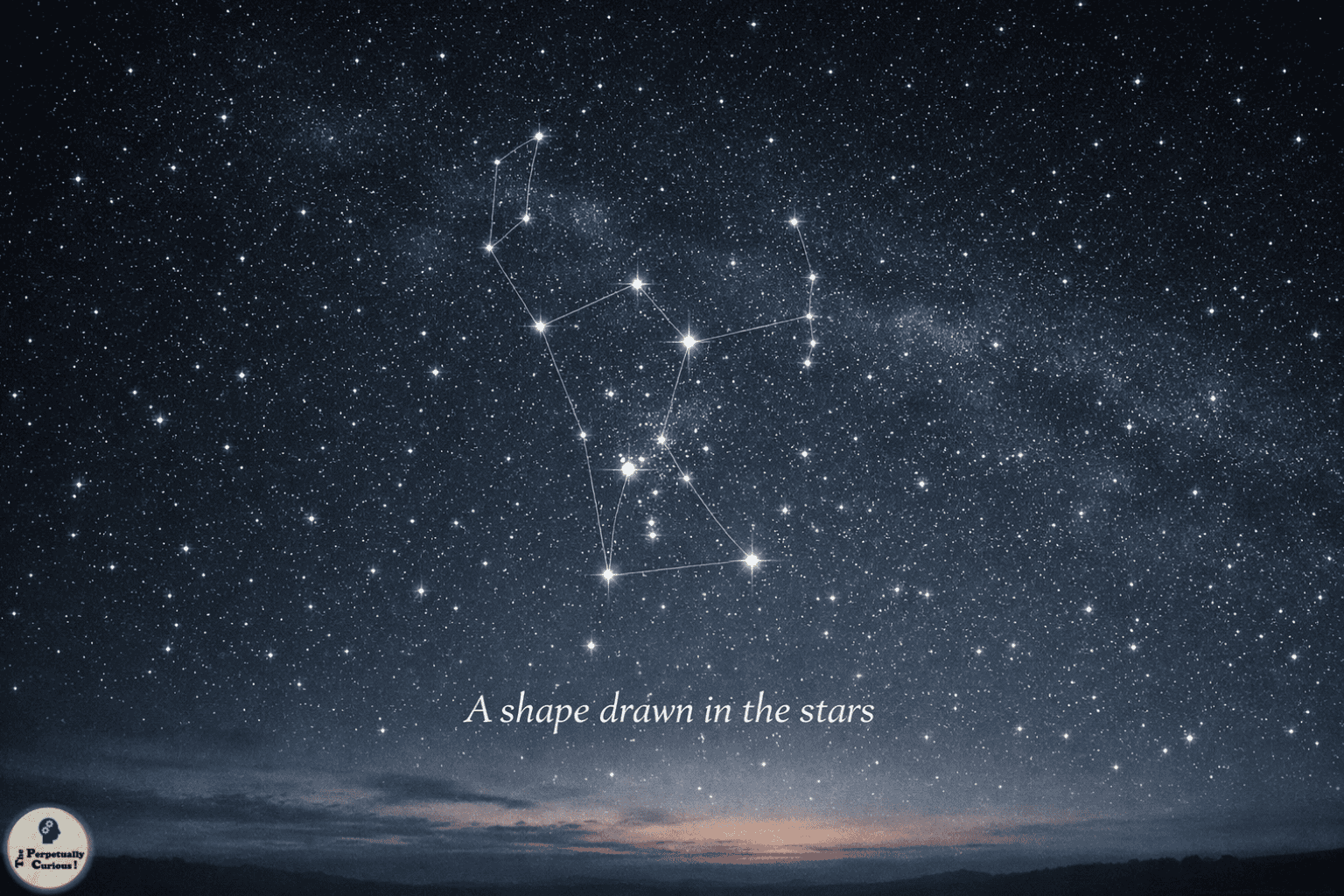
🌌 Constellations: How Star Patterns Help Us Find Our Way
From section: When scattered stars become a mapThat neighboring question of why the sky can appear dark while the universe is filled with light is followed in why space looks dark, where the focus shifts from remembered patterns to visibility itself.
- The Perpetually Curious! › Archives › Cosmic ExplorationArticle
🌞 The Solar Wind: When the Sun Breathes Across Space
Though invisible to our eyes, this cosmic current shapes Earth’s environment, drives space weather, and even fuels storms that can disrupt technology on Earth, and it is why space‑weather forecasters watch the Sun every day.
- The Perpetually Curious! › Canonical › Cosmic ExplorationArticle
🛰️ When Fire Meets Air: How Spacecraft Reenter Earth’s Atmosphere
High above Earth’s landscapes, spacecraft trace arcs through a realm where air gradually thins toward the quiet of orbit. Launch carries them outward through Earth’s layered atmosphere, but return brings the same atmospheric envelope into a very different role.
- The Perpetually Curious! › Canonical › Cosmic ExplorationArticle
🌍 When Earth First Took Shape: A Planet Born from Cosmic Dust
In the long calm after fire and falling dust, Earth began to hold its shape.A young world turned slowly beneath the sky, carrying the memory of its earliest light.Its ancient beginnings still rest in every tide, every shadow, every quiet motion of the planet.
- The Perpetually Curious! › Archives › Cosmic ExplorationArticle
☀️ Solar Eclipses Explained: The Dance of Shadow and Light
This article follows the journey of a solar eclipse from its basic geometry to its cultural meaning and scientific significance, weaving each section into a single narrative that explores how shadow and light shape our understanding of the cosmos and why this rare alignment has inspired observers across time.Read more…