

Some plants enter human life with immediate brilliance, while others become significant through quieter forms of presence that unfold across time. Pirandai, the Tamil name for Cissus quadrangularis, belongs to this quieter realm. With its distinctive four-angled stems, this climbing vine grows along field margins, boundary stones, and home-garden supports across a broad geographic range.
It has appeared in traditional medical systems, everyday cooking, and the careful observations of botanists who documented its unusual form. Its story moves through courtyards, kitchens, landscapes, and laboratories, where cultural memory, ecological adaptation, and scientific inquiry meet around a plant whose quiet geometry invites deeper attention.
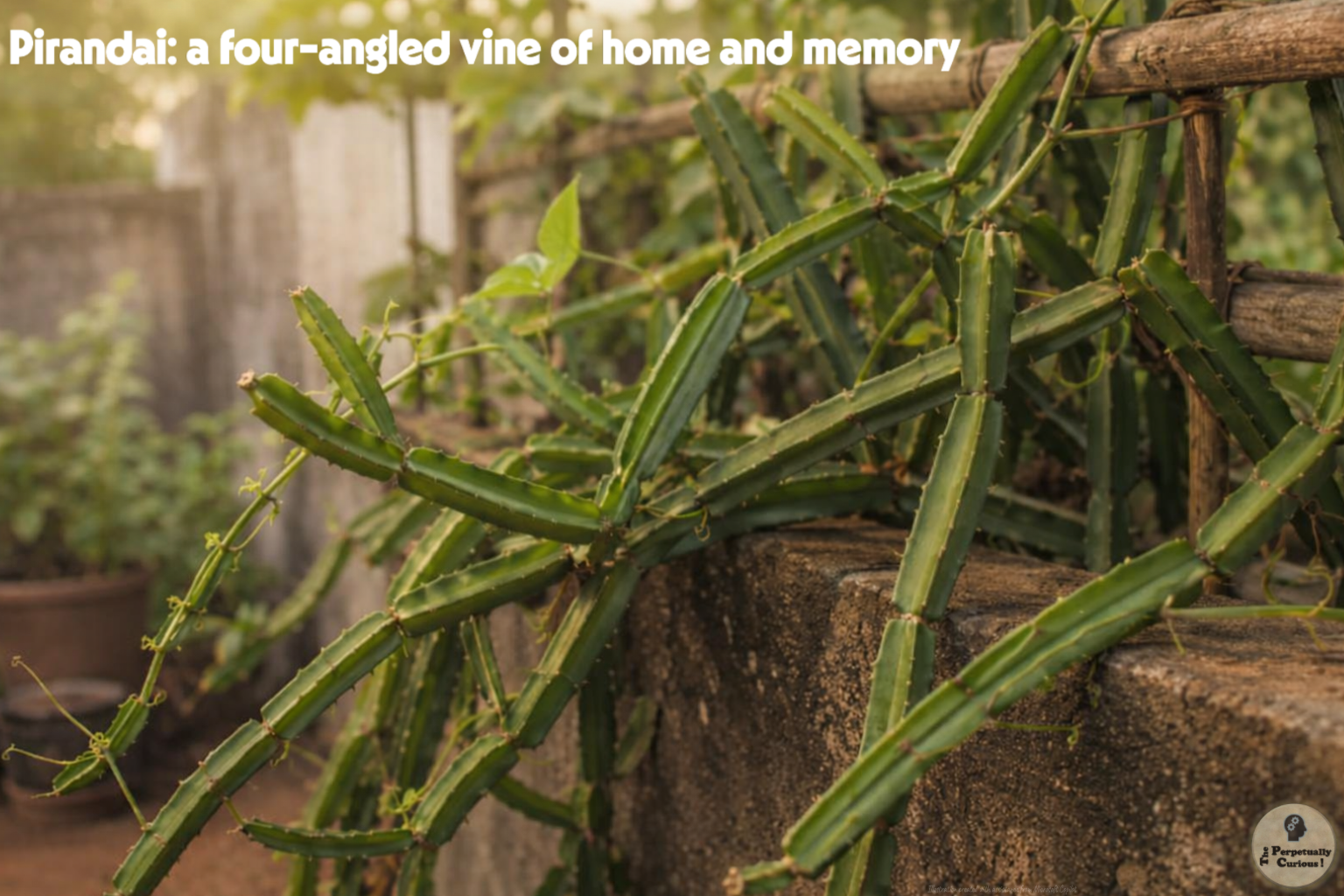
Pirandai moves through the world with a quiet steadiness, carrying memory in its angles and patience in its growth.
It reminds us that understanding often begins in small, attentive moments.
In its presence, the familiar and the unknown meet with a calm and generous grace.
🌱 Names across a diverse landscape
Across India’s many languages, the same species carries a constellation of names. Pirandai is rooted in Tamil home gardens and culinary memory. In Hindi-speaking regions, it is widely recognized as Hadjod, while Telugu and Kannada speakers may know it as Nalleru and Vajravalli, among other regional names.
These names do not fragment the plant’s identity. Instead, they reveal how different communities have encountered and interpreted the same vine. This constellation of names reflects not only geography but also the distinct ways each community has woven the plant into its daily and symbolic life, a prelude to how Pirandai itself appears in the landscape.
🌿 A vine of angles and quiet resilience
Pirandai is a perennial succulent climber in the grape family, Vitaceae. Its most distinctive feature is its stem, which forms a square or rectangular cross-section. Each segment is separated by slightly swollen nodes, giving the vine a geometric rhythm that is both unusual and elegant. Tendrils emerge near the nodes, allowing the plant to anchor itself to fences, rocks, or nearby shrubs.
The leaves are simple, broadly ovate to reniform, and sometimes shallowly three-lobed, appearing intermittently along the stem. Small greenish-white to yellowish flowers can develop into berries that shift toward reddish or purplish tones when mature. As a succulent, Pirandai stores water in its tissues and often thrives in dry, sunlit environments. It is found across a broad Old World range, especially in seasonally dry tropical habitats across parts of Asia, Arabia, Africa, and Madagascar.
This distinctive morphology has long captured attention. The angular stems, in particular, have inspired symbolic associations with bones, which may have influenced how communities interpreted the plant’s potential uses. This intersection of form and meaning is echoed further in the environments the plant chooses to inhabit.
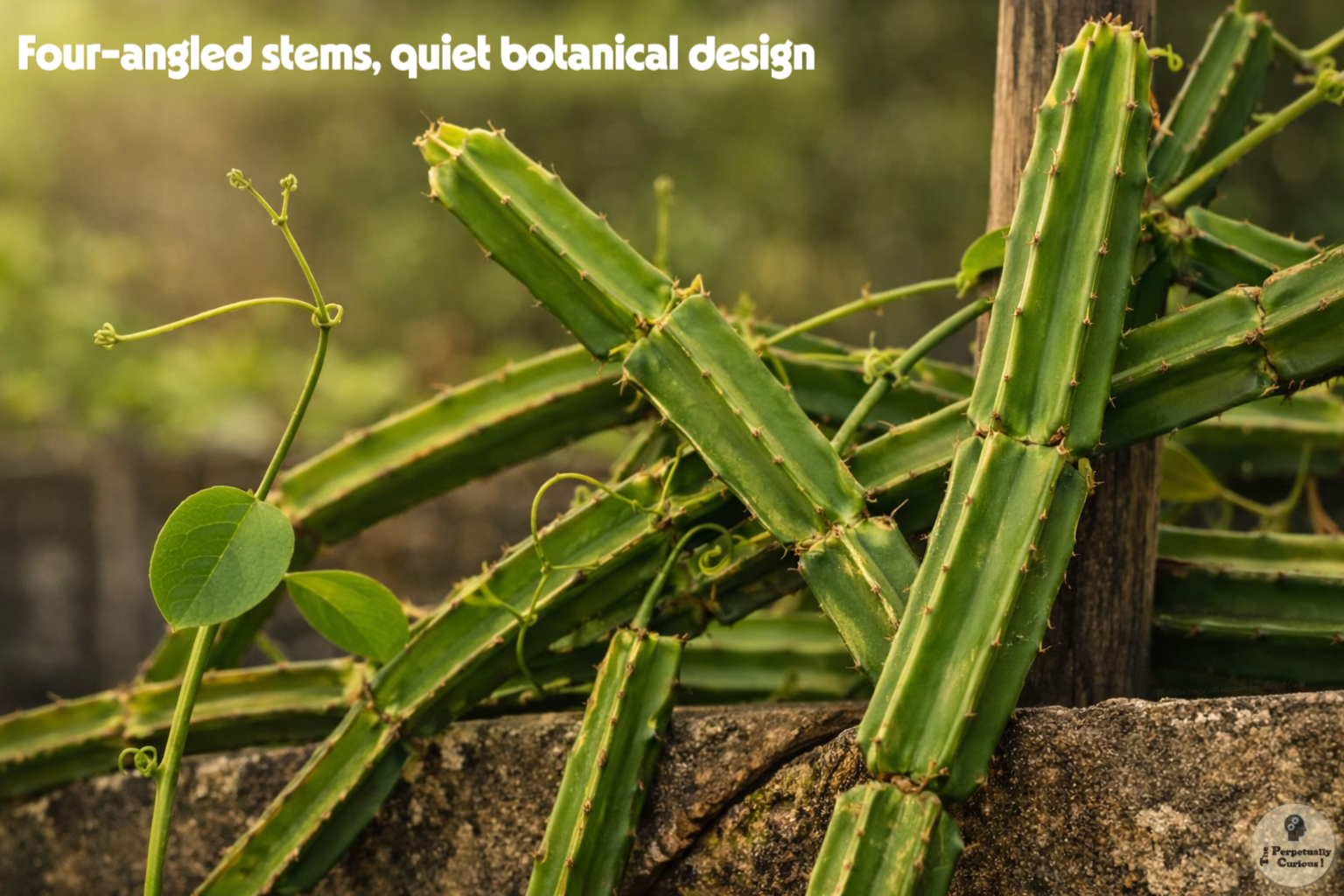
🌾 Ecological presence in semi‑arid landscapes
Pirandai is part of a broader ecological story. Its succulent stems allow it to withstand long periods of dryness, and its climbing habit enables it to coexist with shrubs and small trees rather than compete aggressively. In semi-arid regions, it often grows along boundary walls, rocky outcrops, and open fields where sunlight is abundant and soil is sparse. Its drought resilience reflects the strategies seen in many hardy species that persist in environments shaped by heat and limited moisture.
Its presence in open habitats places it within broader communities of small insects and other pollinators that move through these landscapes.
This ecological resilience mirrors the plant’s cultural resilience, forming a subtle connection between the environments it inhabits and the communities that cultivate it.
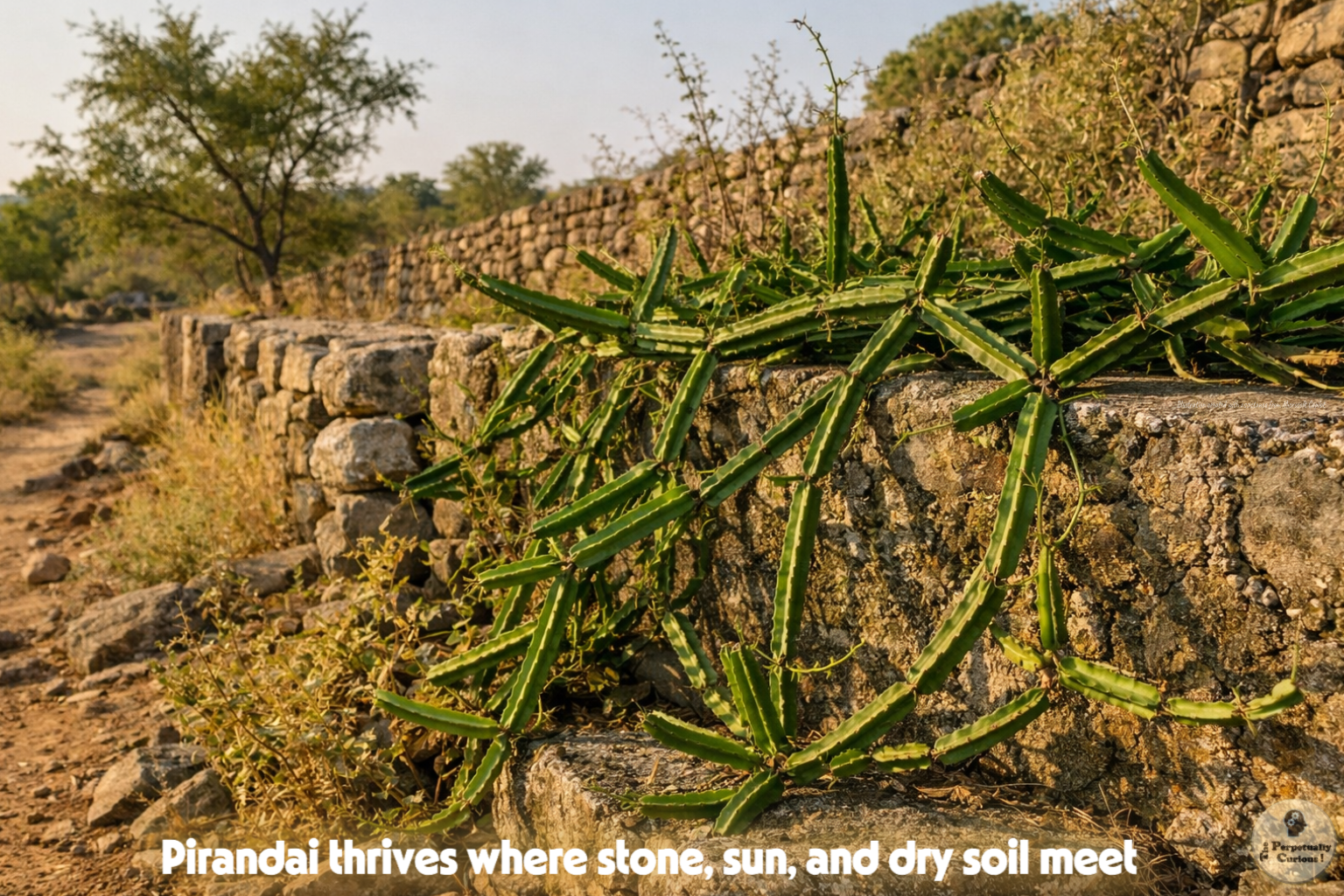
🌍 Nativity and global distribution
Pirandai is native across a broad geographic range that extends from the Indian Subcontinent through Myanmar and the Arabian Peninsula to tropical and southern Africa and Madagascar. Throughout these regions, it grows in dry, open habitats shaped by seasonal heat, sparse rainfall, and well drained soils. Its presence across such a wide area reflects ecological adaptability, while long histories of human movement through trade, migration, and cultivation have also carried the plant across cultural landscapes. This pattern of distribution parallels the quiet expansion seen in other drought-adapted species, including the Baobab tree, which also thrives in challenging environments.
The vine tends to flourish in warm climates with temperatures that remain above freezing, and it often prefers soils where water does not accumulate. Its ability to store moisture in its angular stems allows it to persist through extended dry periods, a trait that helps explain why Pirandai appears in diverse environments, from rocky outcrops to cultivated home gardens.
🌡 Climatic requirements and ecological flexibility
Pirandai generally thrives in temperatures between 68 and 104 degrees Fahrenheit, or 20 to 40 degrees Celsius. It grows best in full sunlight and in soils that range from sandy to loamy, provided drainage is adequate. Although it tolerates drought, it responds to seasonal rainfall with renewed growth, producing tender stems that are often preferred for culinary use. These seasonal rhythms resonate with the broader science of plant timing, through which species tune their growth to cycles of heat, moisture, and light.
This combination of heat tolerance and seasonal responsiveness places Pirandai among plants that have evolved quiet yet effective strategies for survival in challenging climates. Its resilience allows it to inhabit both wild landscapes and home gardens, forming a subtle bridge between ecological adaptation and the cultural familiarity that carries the plant into homes and traditions.
📜 Traditional knowledge and cultural memory
In traditional medical systems, Pirandai has been associated with bone health, fracture care, and joint support. Ayurvedic texts describe preparations made from the stem, sometimes combined with other ingredients, for contexts related to musculoskeletal well-being. The Hindi name hadjod, often translated as “bone joiner,” reflects this longstanding association.
Plants that hold cultural memory, such as the sacred Peepal tree, often share this quiet continuity across generations.
Siddha medicine and other South Indian traditions also describe Pirandai in formulations that address digestive comfort, inflammation, and general vitality. These practices are part of broader cultural frameworks in which plants are understood not only for their biological properties but also for their symbolic and experiential qualities.
The long traditional familiarity with Pirandai parallels the enduring medicinal and cultural presence of the Arjuna tree, a species equally rooted in South Asian healing traditions.
This rich traditional background naturally leads to questions about how modern science approaches the plant. The next step in the narrative explores how researchers have examined Pirandai in controlled settings.
🔬 Scientific curiosity and emerging evidence
Over the past several decades, Cissus quadrangularis has drawn interest from researchers studying medicinal plants. Investigations have focused on its phytochemical composition and its potential biological activities in cell cultures and animal models.
Analyses have identified flavonoids, phenolic compounds, triterpenoids, phytosterols, saponins, glycosides, and vitamin C within the plant. These constituents are often associated with antioxidant and anti-inflammatory properties. These compound classes may act through different biological pathways, although their combined effects in humans remain insufficiently defined. This phytochemical diversity is part of a wider landscape of plant research explored in culturally significant species such as the Neem tree.
Some studies have examined Pirandai’s potential influence on bone formation, fracture healing, and bone density in experimental models. Researchers have investigated parameters such as callus formation, mineral deposition, and osteoblast activity. Other investigations have considered possible roles in ulcer models, metabolic parameters, and oxidative stress.
These findings justify further research, but the evidence remains limited and varies by preparation, outcome, and study design. Human research remains limited, and scientists emphasize the need for larger, well-designed clinical trials to clarify the extent of these effects.
This scientific perspective provides a thoughtful counterbalance to traditional knowledge. Yet Pirandai is not confined to texts or laboratories. It is also a familiar presence in the kitchen, where its character becomes more sensory and immediate.
🕰 A brief history of scientific discovery
Pirandai entered formal botanical literature in 1767, when Cissus quadrangularis was published by Carl Linnaeus. As botanical exploration expanded during the eighteenth and nineteenth centuries, the plant appeared in herbarium collections and descriptive surveys of the Indian subcontinent. These early records, often consisting of pressed stems and concise morphological notes, reflect the moment when a long-familiar household vine became part of global scientific documentation. They form a quiet bridge between traditional familiarity and the developing frameworks of botanical classification.
🍲 A quiet presence in the kitchen
In several South Indian culinary traditions, Pirandai is used as a food ingredient. Young stems are often preferred, as they may have a milder texture and flavor. These stems are typically cleaned, cut into small pieces, and sautéed with spices before being ground into chutneys or thogayal. The cooking process softens the plant’s natural sharpness and integrates it into a balanced dish.
Culinary traditions that incorporate Pirandai often coexist with the use of other culturally rooted plants, including those found in sacred spaces such as the Bael tree.
The aroma that rises from the pan is earthy and fresh, carrying the memory of home gardens and sunlit fences. For many families, Pirandai chutney is a familiar accompaniment to rice, and its preparation is woven into seasonal rhythms when the stems are most tender.
This culinary presence forms a natural transition to the plant’s role in home gardens, where it grows with quiet persistence.
🌼 A companion in home gardens
Pirandai is often cultivated in household gardens, where it climbs along boundaries or trellises. Gardeners may propagate it from stem cuttings, selecting healthy segments a few inches long. With warmth, sunlight, and moderate moisture, these cuttings can root and produce new growth.
The plant tends to prefer well drained soil and can tolerate relatively poor or sandy conditions. Its resilience makes it a practical choice for home cultivation, especially in regions with warm climates. Many households grow Pirandai not only for culinary use but also because it forms part of a living archive of traditional plants.
This close contact with the plant leads naturally to questions about safety and handling.
⚖️ Safety, sensitivity, and scientific caution
Descriptions of Pirandai often include observations about possible skin or throat irritation when the raw plant is handled or consumed. Some individuals report mild itching or discomfort, which may be related to the presence of natural organic acids or microscopic calcium oxalate structures within the tissues. Cooking or sautéing the stems is a common practice that may help reduce these sensations.
Raw handling may expose people more directly to irritating plant structures and soluble constituents than cooked preparations.
Toxicology studies in animal models have examined extracts of Cissus quadrangularis over durations ranging from acute to sub-chronic exposure. These evaluations have generally reported a favorable safety profile within tested dose ranges, although translating findings from controlled experiments to diverse human contexts requires care. Factors such as preparation method, dosage, and individual sensitivity can influence outcomes.
This careful stance aligns with broader scientific practice, where traditional knowledge and experimental evidence are brought into conversation without overstating conclusions.
📚 Chemistry within the angles
The angular stems of Pirandai are not only visually distinctive but also chemically active. Phytochemical studies have identified multiple classes of compounds that may contribute to observed biological activities. Flavonoids and phenolic compounds are often associated with antioxidant effects, while triterpenoids and phytosterols may influence inflammatory pathways.
The study of Pirandai’s constituents connects to a broader inquiry into plant-derived compounds, explored in the molecular story of Stevia, where secondary metabolites define both flavor and function.
In fracture models, researchers have examined how certain constituents may support osteoblast activity or influence bone remodeling. In ulcer models, antioxidant and anti-inflammatory properties have been explored. These findings form part of an evolving scientific picture, one that continues to develop as new methods and studies refine how these compounds are understood.
This chemical complexity brings the narrative toward a broader reflection on how plants like Pirandai inhabit both cultural and scientific worlds.
🌍 A vine between worlds
Pirandai occupies a space between ancestral practice and modern inquiry. In homes, it appears in chutneys and remedies. In laboratories, it appears in chromatograms, fracture models, and discussions of osteogenic potential. This dual presence invites a perspective that honors both tradition and evidence. A similar balance between cultural memory and empirical study appears in global healing traditions, which are explored in traditional medicine systems.
The plant is neither a miracle cure nor a mere ornament. It is a living organism that has encouraged generations to consider the relationship between nature, health, and knowledge. Its story is one of quiet resilience, cultural continuity, and scientific curiosity, a reminder that some plants move most meaningfully through the world by bridging the familiar and the yet to be understood.
🧘 A gentle philosophical reflection
Plants like Pirandai remind us that knowledge often grows in layers. Traditional memory, sensory experience, and scientific observation do not compete for authority. Instead, they coexist, each offering a different way of seeing the world. Pirandai’s quiet geometry invites a slower kind of attention, one that recognizes how meaning can emerge from lived experience, careful study, and the patient act of noticing. It suggests that understanding is not a single moment of insight but a gradual unfolding, shaped by curiosity, continuity, and the willingness to look again.
Pass this article along to someone curious and let the learning travel.
💡 Did You Know
🌿 Quadrangular succulent stems
Pirandai’s four-angled succulent stems help the plant store water and persist through dry periods.
📜 Asthisamharaka meaning
The Sanskrit name asthisamharaka is interpreted in Ayurvedic literature as “that which unites bones,” reflecting a long history of symbolic association between the plant’s form and its perceived uses.
🌾 Seasonal culinary rhythms
In some regions, Pirandai is part of seasonal culinary traditions, with families preparing chutneys when the stems are most tender after the first rains.
🔬 Fracture model research
Researchers have explored Pirandai in fracture models, examining parameters such as callus formation and mineral deposition to understand its potential influence on bone repair.
🧭 Ethnobotanical gardens
Ethnobotanical surveys show that Pirandai often appears in home gardens alongside other culturally significant plants, forming small ecosystems shaped by memory, utility, and tradition.
🧪 Oxidative stress studies
In laboratory settings, researchers sometimes use Pirandai extracts to study oxidative stress pathways, exploring how plant compounds interact with cellular antioxidant systems.
🌿 Green lattices
Pirandai’s climbing habit allows it to form natural green lattices, creating shaded microhabitats that may support small insects and ground plants in semi-arid regions.
🧬 Phytochemical variation
Some phytochemical studies have noted that Pirandai’s composition can vary with soil type and climate, a reminder that plants are shaped by the environments in which they grow.
🔍 Knowledge convergence
Ethnobotanists sometimes use Pirandai as an example of how traditional knowledge and modern science can converge, illustrating how cultural memory can guide scientific inquiry.
🌱 Household memory
Pirandai can function as a kind of household memory plant, because its presence in gardens may reflect family continuity and inherited plant knowledge.
What is Pirandai in English?
Pirandai is the Tamil name for the species Cissus quadrangularis. Common English names include veldt grape, adamant creeper, and bone setter.
Why are the stems four angled?
The stems are quadrangular because the plant is a succulent climber that stores water in its tissues. This angular structure may provide mechanical support and efficient water storage.
Where is Pirandai commonly found?
Pirandai is native across a broad Old World range, including parts of the Indian Subcontinent, Myanmar, the Arabian Peninsula, tropical and southern Africa, and Madagascar. It grows in dry, open habitats and is often cultivated in home gardens.
How is Pirandai used in cooking?
Young stems are cleaned, cut, and sautéed before being ground into chutneys or thogayal. Cooking may help reduce natural sharpness and potential irritation.
Does Pirandai cause irritation?
Some individuals report mild skin or throat irritation when handling or consuming raw Pirandai. Cooking is a common practice that may help reduce these sensations.
Is Pirandai related to the common grapevine?
Pirandai belongs to the Vitaceae family, which includes grapevines. However, its appearance and growth habits differ significantly from those of cultivated grapes.
Is Pirandai used outside India?
Pirandai is described in several traditional medical systems across South Asia and parts of Africa. It appears in ethnobotanical records from regions with warm, dry climates where succulent vines are common.
How tall can Pirandai grow?
Pirandai can climb several feet when supported by fences, trellises, or shrubs. Its growth depends on sunlight, temperature, and soil conditions, and it often spreads horizontally when support structures are limited.
Is Pirandai a proven treatment?
No. Pirandai is not established as a general medical treatment. Traditional use and preliminary clinical and experimental research have examined particular preparations and outcomes, but the findings cannot be generalized across products, doses, or health conditions. Pirandai should not replace professional diagnosis or treatment.
Can Pirandai be grown at home?
Yes. Pirandai is often grown in home gardens as a climbing vine. It can be propagated from stem cuttings and tends to prefer warm temperatures and sunlight.
Is Pirandai a seasonal plant?
Pirandai grows throughout the year in warm climates, but new growth is often more abundant after the first rains. Tender stems are typically preferred for culinary use.
Does Pirandai grow wild or only in cultivation?
Pirandai grows both in the wild and in cultivated settings. It is often found in open, sunlit areas with well drained soil, including rocky outcrops and field boundaries. Its presence in both wild and cultivated spaces mirrors the ecological flexibility seen in other resilient species.
Why does Pirandai taste sharp or astringent?
The plant contains natural acids and secondary metabolites that contribute to its characteristic sharpness. Cooking is a common practice that may help soften these flavors.
Does Pirandai attract pollinators?
Pirandai’s flowers are small and not highly conspicuous, but they may attract certain small insects that visit for nectar or pollen. Its flowers participate in local pollinator communities even if they are not visually prominent.
Is Pirandai considered invasive?
Pirandai is generally not described as invasive. Its growth tends to be moderate, and it often relies on support structures to climb.
Does Pirandai have notable relatives?
Pirandai belongs to the Vitaceae family, which includes grapevines and several other climbing plants. While related, these species differ significantly in appearance and ecological roles.
Does Pirandai appear in modern botanical research?
Pirandai appears in botanical research related to plant morphology, drought tolerance, and succulent adaptations. Its quadrangular stem structure is sometimes used as a teaching example in plant anatomy courses.
Does Pirandai have different regional names?
Yes. Pirandai is known by several names across South Asia, including hadjod in Hindi, asthisamharaka in Sanskrit, and veldt grape in English. These names often reflect cultural associations with the plant’s form or traditional uses.
What does Pirandai look like when it flowers?
Pirandai produces small, greenish-white to yellowish flowers that appear in clusters. They are not visually prominent, but they contribute to the plant’s reproductive cycle and may attract small insects.
How long does Pirandai take to root from cuttings?
Under warm conditions, stem cuttings may begin to root within one to three weeks. Rooting speed depends on temperature, moisture, and the age of the cutting.
Can Pirandai be grown in containers?
Yes. Pirandai can be grown in containers with well drained soil. It benefits from a support structure such as a stake or small trellis, and it prefers full sunlight.
Does Pirandai require fertilizer?
In cultivation, light organic matter may support growth, while the plant is often described as tolerant of relatively poor soils.
Is Pirandai safe for pets or livestock?
Published information on pet or livestock safety is limited. Because raw Pirandai may irritate human skin or throat tissue, animal safety should not be assumed without species-specific information.
How does climate affect Pirandai’s growth?
Pirandai grows best in warm, dry to moderately humid climates. Cooler temperatures may slow growth, and frost can damage the stems.
Does Pirandai have ecological benefits?
Pirandai’s climbing habit can create shaded microhabitats for small insects and ground plants. Its drought tolerance also makes it a resilient component of home garden ecosystems.
Is Pirandai used in modern culinary innovation?
Some contemporary cooks experiment with Pirandai in sauces, pickles, and fusion dishes. These uses remain niche but reflect renewed interest in traditional plants.
How does Pirandai compare to other succulent vines?
Pirandai shares traits with other drought tolerant vines, including water storage and angular stems. However, its quadrangular geometry and cultural history make it distinctive.
🌿 A gentle note: This exploration of pirandai, also known as Cissus quadrangularis, is for educational information only and is not medical, nutritional, or dietary advice. For personal health questions, digestive concerns, plant-based food choices, supplements, or traditional preparations, please consult a qualified healthcare provider.
📤 If Pirandai sparked your curiosity
If this reflection brought pirandai into clearer view, you are welcome to share it with others who enjoy the quieter stories of plants, culture, and science.
“Pirandai (Cissus quadrangularis): Tradition, Botany, and Quiet Scientific Curiosity.” The Perpetually Curious!, June 2026.
https://www.theperpetuallycurious.org/articles/pirandai/Continue Exploring
For the curious mind: want to explore this theme through a few questions? Visit the Classic Quiz Studio, nestled under Explorations opens in a new tab ,and see where a few well-placed questions lead: Botanical Wonders Quizzesopens in a new tab
For what comes next
Site Updates gathers occasional notes, new additions, and ways to keep in touch. RSS brings new publications to your feed reader in chronological order.
Choose the path that speaks to you, and let the next curiosity find you wherever your wondering takes you.