Explore by topic, question, or idea. Find articles, reflections, videos, puzzles, and curiosity pathways gathered across the site.
Press Enter or select Search. A newly typed query starts globally; filters are applied only through the visible rail.
19 results for “fall leaf colors”
- The Perpetually Curious! › Canonical › Planet EarthArticle
🌇 When the Sky Becomes a Painting: Why Clouds Glow Red and Orange at Sunset on Earth
From section: 🌥 Height, thickness, and the drama of cloud color… Mid‑level clouds may show warm tones along their sunlit edges while their interiors remain subdued. Low clouds fall into shadow earlier and may appear gray or muted even while higher clouds still catch filtered sunlight. …
- The Perpetually Curious! › Canonical › Planet EarthArticle
🌊 Niagara Falls, Where Thundering Waters Shape Time
From section: 🌿 Life around the mist: Ecosystems and habitatsMigratory birds follow the river corridor in spring and fall, using it as a natural guide.
- The Perpetually Curious! › Canonical › Planet EarthArticle
🌈 When Sunlight Paints the Rain: The Quiet Geometry of Rainbow Formation
The sky gathers its colors in a circle of light that waits for the patient eye.A moment of rain and sun becomes a quiet geometry that rises only when we look.In that brief alignment, the world offers a soft reminder of how light finds its way through water.
- The Perpetually Curious! › Canonical › Planet EarthArticle
🌍 Why Mud Is Brown or Black: Where Earth Turns to Quiet Ink
From section: 🧭 Reading landscapes through the colors of mudOnce the roles of iron, organic matter, and water are understood, the colors of mud begin to act like a quiet map of environmental conditions. Brown mud along a well‑drained riverbank may suggest regular flushing with oxygenated water and moderate organic inputs. …
- The Perpetually Curious! › Canonical › Planet EarthArticle
🌊 How Nor’easters Form: When the Coast Becomes a Storm Engine
From section: Frequently Asked Questions+Why do leaves change color in fall? As many deciduous trees enter leaf senescence, chlorophyll breaks down. Existing yellow and orange carotenoids become more visible, while some leaves make red or purple anthocyanins. The resulting color depends on the species and the conditions around the leaf.
- The Perpetually Curious! › Canonical › Planet EarthArticle
🌌 Sky in Slow Layers: Understanding Earth’s Atmospheric Structure
From section: 🌠 Mesosphere: the cold frontier where meteors flare… Temperature generally decreases with altitude through this layer. Near the mesopause, it can fall to about minus 130 degrees Fahrenheit (minus 90 degrees Celsius), making this typically the coldest region of Earth’s atmosphere.
- The Perpetually Curious! › Canonical › Planet EarthArticle
🌧️ When Clouds Let Go: Why It Rains and How Raindrops Are Born
The journey begins with invisible vapor, moves through cloud formation, and continues into the microphysical processes that allow droplets or ice particles to grow large enough to fall. …
- The Perpetually Curious! › Canonical › Planet EarthArticle
🌫️ Mist Over Ancient Ridges: The Great Smoky Mountains as a Living, Breathing World
From section: 🌲 A vertical journey: elevation, climate, and forest mosaicsAt middle elevations, cooler temperatures support northern hardwood forests with American beech, birch, and maples. These forests contribute to the vivid autumn colors that many visitors associate with the Appalachian region, as leaf pigments respond to changing light, temperature, and seasonal timing. …
- The Perpetually Curious! › Archives › Planet EarthArticle
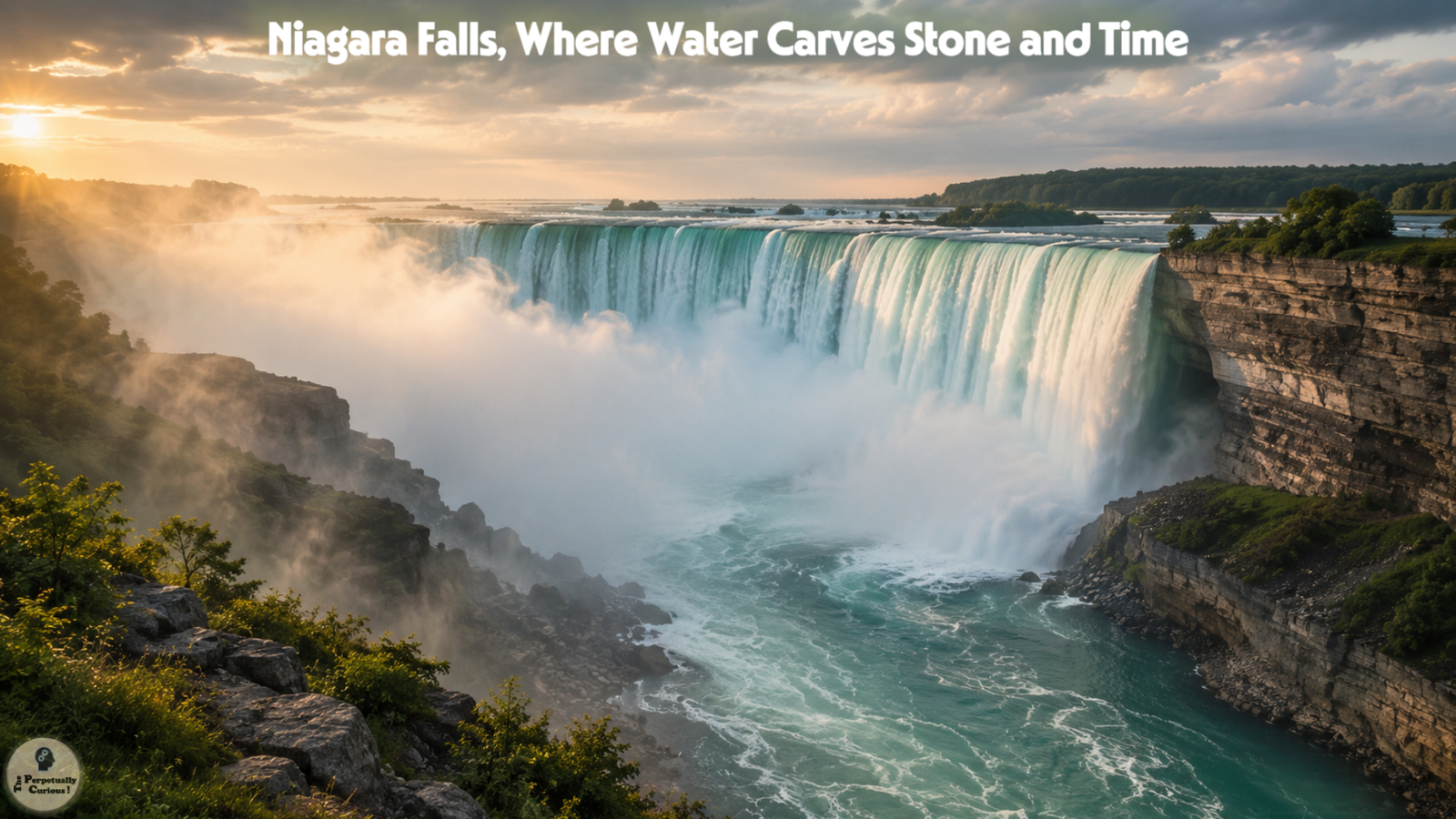
🌊 Niagara Falls Facts: How Water Turns Stone Into Time
When Niagara Falls first appears through its mist, it can feel like a single spectacular drop. But the falls are better understood as a place where a much larger water system briefly becomes visible. The water is not arriving from nowhere.
- The Perpetually Curious! › Canonical › Planet EarthArticle
🌊 Where the Salt Stays: Why the Ocean Is Salty but Rivers and Most Lakes Are Fresh
From section: 🗺️ Salinity is a moving map of the water cycle… Where evaporation is strong and replenishment from rainfall and river inflow is limited, surface water often becomes saltier. Where precipitation is abundant, river discharge is substantial, or ice melts, surface salinity may fall. Currents and vertical mixing continually redistribute these patterns. …