Explore by topic, question, or idea. Find articles, reflections, videos, puzzles, and curiosity pathways gathered across the site.
Press Enter or select Search. A newly typed query starts globally; filters are applied only through the visible rail.
76 results for “leaf shapes”
- The Perpetually Curious! › Canonical › Botanical WondersArticle
🌱 Why Leaves Have Different Shapes: The Science Behind Nature’s Geometry
From section: 🌿 Leaf shape as a multifactorial outcome… This multifactorial nature explains why similar climates can host different leaf shapes, why related species can diverge when exposed to different environments, and why the same species can show subtle variation across its range. …
- The Perpetually Curious! › Canonical › NatureArticle
🌅 The Quiet Geometry of Dawn: How Early Morning Light Shapes the Landscape
The first light of day often arrives with a quiet patience. Before the sun appears, the world begins to shift in gradients of color and in shapes that slowly emerge from darkness. Dawn is not only a moment on the clock.
- The Perpetually Curious! › Canonical › Botanical WondersArticle
🍁 When Leaves Let Go: Why Autumn Colors Turn Red, Gold, and Brown
From section: 🌳 Why neighboring trees take on different colorsThe diversity of leaf shapes is another sign that neighboring trees belong to different lineages, although outline alone does not predict autumn color. The species present help determine the landscape's palette; weather modifies the colors and their timing. …
- The Perpetually Curious! › Archives › Botanical WondersArticle
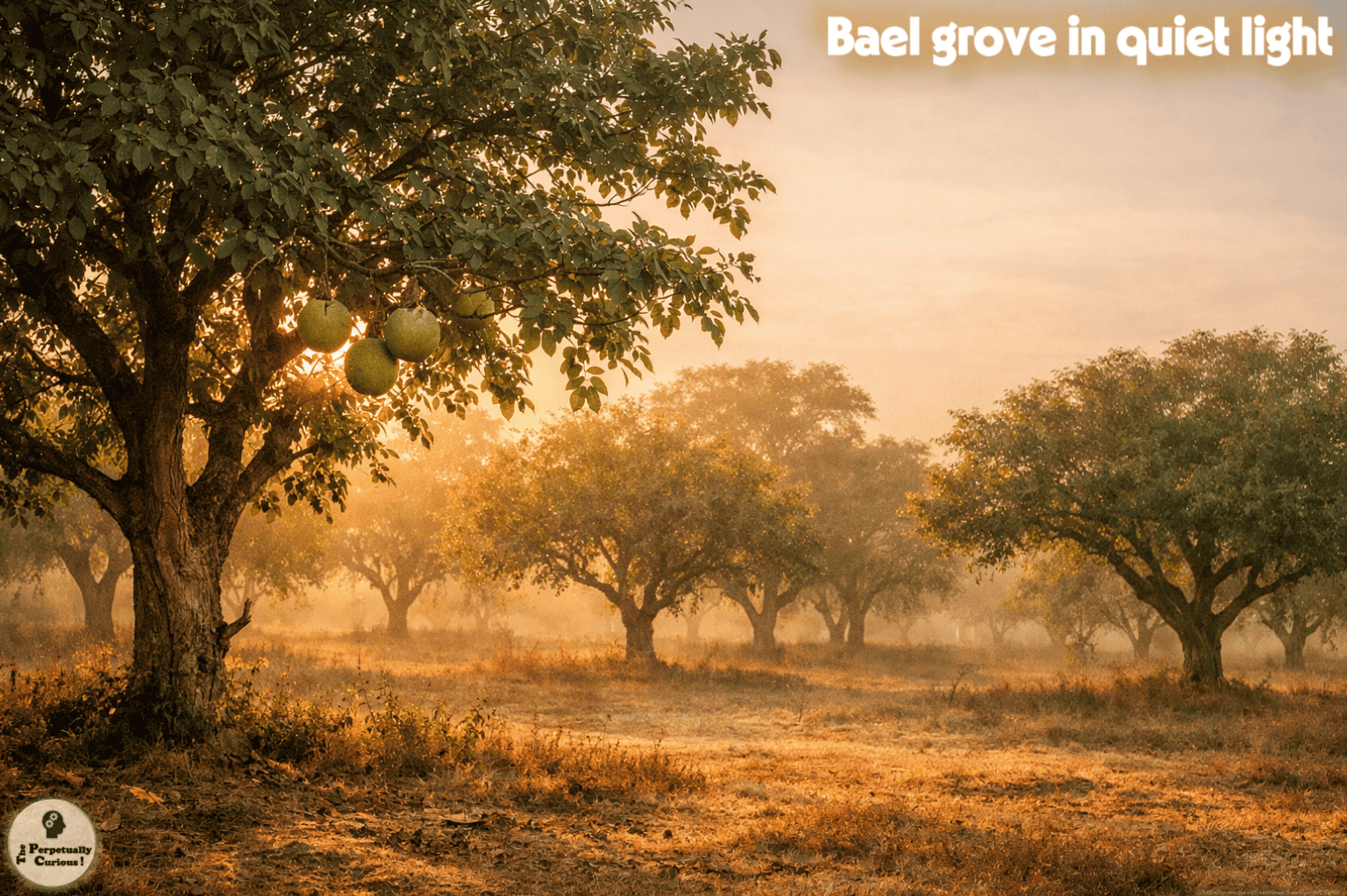
🍃 Bael Tree: Quiet Resilience in Leaf and Fruit
From section: A fruit built for patienceIt grew from the leaf, the fruit, the season, and the landscape.
- The Perpetually Curious! › Archives › Biology & HealthArticle
🧬 When Proteins Forget Their Shape: The Molecular Tragedy of Neurological Disease
🧬 The Art of Molecular Origami In the vast cellular metropolis of your brain, proteins fold themselves into precise three-dimensional sculptures. This molecular origami happens continuously throughout your brain, with proteins finding their destined shapes like keys fitting into locks.
- The Perpetually Curious! › Canonical › Cosmic ExplorationArticle
🌍 When Worlds Pull: Gravity Across the Planets and What It Reveals About Them
Gravity is the quiet sculptor of the cosmos. It shapes the paths of planets, guides the drift of moons, and anchors every step taken on the surface of a world. When we compare gravity across the Solar System, we begin to see how each planet carries its own gravitational signature.
- The Perpetually Curious! › Canonical › Biology & HealthArticle
🧬 When Proteins Forget Their Shape: Protein Misfolding in Neurodegenerative Diseases
From section: 🧩 The architecture of vulnerabilityA neuron is not merely a generic cell carrying electrical signals. Different neuron classes have different shapes, firing patterns, energy demands, chemical environments, axonal lengths, and relationships with surrounding glial cells. …
- The Perpetually Curious! › Canonical › Biology & HealthArticle
🧠 The Neural Symphony: How Neurons, Glia, and Networks Shape Human Experience
From section: 🌳 The magnificent diversity of neural architectureThe lesson is already emerging: a cell's identity shapes what it can do, but not what an entire thought or emotion is. Function depends on the network into which that cell is woven.
- The Perpetually Curious! › Canonical › Biology & HealthArticle
🧠 Where Awareness Takes Shape: Synapses, Brain Networks, and Consciousness
From section: 🧩 From signals to a moment of experience… Different brain systems handle different parts, while their moment-to-moment activity changes with the situation. The interplay of neurons, glial cells, and wider brain networks shapes how signals are processed. …
- The Perpetually Curious! › Canonical › Botanical WondersArticle
🌿 Trees That Drink the Sky: How Certain Species Shape Water and Land in South India
From section: 💡 Did You Know🌲 Eucalyptus height Some Eucalyptus species can reach heights of more than 150 feet (about 45 meters). Their rapid growth and large leaf area contribute to high stand‑level water use in certain plantation settings.