Explore by topic, question, or idea. Find articles, reflections, videos, puzzles, and curiosity pathways gathered across the site.
Press Enter or select Search. A newly typed query starts globally; filters are applied only through the visible rail.
151 results for “the hidden palette of plant pigments”
- The Perpetually Curious! › Archives › Botanical WondersArticle
🎨 The Colorful World of Grapes: What Makes Each Variety Unique
🍇 Red, Green, or Black: What Sets Grapes Apart? Grapes have long captured our attention with their vibrant colors and diverse flavors. Yet beyond their appearance lies a fascinating story of plant chemistry and nutrition.
- The Perpetually Curious! › Canonical › Planet EarthArticle
🌍 Why Mud Is Brown or Black: Where Earth Turns to Quiet Ink
From section: 💡 Did You Know🟤 In some wetlands, dissolved organic compounds called humic substances can stain mud dark brown or nearly black, even when iron levels are low. These natural pigments come from the slow breakdown of plant material.
- The Perpetually Curious! › Archives › Planet EarthArticle
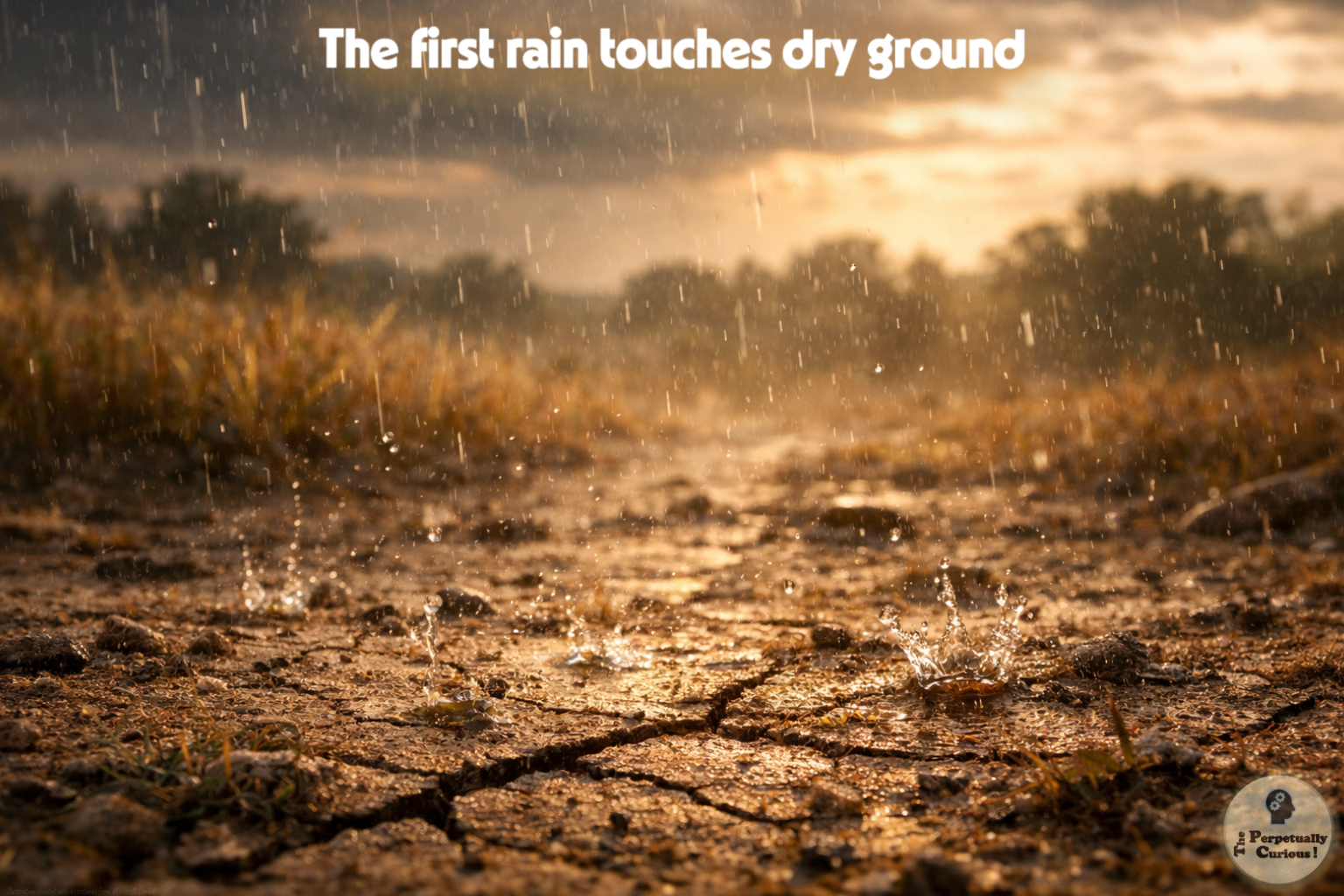
🌧️ Petrichor: How First Rain Lifts Earth’s Hidden Scent
During dry periods, plant related oils and other volatile compounds can gather on surfaces.
- The Perpetually Curious! › Archives › Botanical WondersArticle
When Plants Became Predators: The Evolutionary Marvel of Carnivorous Flora 🌿
Picture the Venus flytrap's jaw-like leaves snapping shut, the sundew's glistening tentacles slowly curling around trapped prey, or the pitcher plant's elegant vase concealing a pool of digestive enzymes.
- The Perpetually Curious! › Canonical › Botanical WondersArticle
🍊 The Citrus Family Tree: Tracing the Roots of Oranges, Lemons, Limes, and Grapefruit
From section: 🎨 The colors of citrus: why fruits turn green, yellow, orange, or red… These pigments develop under cooler night temperatures and specific genetic conditions, which is why blood oranges appear in certain regions and not others. The pigments that shape blood oranges form part of a wider palette of plant chemistry that also appears in studies of vegetable color.
- The Perpetually Curious! › Canonical › Engineering & TechnologyArticle
🧪 The Making of Toothpaste: The Subtle Science Behind a Daily Ritual
Understanding how toothpaste is made reveals the intricate craft behind an object that most people use without a second thought, and this hidden craft mirrors the transformations seen in pencil making, where simple materials are shaped into a tool that quietly supports daily life.
- The Perpetually Curious! › Canonical › Botanical WondersArticle
🍃 Pirandai (Cissus quadrangularis): Tradition, Botany, and Quiet Scientific Curiosity
… Its story moves through courtyards, kitchens, landscapes, and laboratories, where cultural memory, ecological adaptation, and scientific inquiry meet around a plant whose quiet geometry invites deeper attention.
- The Perpetually Curious! › Canonical › Botanical WondersArticle
🌲 When Trees Carry Time: Oldest Tree Species, Ancient Forests, and Sacred Trees
Across continents and epochs, trees have shaped Earth’s story in ways both visible and hidden. Some living lineages trace their ancestry to worlds where dinosaurs walked, some tree-like forest-builders first rose in Devonian landscapes and later vanished into stone, and a few…
- The Perpetually Curious! › CanonicalReflection
Quiet Cycles of Life
👁️ In quiet cycles, the planet exchanges oxygen and carbon across leaf, sea, and sky. When we pay attention to that hidden cadence, we sense a shared rhythm moving through living systems. A Quiet Descent into the Reflection Consider a single oak leaf in sunlight.
- The Perpetually Curious! › Canonical › Engineering & TechnologyArticle
🖋️ Printing Ink: The Science and Living History Behind the Printed Page
From section: 🎨 What ink is made of: The foundation of color and formColorants are either pigments or dyes. Pigments are solid particles that remain suspended in the liquid. Their particle sizes often range from roughly 100 nanometers to about 1 micrometer, and their surfaces may be treated with dispersants to prevent agglomeration. Because pigments do not dissolve, they often resist…