Explore by topic, question, or idea. Find articles, reflections, videos, puzzles, and curiosity pathways gathered across the site.
Press Enter or select Search. A newly typed query starts globally; filters are applied only through the visible rail.
28 results for “the science behind familiar moments”
- The Perpetually Curious! › Videos & Podcasts › Cosmic ExplorationPodcast
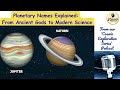
🌌 Planetary Names Explained: From Ancient Gods to Modern Science | Cosmic Exploration Series Podcast
From section: Video context#PlanetNames #SolarSystem #Astronomy 🪐 Why are the planets named Mercury, Venus, Earth, Mars, Jupiter, Saturn, Uranus, and Neptune? This astronomy podcast explores the origins and meanings of the planet names in our solar system, revealing how ancient observation, mythology, language, culture, and modern science…
- The Perpetually Curious! › Canonical › Cosmic ExplorationArticle
🌑 Shadows Across the Solar System: How Eclipses Unfold Beyond Earth
There is a moment on Earth when daylight softens, shadows stretch across familiar ground, and the Sun’s brilliance dims as if the world is holding its breath. Although this article is not about Earth’s eclipses, that moment offers a useful anchor.
- The Perpetually Curious! › Archives › Cosmic ExplorationArticle
🌌 Planetary Names Explained: From Ancient Gods to Modern Science
💡 Have you ever wondered why the planets in our solar system bear such distinctive names? From swift Mercury to majestic Jupiter, these names reflect ancient traditions that connect cultural understanding with the science of the skies. Read more »
- The Perpetually Curious! › Canonical › Cosmic ExplorationArticle
🌌 The Hunt for the Invisible: Understanding Dark Matter Through Science’s Greatest Detective Story
From section: 🌀 Mapping the invisible architectureOur solar system moves through this halo as it orbits the Milky Way at roughly 490,000 miles per hour (790,000 kilometers per hour). In leading particle models, dark matter interacts so weakly with ordinary matter that this motion produces no sensation and no familiar friction. …
- The Perpetually Curious! › Archives › Cosmic ExplorationArticle
The Universe's Greatest Mystery: Why You Exist at All 🌌
The Cosmic Coin Flip That Created Everything In the universe's first moments after the Big Bang, the universe played a game of annihilation that should have left nothing behind. Matter met antimatter in a cosmic battlefield, particle pairs destroying each other in perfect flashes of pure energy.
- The Perpetually Curious! › Canonical › Cosmic ExplorationArticle
🌟 Brown Dwarfs: Between Giant Planets and the Smallest Stars
The cosmos often reveals its rules most clearly where familiar categories begin to blur. Between giant planets and the smallest hydrogen-burning stars lies a dim frontier populated by brown dwarfs, objects massive enough for gravity to compress and heat their interiors, yet not…
- The Perpetually Curious! › Archives › Cosmic ExplorationArticle
Lunar Regolith: The Moon's Ancient Chronicle Written in Dust 🌙
From section: Opening Reflection ✨That contrast is explored more directly in a related article on Earth soil and lunar regolith, where water and life on Earth, and vacuum and impacts on the Moon, help explain why two kinds of ground can share familiar elements yet preserve history so differently.
- The Perpetually Curious! › Canonical › Cosmic ExplorationArticle
🌌 The Universe’s Ancient Whisper: Decoding the Cosmic Microwave Background
From section: 🌡️ Reading the universe’s baby pictureThe familiar blue, orange, and red maps are not literal photographs and do not show colors that human eyes could see. They are scientific visualizations of extremely small microwave temperature differences. …
- The Perpetually Curious! › Canonical › Cosmic ExplorationArticle
🌌 Why Space Feels Cold Among So Many Suns: The Quiet Physics of Cosmic Warmth
From section: ☀️ Radiation, absorption, and why darkness does not mean coldA dark sky is therefore an optical condition, not a temperature reading. A surface in direct sunlight can reach a high temperature while the sky behind it remains visually dark. …
- The Perpetually Curious! › Canonical › Cosmic ExplorationArticle
✨ Constellations: Quiet Patterns, Shared Skies, and the Stories We Trace Together
From section: 🧭 Constellations as tools for orientationFamiliar patterns such as Orion, the Big Dipper in Ursa Major, and the Southern Cross in Crux became especially important, serving as reliable seasonal markers and directional guides across different cultures.