Explore by topic, question, or idea. Find articles, reflections, videos, puzzles, and curiosity pathways gathered across the site.
Press Enter or select Search. A newly typed query starts globally; filters are applied only through the visible rail.
27 results for “a cultural journey through the week tracing the ancient origins of the seven days”
- The Perpetually Curious! › Canonical › Planet EarthArticle
🌧️ When Earth Begins to Breathe: Why Rain Smells the Way It Does
From section: 💧 How raindrops release the scentThis physical explanation naturally leads to the cultural dimension of the experience. The broad mechanism is shared across many rainy landscapes, yet the meaning attached to the scent varies widely among regions and communities.
- The Perpetually Curious! › Canonical › Planet EarthArticle
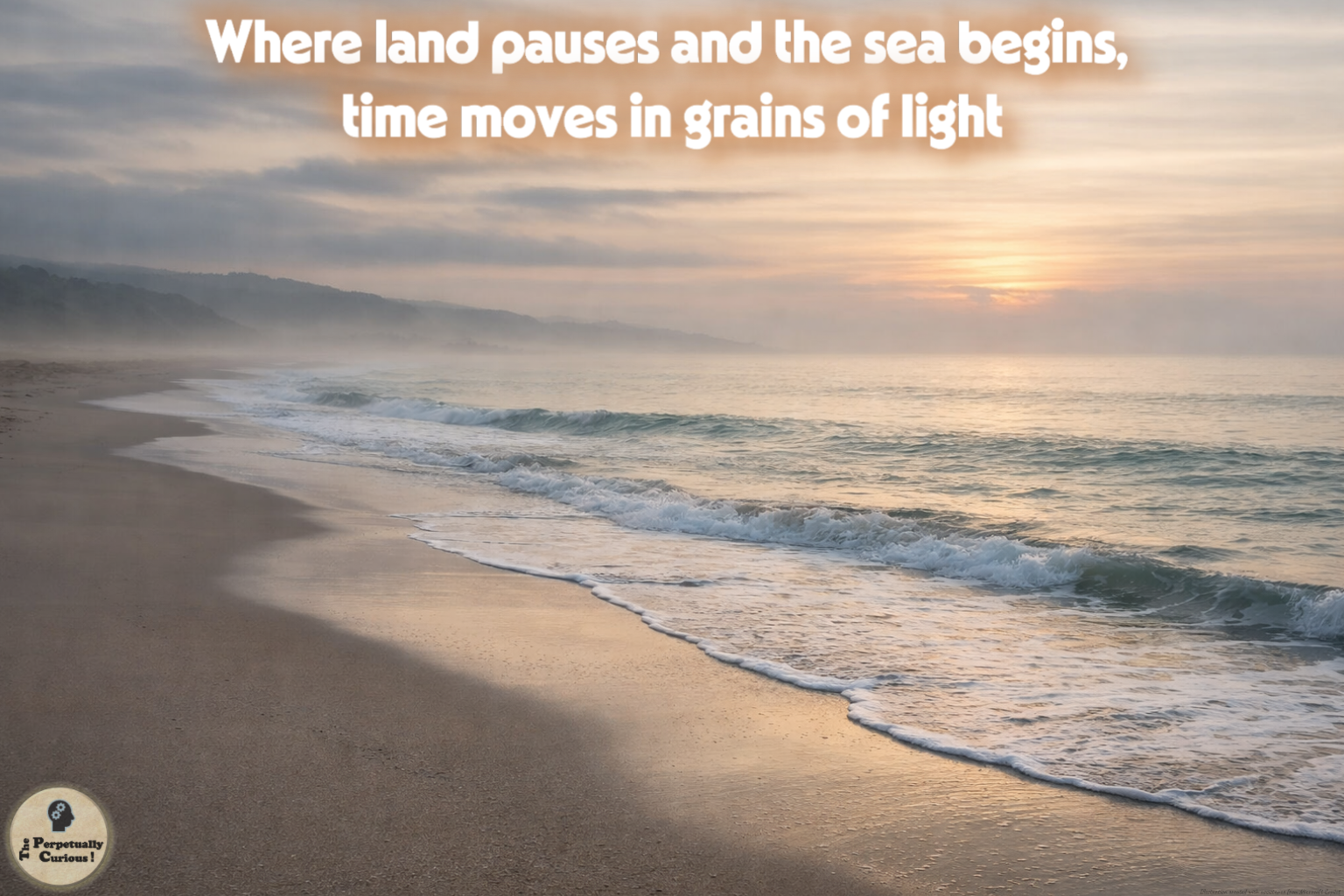
🌊 Where the Waves Leave Their Footprints: Why Beaches Carry Sand
From section: ⛰️ The Birth of SandMuch beach sand begins its life as part of a larger rock. Mountains, cliffs, and ancient bedrock slowly break down through the combined effects of mechanical and chemical weathering. Mechanical weathering includes processes such as freeze‑thaw cycles, abrasion, and the grinding action of moving water. …
- The Perpetually Curious! › Canonical › Planet EarthArticle
🌈 When Sunlight Paints the Rain: The Quiet Geometry of Rainbow Formation
From section: 🌟 Supernumerary rainbows: delicate fringes from wave behaviorJust inside the primary rainbow, faint pastel-colored bands may appear as though the main arc has been quietly echoed. These are supernumerary rainbows. Unlike the primary and secondary bows, which can be described largely by tracing rays through droplets, these delicate fringes reveal the wave nature of light.
- The Perpetually Curious! › Canonical › Planet EarthArticle
🌏 When the Pacific Breathes Warm: El Niño and the Changing Rhythms of Rain
From section: 💡 Did you know?🗓️ El Niño does not follow a fixed timetable. Events recur irregularly, generally every two to seven years. Many begin developing during Northern Hemisphere spring or summer, strengthen through autumn, and reach their greatest intensity during winter, but their duration and seasonal evolution vary.
- The Perpetually Curious! › Canonical › Planet EarthArticle
🌌 Sky in Slow Layers: Understanding Earth’s Atmospheric Structure
A quiet stillness rises through the layers, where drifting atoms meet the long reach of sunlight. The sky becomes a slow and patient frontier, shaped by warmth, motion and invisible tides. Above it all, Earth keeps its gentle hold, carrying every breath into the open dark.
- The Perpetually Curious! › Archives › Planet EarthArticle
❄️ Antarctica: Southernmost Continent’s Frozen Symphony of Silence and Light
From section: ❓ FAQ… What appears as snow is often just old snow being blown around by katabatic winds that in rare extremes have been recorded near 200 mph (320 km/h). To understand why this ancient snow appears brilliantly white, see our related article: ✍️ The Science of Snow Whiteness: A Journey Through Light and Ice ❄️
- The Perpetually Curious! › Archives › Planet EarthArticle
🌊 The Great Lakes: North America's Temporary Inland Seas
Picture yourself holding a glass of water in Chicago. That water contains a mixture of ages, with some molecules that fell as rain just years ago and others that have circulated through Lake Superior for nearly two centuries.
- The Perpetually Curious! › Canonical › Planet EarthArticle
🌊 How Nor’easters Form: When the Coast Becomes a Storm Engine
From section: 🌡️ Where cold land air meets a milder oceanAs moist air rises, it cools, and cloud droplets or ice crystals can grow. Some of the cloud processes that form rain can also begin precipitation that reaches the ground as snow. Temperatures through the air below the clouds help determine what finally reaches a particular place.
- The Perpetually Curious! › Canonical › Planet EarthArticle
🌐 How SONAR Uses Sound to Map the Hidden Ocean Depths
Beneath the surface, sound becomes a traveler, carrying stories through shifting layers of depth and distance. In its echoes, the ocean reveals shapes, histories, and quiet truths that light can never reach.
- The Perpetually Curious! › Archives › Planet EarthArticle
🌊 Why Beaches Have Sand
Mountains, cliffs, and ancient bedrock slowly break down through weathering.