Explore by topic, question, or idea. Find articles, reflections, videos, puzzles, and curiosity pathways gathered across the site.
Press Enter or select Search. A newly typed query starts globally; filters are applied only through the visible rail.
12 results for “brachistochrone landscapes”
- The Perpetually Curious! › Canonical › Botanical WondersArticle
🌿 Trees That Drink the Sky: How Certain Species Shape Water and Land in South India
From section: 🌌 A quiet reflection on shared landscapesThe presence of Prosopis juliflora, eucalyptus, acacia, Lantana, and Ipomoea in South Indian landscapes is part of a larger story about how species travel, adapt, and sometimes dominate. It is also a story about how communities respond, how science observes, and how policy attempts to balance different needs.
- The Perpetually Curious! › Canonical › Botanical WondersArticle
🌲 When Trees Carry Time: Oldest Tree Species, Ancient Forests, and Sacred Trees
Across continents and epochs, trees have shaped Earth’s story in ways both visible and hidden. Some living lineages trace their ancestry to worlds where dinosaurs walked, some tree-like forest-builders first rose in Devonian landscapes and later vanished into stone, and a few…
- The Perpetually Curious! › Archives › Botanical WondersArticle
🌳 The Baobab Tree: Nature’s Enduring “Tree of Life”
Scattered across the sweeping landscapes of Africa, Madagascar, and Australia stands one of nature’s most iconic and resilient wonders, the baobab. Admired for its surreal silhouette with branches reaching skyward like roots, the baobab is more than striking.
- The Perpetually Curious! › Archives › Botanical WondersArticle
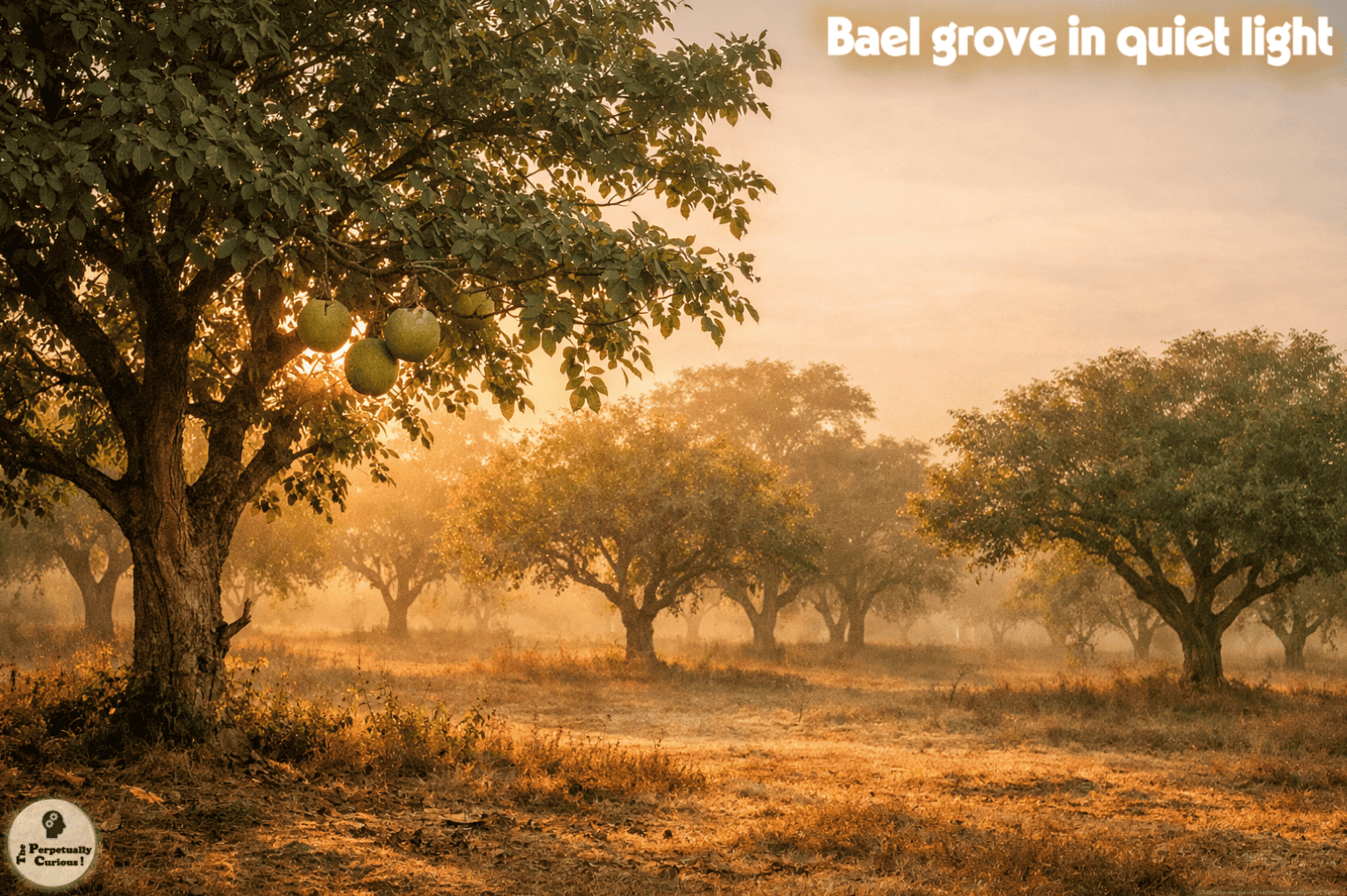
🍃 Bael Tree: Quiet Resilience in Leaf and Fruit
The bael tree, Aegle marmelos, is not a showy tree in the usual sense. Its strength is quieter. It grows across warm South Asian landscapes where dry seasons can be long, soils can be difficult, and survival often depends on patience rather than speed.
- The Perpetually Curious! › Canonical › Botanical WondersArticle
🍃 Bael Tree: Ecology, Sacred Groves, and Cultural History
From section: 🌳 A tree of quiet resilienceBy grounding ourselves in the tree’s physical form, we gain a foundation for understanding how it thrives in the landscapes that shaped it.
- The Perpetually Curious! › Canonical › Botanical WondersArticle
🍃 Pirandai (Cissus quadrangularis): Tradition, Botany, and Quiet Scientific Curiosity
… Its story moves through courtyards, kitchens, landscapes, and laboratories, where cultural memory, ecological adaptation, and scientific inquiry meet around a plant whose quiet geometry invites deeper attention.
- The Perpetually Curious! › Canonical › Botanical WondersArticle
🍊 The Citrus Family Tree: Tracing the Roots of Oranges, Lemons, Limes, and Grapefruit
From section: 🌱 Where citrus grows: climate and conditionsThese patterns describe broad tendencies rather than strict requirements, and they reflect the long history of citrus cultivation across many landscapes and climates. With this environmental backdrop in place, the narrative can now turn to the first major branch of the citrus family tree, the mandarin line.
- The Perpetually Curious! › Canonical › Botanical WondersArticle
🌱 Why Leaves Have Different Shapes: The Science Behind Nature’s Geometry
From section: 💡 Did You Know🔥 Eucalyptus leaves often hang vertically, which reduces exposure to intense sunlight and may help limit overheating in Australian landscapes.
- The Perpetually Curious! › Canonical › Botanical WondersArticle
🌿 When One Tree Remembered a Greener Sahara: The Quiet Story of the Tree of Ténéré
From section: 🌱 Myth versus reality… The Tree of Ténéré and modern restoration work both speak to resilience in difficult environments. The difference is that one belongs to memory and meaning, while the other belongs to many practical decisions made across many landscapes. …
- The Perpetually Curious! › Archives › Botanical WondersArticle
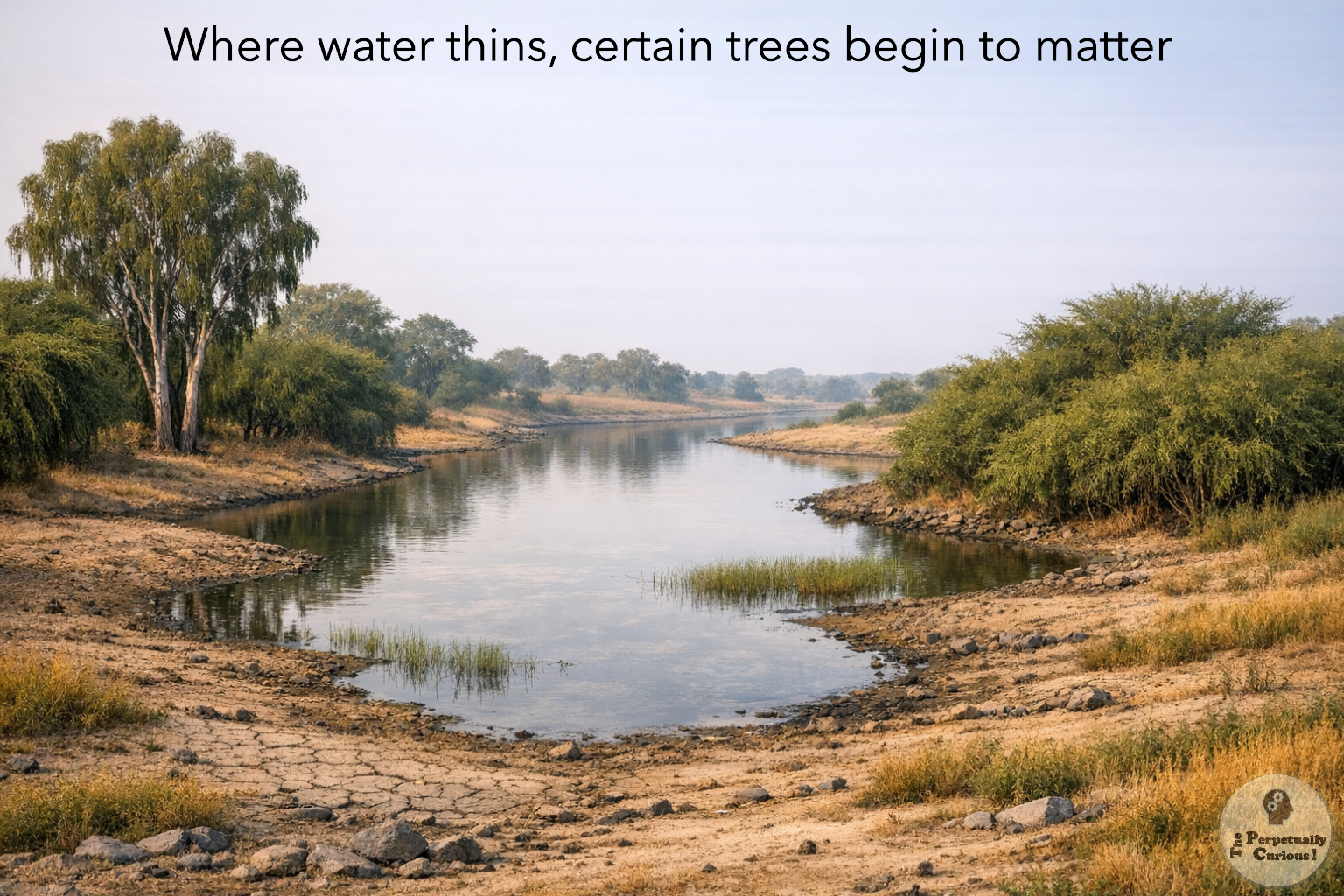
💧 Seasonal Ponds and Root Depth in South India
From section: How roots change the pond-margin storyIn South Indian landscapes, this question becomes especially important around tanks, canals, pond margins, and semi-arid fields.