Explore by topic, question, or idea. Find articles, reflections, videos, puzzles, and curiosity pathways gathered across the site.
Press Enter or select Search. A newly typed query starts globally; filters are applied only through the visible rail.
22 results for “days of the week names origins etymology history arts culture podcast tpc8”
- The Perpetually Curious! › Archives › Cosmic ExplorationArticle
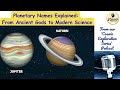
🌌 Planetary Names Explained: From Ancient Gods to Modern Science
💡 Have you ever wondered why the planets in our solar system bear such distinctive names? From swift Mercury to majestic Jupiter, these names reflect ancient traditions that connect cultural understanding with the science of the skies. Read more »
- The Perpetually Curious! › Archives › Cosmic ExplorationArticle
🌔 Lunar Eclipses: Earth’s Shadow on the Moon
🌕➡️🔴 The Allure of a Lunar Eclipse: Earth’s Shadow Play in the Night Sky Among the many wonders of the night sky, few spectacles are as enchanting as a lunar eclipse. On these special nights, our familiar Moon is transformed, slipping into Earth’s shadow.
- The Perpetually Curious! › Archives › Cosmic ExplorationArticle
☀️ Solar Eclipses Explained: The Dance of Shadow and Light
Solar eclipses are among the most captivating events in the sky. They reveal how a rare alignment of Sun, Moon, and Earth can transform the ordinary daylight landscape into something unfamiliar and striking. Daylight softens, shadows sharpen, and the familiar world takes on a new character.
- The Perpetually Curious! › Videos & Podcasts › Cosmic ExplorationPodcast
🌌 Planetary Names Explained: From Ancient Gods to Modern Science | Cosmic Exploration Series Podcast
From section: Video context#PlanetNames #SolarSystem #Astronomy 🪐 Why are the planets named Mercury, Venus, Earth, Mars, Jupiter, Saturn, Uranus, and Neptune? This astronomy podcast explores the origins and meanings of the planet names in our solar system, revealing how ancient observation, mythology, language, culture, and modern science…
- The Perpetually Curious! › Canonical › Cosmic ExplorationArticle
🌙 Quiet Worlds, Vast Stories: Some Lesser-Known Moons of Our Solar System
… These lesser-known moons do not dominate by size. Instead, they invite curiosity through unusual orbits, fractured surfaces, hidden oceans, and mysterious origins.
- The Perpetually Curious! › Canonical › Cosmic ExplorationArticle
🌟 Brown Dwarfs: Between Giant Planets and the Smallest Stars
From section: 🔭 How brown dwarfs came into view… In 2024, astronomers established that the object long known as Gliese 229B is itself a tight pair, now called Gliese 229Ba and Gliese 229Bb. The two brown dwarfs orbit each other every 12.1 days. What first appeared to be a single landmark brown dwarf was therefore two.
- The Perpetually Curious! › Canonical › Cosmic ExplorationArticle
🌌 The Hunt for the Invisible: Understanding Dark Matter Through Science’s Greatest Detective Story
From section: Frequently Asked Questions+… Dark energy is associated with the accelerated expansion of the universe and does not behave like matter concentrated in galactic halos. Their similar names reflect what remains unexplained, not a shared physical identity.
- The Perpetually Curious! › Canonical › Cosmic ExplorationArticle
🌌 Why Space Feels Cold Among So Many Suns: The Quiet Physics of Cosmic Warmth
From section: 🌌 The cosmic microwave background: a quiet thermal baselineAcross the observable universe, space is permeated by a faint radiation field known as the cosmic microwave background. It is relic light from an early stage of cosmic history. About 380,000 years after the Big Bang, the universe had cooled enough for atomic nuclei to capture electrons and form neutral atoms. …
- The Perpetually Curious! › Canonical › Cosmic ExplorationArticle
🌌 The Universe’s Ancient Whisper: Decoding the Cosmic Microwave Background
From section: ✨ The afterglow of everythingTo understand the CMB, we must return to a universe that was hot, dense, and opaque. During its early history, ordinary matter existed as an ionized plasma of nuclei and free electrons. Photons repeatedly scattered from those charged particles, so light could not travel far in a straight line.
- The Perpetually Curious! › Canonical › Cosmic ExplorationArticle
🌍 When Earth First Took Shape: A Planet Born from Cosmic Dust
From section: 🌗 A world reshaped: The giant impact and the birth of the MoonThe leading scientific explanation for the Moon’s origin is the giant impact hypothesis. According to this model, a large protoplanet collided with the early Earth roughly 4.5 billion years ago, within the opening tens of millions of years of Earth’s history. This hypothetical impactor is conventionally called Theia.