Explore by topic, question, or idea. Find articles, reflections, videos, puzzles, and curiosity pathways gathered across the site.
Press Enter or select Search. A newly typed query starts globally; filters are applied only through the visible rail.
208 results for “each sand”
- The Perpetually Curious! › Canonical › Planet EarthArticle
🌫️ Mist Over Ancient Ridges: The Great Smoky Mountains as a Living, Breathing World
From section: 🌅 A landscape of wonder: experiencing the Smokies as a living narrative… The Great Smoky Mountains can be seen as a layered story, where each ridge and valley carries traces of deep time, ecological complexity, cultural memory, and continuing stewardship.
- The Perpetually Curious! › Canonical › Wilderness & Homestead CreaturesArticle
🐾 Where the Wild Paths Divide: Wolves, Foxes, and Jackals in the Dog Family
At first light, the world reveals its quiet inhabitants. A wolf’s tracks appear along the edge of a frozen river, each print pressed into the snow with deliberate weight. In a distant field, a fox pauses beside a tangle of brambles, its ears turning toward the faint rustle of hidden prey.
- The Perpetually Curious! › Canonical › Cosmic ExplorationArticle
🌌 Borrowing the Orbits of Giants: How Gravity Assists Carry Spacecraft into the Deep
On certain nights, the planets appear as quiet lanterns suspended in the dark, drifting along their ancient paths. To the eye, they seem serene and still. Yet each one is a massive world in motion, circling the Sun with tremendous momentum. For spacecraft, these worlds are not only destinations.
- The Perpetually Curious! › Canonical › Cosmic ExplorationArticle
🌌 Why Space Looks Dark in a Universe Filled with Light: Understanding the Quiet Cosmos
On a clear night, the sky stretches overhead as a vast field of darkness, interrupted only by scattered stars and the faint glow of the Milky Way. This darkness feels puzzling when one considers that the universe contains an extraordinary number of stars, each emitting light in all directions.
- The Perpetually Curious! › Canonical › Botanical WondersArticle
🌱 Why Leaves Have Different Shapes: The Science Behind Nature’s Geometry
Leaves appear as simple silhouettes against the sky, yet each outline is the visible trace of a long conversation between genes, climate, and physics. A maple’s palmate blade, an oak lobe, a peepal heart, and the fine scales of arborvitae are not decorative accidents.
- The Perpetually Curious! › Canonical › Botanical WondersArticle
🌿 When One Tree Remembered a Greener Sahara: The Quiet Story of the Tree of Ténéré
In the vastness of the Sahara, where the horizon often feels like a soft line drawn between sand and sky, stories tend to grow where trees seldom do. One modern retelling imagines that a solitary acacia endured heat, wind, and isolation so powerfully that its survival inspired…
- The Perpetually Curious! › CanonicalReflection
The Practice of Seeing
From Reflections on Perception ◒ 👁️ A bird gathers its surroundings through many small turns of the head. Each shift of angle is a way of completing the world it sees, a patient method for turning fragments into clarity.
- The Perpetually Curious! › Archives › Environment & SustainabilityArticle
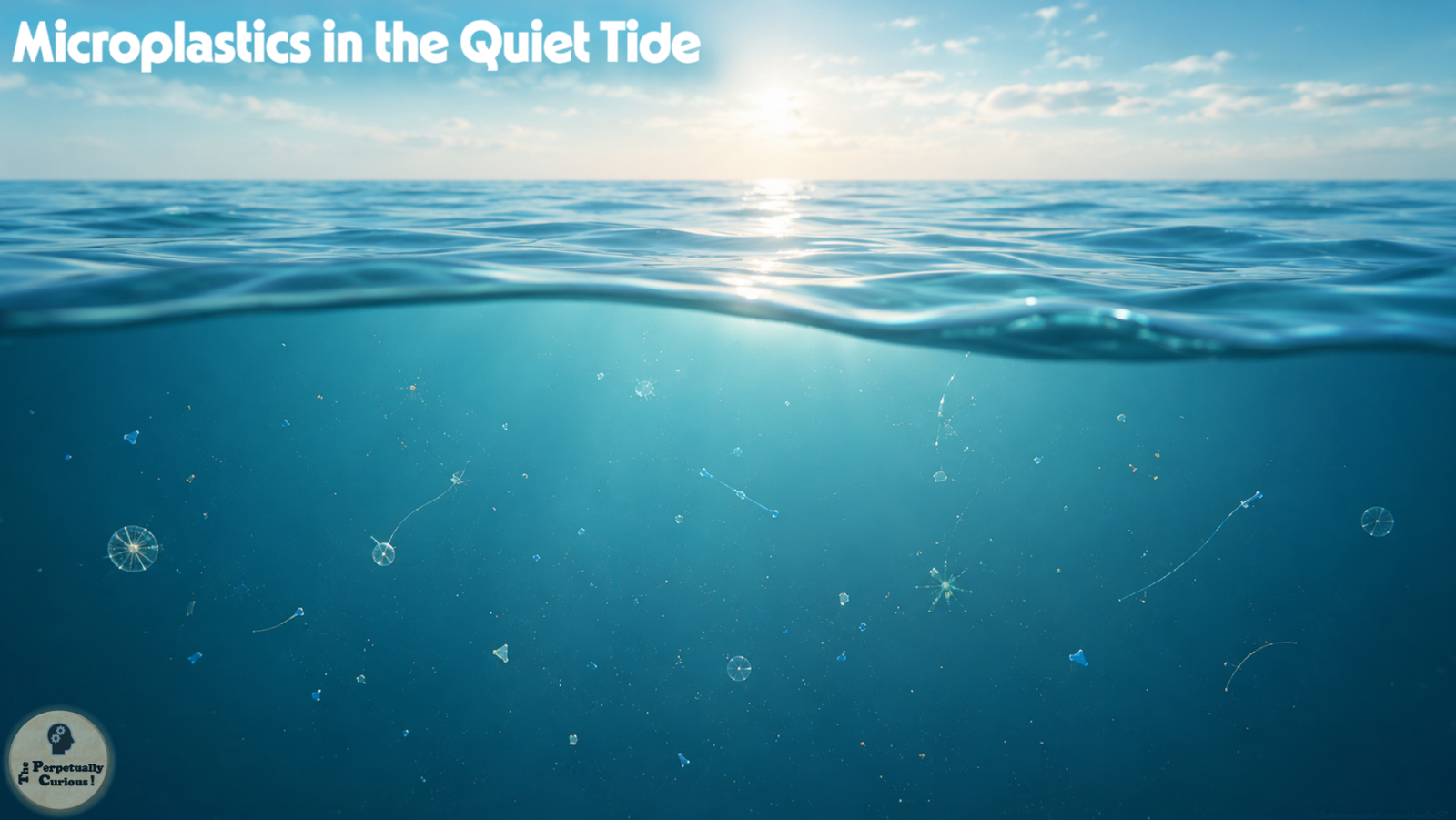
🌊 Microplastics in the Ocean: How Tiny Fragments Travel
In each case, a human-made material begins to join the ordinary motion of the ocean.
- The Perpetually Curious! › Archives › Botanical WondersArticle
The Coffee Odyssey: A Bean's Scientific Journey from Soil to Soul ☕
The morning ritual of brewing coffee connects us to an ancient agricultural symphony that spans continents and centuries. Each aromatic sip represents the culmination of precise botanical processes, meticulous human craftsmanship, and transformative chemistry.
- The Perpetually Curious! › Archives › Cosmic ExplorationArticle
🌌 When Worlds Shine: Why Some Planets Outglow Others in Our Night Sky
The night sky often feels calm and timeless, yet the brightness of the planets tells a dynamic story of light, distance, geometry, and illumination. When Venus blazes in the evening or morning sky, it can appear almost unreal, while Mars, Jupiter, and Saturn each take turns as…