Explore by topic, question, or idea. Find articles, reflections, videos, puzzles, and curiosity pathways gathered across the site.
Press Enter or select Search. A newly typed query starts globally; filters are applied only through the visible rail.
14 results for “fall learning colors”
- The Perpetually Curious! › Canonical › Cosmic ExplorationArticle
🌙 Quiet Worlds, Vast Stories: Some Lesser-Known Moons of Our Solar System
From section: 🔭 Why lesser-known moons matterAfter learning about the largest moons, it is natural to wonder what lies beyond the giants. Smaller moons may seem modest at first glance, yet they often preserve clues about the early solar system. …
- The Perpetually Curious! › Canonical › Cosmic ExplorationArticle
The Cosmic Recipe: Understanding the Physical Criteria for Star Formation 🌟
From section: 🧲 Magnetic fields: the invisible sculptors… This changing balance helps explain why stellar birth is neither an instantaneous free fall nor a perfectly regulated sequence. Modern observatories capable of probing cold, dust-shrouded regions are explored further in how space telescopes reveal hidden wavelengths.
- The Perpetually Curious! › Canonical › Cosmic ExplorationArticle
✨ Constellations: Quiet Patterns, Shared Skies, and the Stories We Trace Together
From section: 🔭 How constellations guide observing todayLearning the sky becomes a slow accumulation of familiarity. Over time, the patterns become companions that guide the eye from one region to another, forming a mental map that grows with each night of observation.
- The Perpetually Curious! › Archives › Cosmic ExplorationArticle
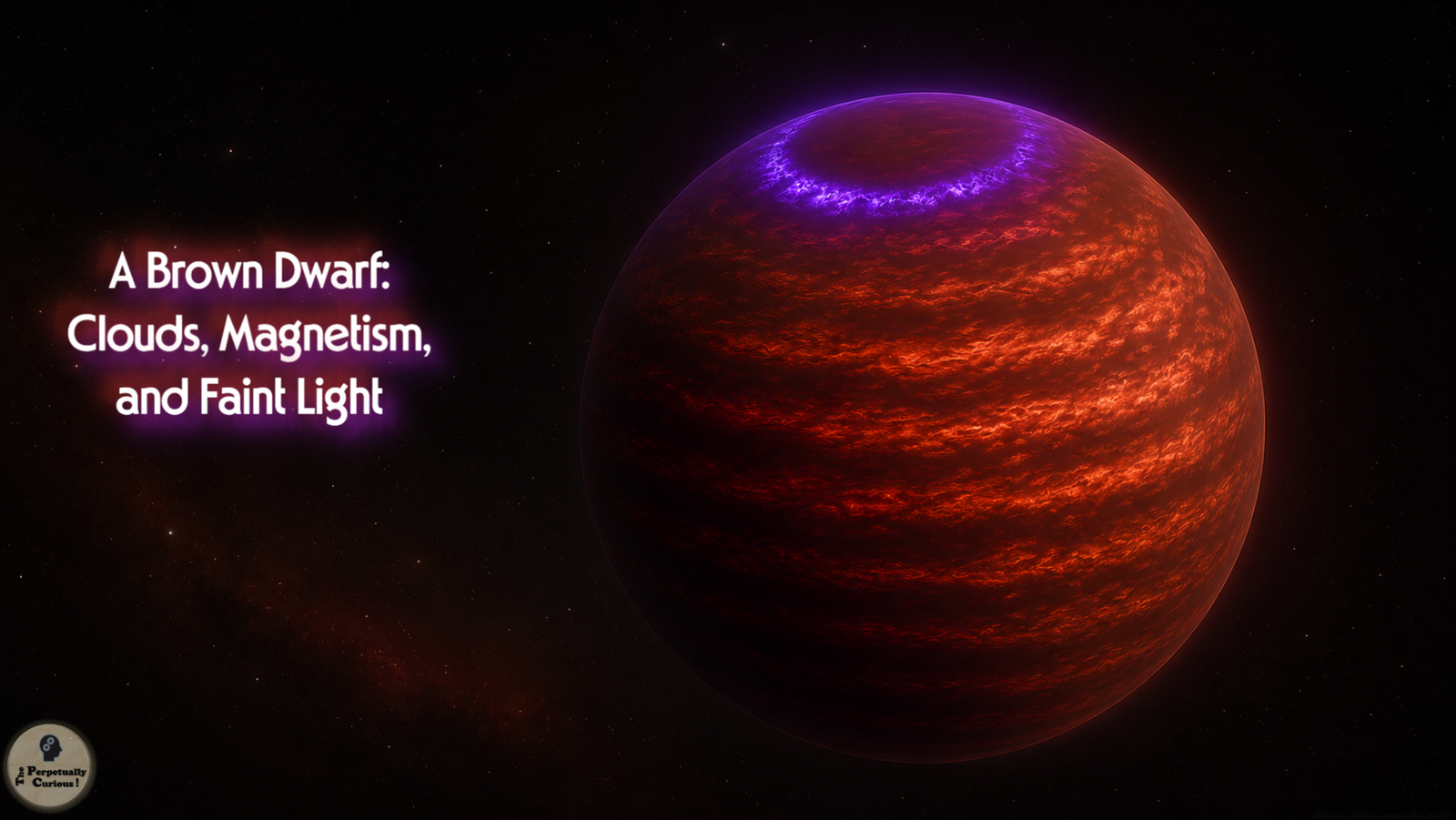
🌟 Brown Dwarfs: Why Stellar Ignition Never Takes Hold
A brown dwarf begins with a question that gravity cannot answer by itself. As gas contracts, the interior grows denser and hotter. Yet heating alone does not make a star.