Explore by topic, question, or idea. Find articles, reflections, videos, puzzles, and curiosity pathways gathered across the site.
Press Enter or select Search. A newly typed query starts globally; filters are applied only through the visible rail.
48 results for “hd 100546 b unraveling a cosmic mystery cosmic exploration series podcast”
- The Perpetually Curious! › Videos & Podcasts › Cosmic ExplorationPodcast
HD 100546 b: Unraveling a Cosmic Mystery | Cosmic Exploration Series Podcast
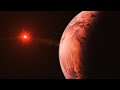
Watch on TPC YouTube ↗ Exoplanets & formation 🪐 HD 100546 b: Unraveling a Cosmic Mystery A young distant system opens questions about planetary formation, gas giants, disk structure, and how astronomers interpret emerging worlds.
- The Perpetually Curious! › Archives › Cosmic ExplorationArticle
🪐 HD 100546 b: Unraveling a Cosmic Mystery
Astronomy enthusiasts may find HD 100546 b especially compelling: a candidate gas giant located about 359 light‑years away in the constellation Musca, identified through Gaia DR3 measurements.
- The Perpetually Curious! › Videos & Podcasts › Cosmic ExplorationPodcast
🌌 Planetary Names Explained: From Ancient Gods to Modern Science | Cosmic Exploration Series Podcast
🌌 Planetary Names Explained: From Ancient Gods to Modern Science | Cosmic Exploration Series Podcast #PlanetNames #SolarSystem #Astronomy 🪐 Why are the planets named Mercury, Venus, Earth, Mars, Jupiter, Saturn, Uranus, and Neptune?
- The Perpetually Curious! › Archives › Cosmic ExplorationArticle
🌌 The Cosmic Silence: Unraveling the Fermi Paradox in an Age of Discovery
In 1950, physicist Enrico Fermi posed a question that still feels disarmingly direct: “Where is everybody?” It was not a claim about what must exist, but a moment of clear reasoning in a universe that seems generous with stars and unexpectedly quiet with replies.Read more »
- The Perpetually Curious! › Canonical › Cosmic ExplorationArticle
🌌 The Universe’s Ancient Whisper: Decoding the Cosmic Microwave Background
… After Penzias and Wilson connected with a Princeton group preparing to search for predicted relic radiation, the meaning of the noise became clear. They had encountered the cosmic microwave background, or CMB, the oldest light that can travel freely to us.
- The Perpetually Curious! › Canonical › Cosmic ExplorationArticle
🌌 Why Space Feels Cold Among So Many Suns: The Quiet Physics of Cosmic Warmth
From section: 🌤 Radiative equilibrium: how objects find their temperature in space… The temperature it approaches depends on every remaining energy source, including faint surrounding radiation and any heat generated within the object. Even the cosmic dark contains a quiet radiative background.
- The Perpetually Curious! › Archives › Cosmic ExplorationArticle
The Universe's Ancient Whisper: Decoding the Cosmic Microwave Background 🌌
From section: When Static Revealed Creation 📡Little did they know that this stubborn interference would soon reshape humanity's understanding of cosmic origins.
- The Perpetually Curious! › Canonical › Cosmic ExplorationArticle
The Cosmic Recipe: Understanding the Physical Criteria for Star Formation 🌟
The birth of a star requires more than cosmic wishful thinking. It depends on a convergence of conditions that can transform cold gas and dust into a self-luminous sphere of plasma. …
- The Perpetually Curious! › Canonical › Cosmic ExplorationArticle
🌍 When Earth First Took Shape: A Planet Born from Cosmic Dust
From section: 🌌 Earth’s formation mapped across galactic years… In this article, the galactic year is used as a perspective tool rather than a literal chronology for specific events. Mapping Earth’s formation against this larger rhythm does not replace the planetary timeline, but it gives that timeline a wider cosmic scale.
- The Perpetually Curious! › Canonical › Cosmic ExplorationArticle
🌌 Borrowing the Orbits of Giants: How Gravity Assists Carry Spacecraft into the Deep
This article follows that journey from the challenge of reaching distant planets to the elegant physics that makes gravity assists possible. It traces how a subtle idea in orbital mechanics became one of the most important tools in cosmic exploration, and how it continues to shape the paths of spacecraft today.