Explore by topic, question, or idea. Find articles, reflections, videos, puzzles, and curiosity pathways gathered across the site.
Press Enter or select Search. A newly typed query starts globally; filters are applied only through the visible rail.
152 results for “microplastics in the ocean how tiny fragments travel”
- The Perpetually Curious! › Archives › Environment & SustainabilityArticle
🌊 Microplastics in the Ocean: How Tiny Fragments Travel
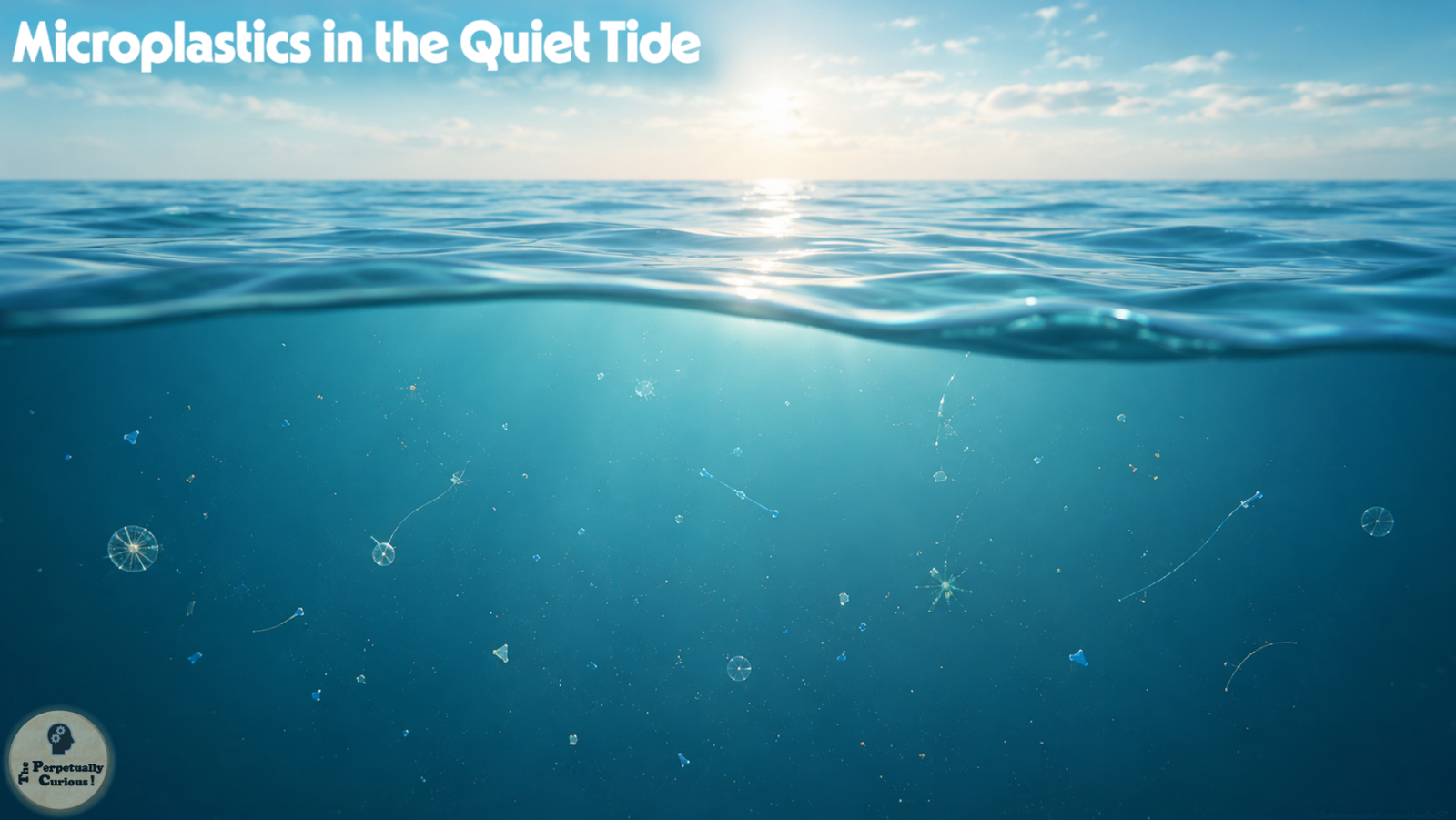
Microplastics in the ocean are not only small pieces of plastic. They are mobile fragments, shaped by weathering, water movement, and the living systems they pass through.
- The Perpetually Curious! › Canonical › Environment & SustainabilityArticle
🔄 Tides of Plastic: Microplastic Pollution in the Oceans and Its Journey Back to Us
From section: 🌊 From land to sea: how microplastics enter and move through the oceans… Transport patterns can create encounter zones where particles and marine life meet in surface waters, sediments, estuaries, and feeding grounds. Once the ocean has carried these fragments into the spaces where organisms live and feed, the story shifts from physical movement to biological contact.
- The Perpetually Curious! › Canonical › Planet EarthArticle
🌊 Where the Salt Stays: Why the Ocean Is Salty but Rivers and Most Lakes Are Fresh
From section: Frequently Asked Questions+Does salt evaporate with ocean water? Most dissolved salts do not enter water vapor during ordinary evaporation. Water molecules escape from the surface, leaving the ions behind. Salt can still reach the atmosphere through breaking waves and sea spray, which produce tiny salt-containing droplets and particles.
- The Perpetually Curious! › Canonical › Environment & SustainabilityArticle
🕸️ Ghost Nets, Silent Drifters: How Lost Fishing Gear Haunts the Ocean
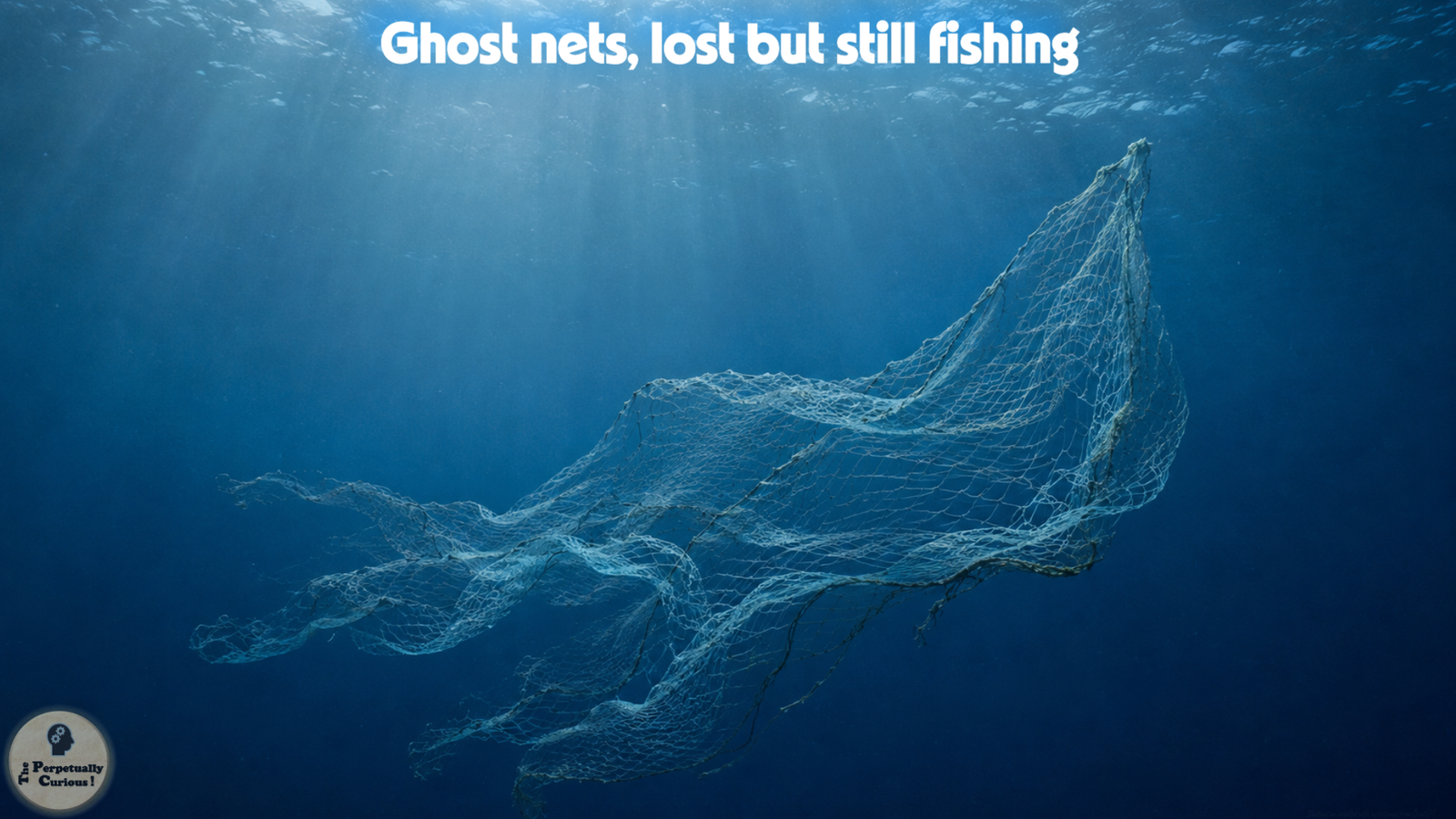
From section: Frequently Asked Questions+How are ghost nets connected to microplastics? As synthetic nets age, sunlight, saltwater, abrasion, and wave action can weaken them into smaller fragments. Those fragments can contribute to microplastic pollution and may be ingested by fish, invertebrates, and other organisms.
- The Perpetually Curious! › Canonical › Planet EarthArticle
🌐 How SONAR Uses Sound to Map the Hidden Ocean Depths
From section: 🐋 Listening to life in the oceanThis biological perspective connects back to the earlier discussion of sound propagation. The same physical principles that guide SONAR pulses also shape how animal sounds travel through the ocean, which provides a natural path toward understanding how SONAR technology developed over time.
- The Perpetually Curious! › Archives › Cosmic ExplorationArticle
The Asteroid Belt: Ancient Fragments of Our Solar System's Story 🌌
On New Year's Day 1801, Italian astronomer Giuseppe Piazzi made a discovery that would transform our understanding of the solar system. While searching for a suspected planet between Mars and Jupiter, he found something else entirely: the first of millions of rocky fragments…
- The Perpetually Curious! › Canonical › Wilderness & Homestead CreaturesArticle
🌺 Whispers of Tiny Wings: Hummingbirds, Their Lives, and the Science of Small Flight
From section: Frequently Asked Questions+Do all hummingbirds migrate? Not all species migrate. Some remain in relatively small geographic areas, while others travel thousands of miles seasonally.
- The Perpetually Curious! › Canonical › Cosmic ExplorationArticle
🌍 When Earth First Took Shape: A Planet Born from Cosmic Dust
From section: 🌊 From fire to water: Cooling, oceans, and early atmosphere… Early Earth may have hosted a global or near-global ocean, although the timing, extent, and stability of those first oceans remain active areas of research.
- The Perpetually Curious! › CanonicalGateway
🪐 K2-18 b: The Ocean World We Have Not Seen
One interpretation describes K2-18 b as a possible Hycean world, with a hydrogen-rich atmosphere above a global ocean. Other research finds that the same observations can be explained by a gas-rich mini-Neptune with no habitable surface. …
- The Perpetually Curious! › Archives › Environment & SustainabilityArticle
🕸️ Ghost Nets: Silent Killers Threatening Our Oceans and Reefs
🌊 Beneath the calm surface of the ocean, a hidden danger can keep moving long after people lose sight of it: ghost nets. These abandoned, lost, or discarded fishing nets may drift through open water, settle on reefs, tangle with other debris, or remain suspended where marine…