Explore by topic, question, or idea. Find articles, reflections, videos, puzzles, and curiosity pathways gathered across the site.
Press Enter or select Search. A newly typed query starts globally; filters are applied only through the visible rail.
223 results for “small islands in the skin why moles form and why most stop growing”
- The Perpetually Curious! › Canonical › PhysicsArticle
💡 Listening to Matter When It Learns to Glow: How an Incandescent Light Bulb Works
Within this small, sealed sphere, physics becomes something we can see. The incandescent bulb offers more than illumination. …
- The Perpetually Curious! › Canonical › NatureArticle
🌅 The Quiet Geometry of Dawn: How Early Morning Light Shapes the Landscape
From section: 🌄 How light reveals form: the landscape as a drawingIn the final moments before sunrise, the growing but still diffuse light begins to show the first hints of shadow‑like directionality. These early forms remain soft, yet they suggest the long, shallow‑angle shadows soon to appear when the sun clears the horizon. …
- The Perpetually Curious! › Archives › Biology & HealthArticle
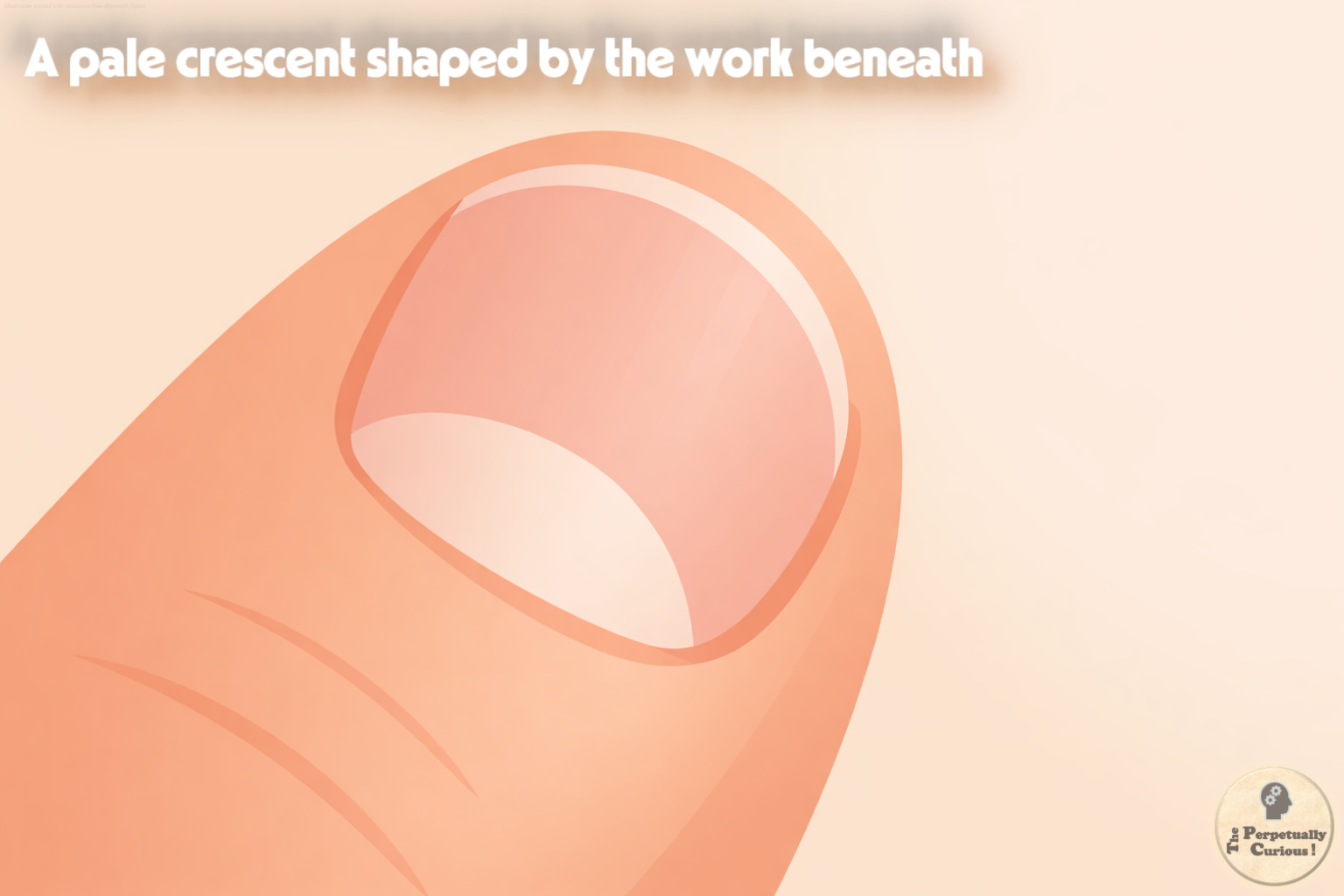
🌙 White Half Moon on Nails: The Quiet Growth Zone Beneath
At the base of some fingernails, a pale crescent appears like a small moon partly tucked under the skin. It may be broad and clear on the thumb, faint on another finger, or almost absent from view.
- The Perpetually Curious! › Canonical › Botanical WondersArticle
🍁 When Leaves Let Go: Why Autumn Colors Turn Red, Gold, and Brown
From section: 🍃 The green that begins to fadeDuring the growing season, chlorophyll absorbs light used in photosynthesis. Its abundance makes most leaves appear green and masks much of the yellow and orange already present. …
- The Perpetually Curious! › Canonical › Biology & HealthArticle
🧠 The Brain’s Guarded Border: How the Blood-Brain Barrier Protects Us and Complicates Treatment
From section: 🛡️ Why the brain needs this degree of controlThat combination of strength and selectivity is central to the barrier’s success. It is also why a medicine cannot be judged only by what it does to a cell in a laboratory dish. Before it can act inside the brain, it must first arrive at the right place in a usable form.
- The Perpetually Curious! › Canonical › Food & LifestyleArticle
🥛 Milk Across Cultures: A Journey Through Nature’s Dairy Diversity
From section: 🌍 A global dairy landscapeCattle provide most of the world’s milk, while buffaloes form the second-largest source. Goats, sheep, camels, equines, and yaks account for much smaller global shares, yet their regional importance can be profound. …
- The Perpetually Curious! › Canonical › Biology & HealthArticle
🧠 The Neural Symphony: How Neurons, Glia, and Networks Shape Human Experience
From section: 🌙 The temporal brain: neural rhythms across day and nightThe daily clock does not stop when consciousness fades. Instead, sleep reveals another form of coordinated neural activity.
- The Perpetually Curious! › Canonical › Planet EarthArticle
🌏 When the Pacific Breathes Warm: El Niño and the Changing Rhythms of Rain
From section: Frequently Asked Questions+… Rain still develops through local and regional processes involving moisture, uplift, cooling, and condensation. This distinction becomes clearer when examining how clouds and rain form.
- The Perpetually Curious! › Canonical › Cosmic ExplorationArticle
🌌 Why Space Feels Cold Among So Many Suns: The Quiet Physics of Cosmic Warmth
From section: 💡 Did You Know?🌗 On a small airless asteroid, rotation and thermal inertia work together to shape local day-and-night temperature contrasts. Faster rotation shortens the time each surface region spends in sunlight or darkness. …
- The Perpetually Curious! › Canonical › Engineering & TechnologyArticle
🚆 Quiet Power on the Rails: Understanding Hydrogen Trains and Their Emerging Role
From section: 💡 Did You Know?💧 Most of the water mass comes from the surrounding air A fuel cell combines onboard hydrogen with oxygen drawn from the air. Through this reaction, 1 kilogram of hydrogen can form about 9 kilograms of water, which may leave the system as liquid water or vapor depending on the train’s design and operating conditions.