Explore by topic, question, or idea. Find articles, reflections, videos, puzzles, and curiosity pathways gathered across the site.
Press Enter or select Search. A newly typed query starts globally; filters are applied only through the visible rail.
24 results for “the sacred peepal tree ficus religiosa global significance in science nature and spirit”
- The Perpetually Curious! › Archives › Planet EarthArticle
When Nature's Fury Spirals: Understanding the Science Behind Nor'easters 🌊
Few weather phenomena capture the raw power of nature quite like a nor'easter bearing down on the Eastern Seaboard. These massive storm systems, born from the collision of opposing air masses over the Atlantic, represent some of the most complex and fascinating atmospheric dynamics on Earth.
- The Perpetually Curious! › Archives › Planet EarthArticle
The Science of Snow Whiteness: A Journey Through Light and Ice ❄️
From section: Introduction ❄️Understanding why snow appears white illuminates not just winter phenomena, but the very nature of light itself.Read more »
- The Perpetually Curious! › Canonical › Planet EarthArticle
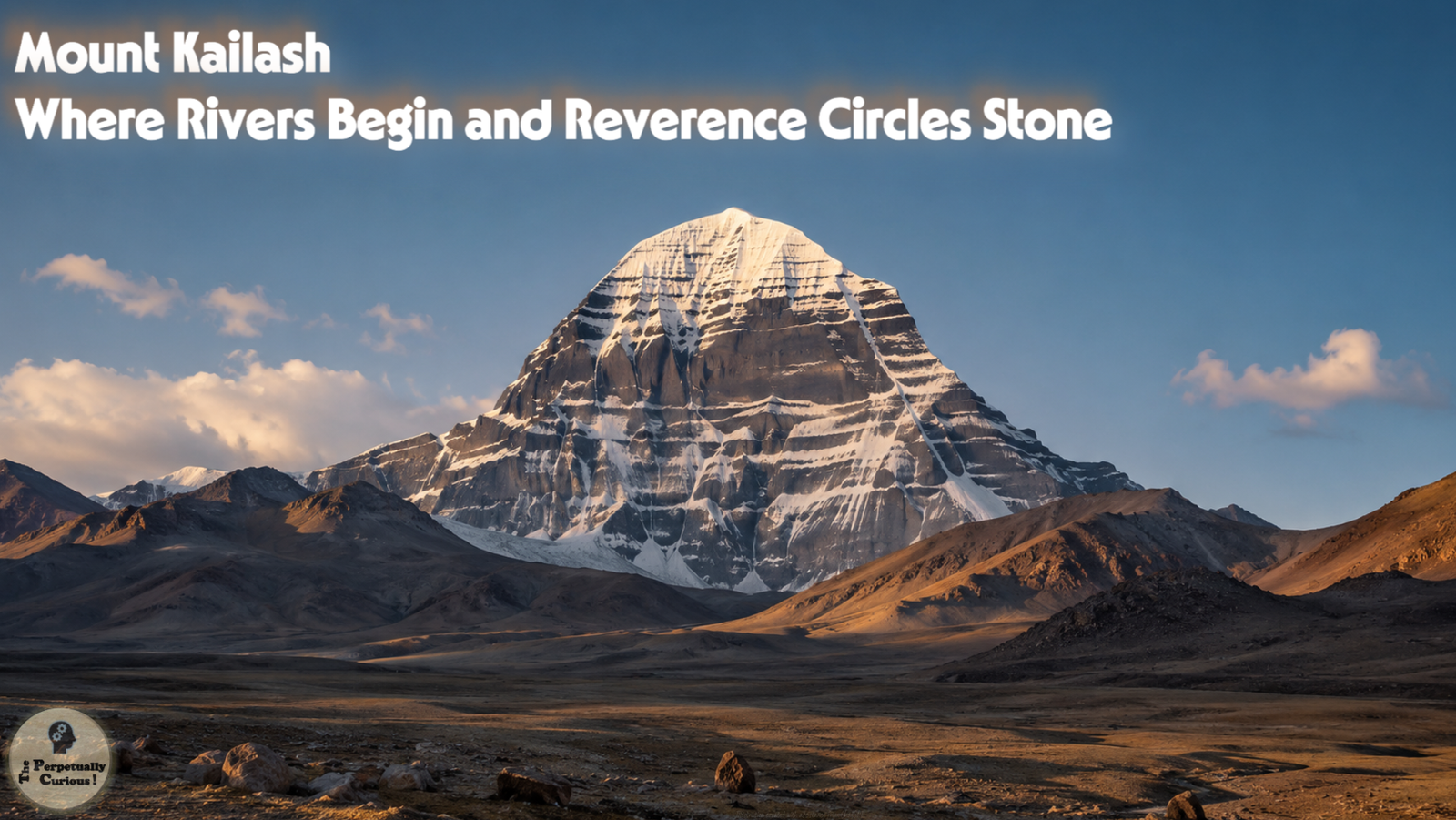
🏔️ Mount Kailash: A Summit Where Water, Story, and Sky Converge
From section: 🕉 A mountain at the crossroads of faithsMount Kailash belongs to a wider family of revered landscapes and living symbols, much like the Sacred Peepal Tree, where natural form, cultural memory, and ecological presence meet.
- The Perpetually Curious! › Canonical › Planet EarthArticle
🌫️ Mist Over Ancient Ridges: The Great Smoky Mountains as a Living, Breathing World
From section: 🌍 A protected landscape: conservation, recognition, and ongoing challengesIn this sense, the Smokies are both a protected landscape and an evolving one. Conservation is a continuing conversation shaped by science, history, and the lived experiences of the people who care about these mountains. …
- The Perpetually Curious! › Archives › Planet EarthArticle
❄️ Antarctica: Southernmost Continent’s Frozen Symphony of Silence and Light
From section: ❓ FAQ… This massive ice sheet contains about 90% of the world's ice and approximately 70% of Earth's fresh water. If it melted entirely, global sea levels would rise approximately 190 feet (58 meters).
- The Perpetually Curious! › Canonical › Planet EarthArticle
🌊 Niagara Falls, Where Thundering Waters Shape Time
From section: 🌾 Stories and names: Indigenous presence and early accountsFor communities such as the Neutral, the falls and surrounding lands held significance as places of travel, sustenance, and meaning. Oral traditions and archaeological evidence indicate long‑standing relationships with the river, shaped by observation, respect, and adaptation.
- The Perpetually Curious! › Archives › Planet EarthArticle
🏔️ Mount Kailash: Why a Sacred Summit Is Circled, Not Climbed
Mount Kailash is often described through reverence, but its power begins with geography. On the western Tibetan Plateau, the mountain rises as a sharply recognizable summit of snow, dark rock, and open sky. It is high, about 21,778 feet (6,638 meters), yet its significance does…
- The Perpetually Curious! › Canonical › Planet EarthArticle
🌌 Sky in Slow Layers: Understanding Earth’s Atmospheric Structure
From section: Did You Know🌊 Earth’s atmosphere experiences global-scale tides as well as smaller gravity waves. These are vast waves moving through the air, not movements of ocean water. …
- The Perpetually Curious! › Canonical › Planet EarthArticle
🌈 When Sunlight Paints the Rain: The Quiet Geometry of Rainbow Formation
From section: 🌟 Supernumerary rainbows: delicate fringes from wave behaviorJust inside the primary rainbow, faint pastel-colored bands may appear as though the main arc has been quietly echoed. These are supernumerary rainbows. Unlike the primary and secondary bows, which can be described largely by tracing rays through droplets, these delicate fringes reveal the wave nature of light.
- The Perpetually Curious! › Canonical › Planet EarthArticle
🌑 How Coal Is Formed: The Slow Birth of Black Stone Across Deep Time
From section: 🌍 Coal in Earth’s long story… Its formation involves ecological processes at the surface and physical and chemical processes at depth. This dual nature makes coal a valuable subject for studies of Earth’s long-term carbon and oxygen cycles, ancient climate, and the evolution of terrestrial ecosystems.