Explore by topic, question, or idea. Find articles, reflections, videos, puzzles, and curiosity pathways gathered across the site.
Press Enter or select Search. A newly typed query starts globally; filters are applied only through the visible rail.
22 results for “the second brain speaks first when parkinson disease begins in your belly”
- The Perpetually Curious! › Canonical › Cosmic ExplorationArticle
🌌 The Hunt for the Invisible: Understanding Dark Matter Through Science’s Greatest Detective Story
From section: 🔍 The first clues: when galaxies refused to make senseHe called this missing component dunkle Materie, or dark matter. The idea was striking, but at the time it remained one clue among many unresolved questions about galaxies.
- The Perpetually Curious! › Canonical › Cosmic ExplorationArticle
🌌 The Universe’s Ancient Whisper: Decoding the Cosmic Microwave Background
That light did not emerge at the first instant of the Big Bang. It began its free journey when the universe was about 380,000 years old, then crossed expanding space for almost 13.8 billion years. …
- The Perpetually Curious! › Canonical › Cosmic ExplorationArticle
🌑 Shadows Across the Solar System: How Eclipses Unfold Beyond Earth
From section: 🔭 The geometry that shapes every eclipseEvery eclipse begins with a simple arrangement: a light source, an object that blocks the light, and a surface where the shadow falls. In our Solar System, the Sun is the light source, planets and moons are the objects that cast shadows, and the surfaces range from rocky ground to swirling clouds.
- The Perpetually Curious! › Canonical › Cosmic ExplorationArticle
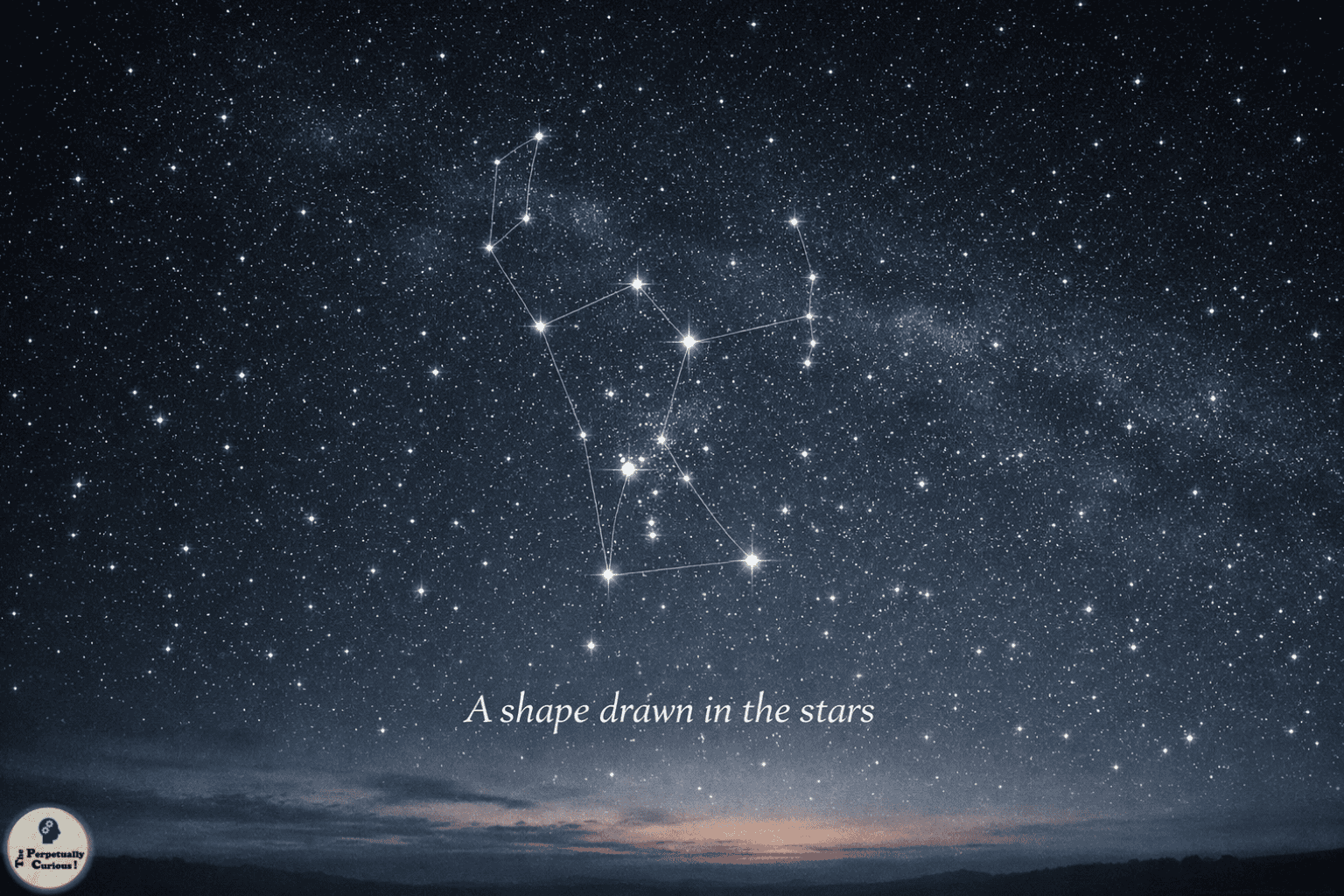
✨ Constellations: Quiet Patterns, Shared Skies, and the Stories We Trace Together
From section: Frequently Asked Questions+How do astronomers decide where a constellation begins and ends? Constellation boundaries follow lines of right ascension and declination, which are similar to longitude and latitude on Earth.
- The Perpetually Curious! › Archives › Cosmic ExplorationArticle
🌌 When Stars Become Worlds: A Journey Through the Largest Stars We Know
The largest stars in the universe are not simply scaled-up versions of the Sun. They are vast, unstable, and luminous structures whose outer layers drift in slow, turbulent motion. Their atmospheres are so extended that the idea of a clear surface begins to dissolve into gradients of thinning gas.
- The Perpetually Curious! › Archives › Cosmic ExplorationArticle
The Asteroid Belt: Ancient Fragments of Our Solar System's Story 🌌
On New Year's Day 1801, Italian astronomer Giuseppe Piazzi made a discovery that would transform our understanding of the solar system. While searching for a suspected planet between Mars and Jupiter, he found something else entirely: the first of millions of rocky fragments…
- The Perpetually Curious! › Archives › Cosmic ExplorationArticle
The Universe's Greatest Mystery: Why You Exist at All 🌌
The Cosmic Coin Flip That Created Everything In the universe's first moments after the Big Bang, the universe played a game of annihilation that should have left nothing behind. Matter met antimatter in a cosmic battlefield, particle pairs destroying each other in perfect flashes of pure energy.
- The Perpetually Curious! › Archives › Cosmic ExplorationArticle
The Moon's Ancient Dance: Understanding Lunar Phases Through Science and Story 🌙
Every approximately 29.5 days, Earth’s sole natural satellite completes a shape-shifting performance that has captivated humanity since our species first gazed skyward.
- The Perpetually Curious! › Archives › Cosmic ExplorationArticle
🌌 Constellations: How Star Patterns Help Us Find Our Way
At first glance, constellations look like drawings placed gently across the night. A hunter, a cross, a scorpion, a bear, or a bright line of stars can seem almost intentional, as though the sky itself has arranged symbols for us to find.
- The Perpetually Curious! › Archives › Cosmic ExplorationArticle
When the Sky Falls: Extraordinary Precipitation Across Our Solar System 🌧️
Our journey begins with Earth's familiar rain, moves inward to Mercury's impossibility, then ventures outward through planets where precipitation ranges from the sulfuric acid storms of Venus to the diamond hail of distant giants, pauses at the dwarf planets marking our solar system's frontier, then explores the…