Explore by topic, question, or idea. Find articles, reflections, videos, puzzles, and curiosity pathways gathered across the site.
Press Enter or select Search. A newly typed query starts globally; filters are applied only through the visible rail.
56 results for “the treatment of tenere”
- The Perpetually Curious! › Canonical › Engineering & TechnologyArticle
🚆 Quiet Power on the Rails: Understanding Hydrogen Trains and Their Emerging Role
A train can move through the landscape with the smooth acceleration of electric traction while producing no diesel exhaust from its propulsion system. In many hydrogen passenger trains, compressed hydrogen serves as an onboard energy carrier.
- The Perpetually Curious! › Canonical › Environment & SustainabilityArticle
🌿 Liquid Trees: Microalgae Photobioreactors and the Quiet Art of Urban Breathing
From section: Frequently Asked Questions+What inspired the idea of placing microalgae in public spaces? Photobioreactors have long been used for scientific research, biomass cultivation, wastewater treatment, and carbon-management studies. …
- The Perpetually Curious! › Canonical › Engineering & TechnologyArticle
🚂 Echoes of Steam, Currents of Steel: Train Engines and the Rise of High-Speed Motion
The story of train engines is a story of how societies learned to move people and goods across landscapes that once felt impossibly vast. It begins with wooden rails, gravity, and horses, then grows into the thunderous age of steam, the practical reach of diesel power, and the…
- The Perpetually Curious! › Canonical › Biology & HealthArticle
😮💨 When A Breath Becomes a Yawn: Why We Yawn and What This Quiet Reflex May Reveal
A yawn often arrives softly, as if carried on an internal tide. A slow, deep inhalation gathers the body, the jaw opens wide, the eyes close for a moment, and then a long exhalation follows. It is a gesture so familiar that it often passes without notice, yet it carries a quiet mystery.
- The Perpetually Curious! › Canonical › Cosmic ExplorationArticle
🌌 Borrowing the Orbits of Giants: How Gravity Assists Carry Spacecraft into the Deep
On certain nights, the planets appear as quiet lanterns suspended in the dark, drifting along their ancient paths. To the eye, they seem serene and still. Yet each one is a massive world in motion, circling the Sun with tremendous momentum. For spacecraft, these worlds are not only destinations.
- The Perpetually Curious! › Canonical › Biology & HealthArticle
🌡️ When the Skin Remembers the Cold: Why We Get Goosebumps
There are moments when the body seems to answer before the mind has found its words. A sudden chill moves through the air, a musical phrase rises toward its quiet summit, or a story reaches a point that feels suspended in time. In these moments, the skin responds with a familiar texture.
- The Perpetually Curious! › Canonical › Wilderness & Homestead CreaturesArticle
🧫 Tides of Chemical Worlds: How Animals Meet the Molecules Around Them
Before an animal sees or hears another creature, it often meets its chemistry first. Across forests, oceans, and grasslands, animals move through landscapes shaped not only by terrain and climate, but also by chemistry.
- The Perpetually Curious! › Canonical › Cosmic ExplorationArticle
The Cosmic Recipe: Understanding the Physical Criteria for Star Formation 🌟
In the vast expanse of our universe, where darkness stretches for light-years and cold reigns supreme, something extraordinary happens. Stars are born. This process, far from being a simple ignition, represents one of nature's most complex and beautiful phenomena.
- The Perpetually Curious! › Archives › Botanical WondersArticle
🍊 Citrus Family Tree: How Ancient Lineages Became Familiar Fruits
From section: Why familiar names can hide mixed ancestryThe broader main-site treatment follows these relationships much farther, including the citron-influenced paths toward lemons and limes, the more complicated position of sweet lime, regional South Indian citrus names, pollination, peel color, comparison tables, and a fuller set of reader questions.
- The Perpetually Curious! › Archives › Planet EarthArticle
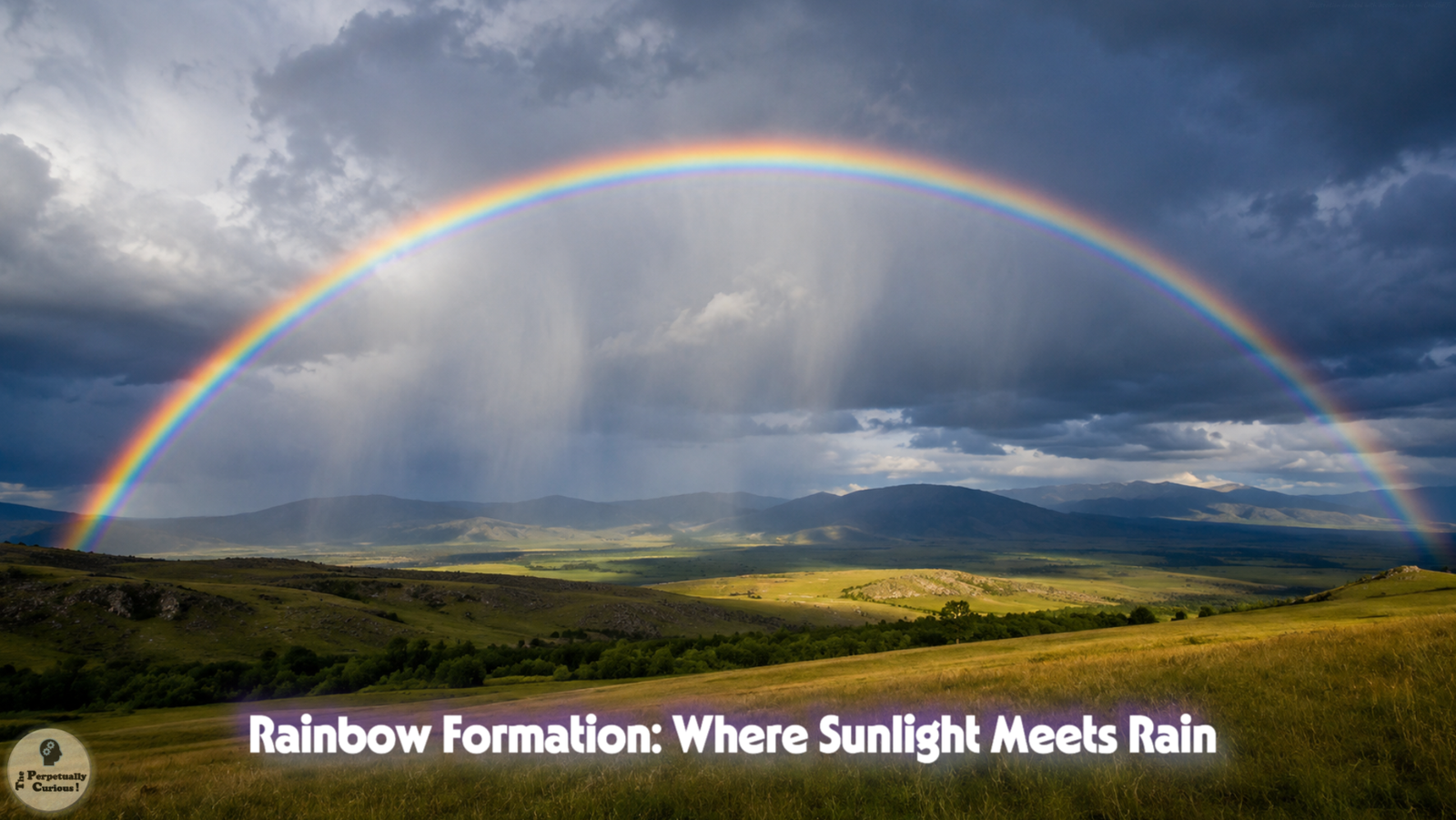
🌈 Rainbow Formation: Why Every Observer Sees a Different Arc
From section: The 42-degree cone behind the arcThe broader optics, including secondary bows, delicate interference fringes, and other variations, remain part of the main-site treatment of rainbow formation.