Explore by topic, question, or idea. Find articles, reflections, videos, puzzles, and curiosity pathways gathered across the site.
Press Enter or select Search. A newly typed query starts globally; filters are applied only through the visible rail.
27 results for “through the ages the naming of the months in our calendar”
- The Perpetually Curious! › Canonical › Planet EarthArticle
🌈 When Sunlight Paints the Rain: The Quiet Geometry of Rainbow Formation
Rainbows often arrive with a sense of gentle timing, appearing just as a storm begins to loosen its hold on the sky. Sunlight returns through thinning clouds, rain still hangs in the distance, and an arc of color seems to gather between them.
- The Perpetually Curious! › Archives › Planet EarthArticle
The Science of Snow Whiteness: A Journey Through Light and Ice ❄️
Introduction ❄️ Fresh snow transforms familiar landscapes into brilliant white canvases, whether from gentle flurries or powerful nor'easters, yet individual ice crystals begin as clear structures.
- The Perpetually Curious! › Canonical › Planet EarthArticle
🌍 Why Mud Is Brown or Black: Where Earth Turns to Quiet Ink
The earth settles into its darker tones where water lingers and light moves slowly through the quiet layers below. In these shaded places, iron, clay, and time leave their soft record of change. The surface holds the moment, while the depths keep their patient ink.
- The Perpetually Curious! › Canonical › Planet EarthArticle
🌌 Sky in Slow Layers: Understanding Earth’s Atmospheric Structure
A quiet stillness rises through the layers, where drifting atoms meet the long reach of sunlight. The sky becomes a slow and patient frontier, shaped by warmth, motion and invisible tides. Above it all, Earth keeps its gentle hold, carrying every breath into the open dark.
- The Perpetually Curious! › Canonical › Planet EarthArticle
🌧️ When Clouds Let Go: Why It Rains and How Raindrops Are Born
The journey begins with invisible vapor, moves through cloud formation, and continues into the microphysical processes that allow droplets or ice particles to grow large enough to fall. …
- The Perpetually Curious! › Canonical › Planet EarthArticle
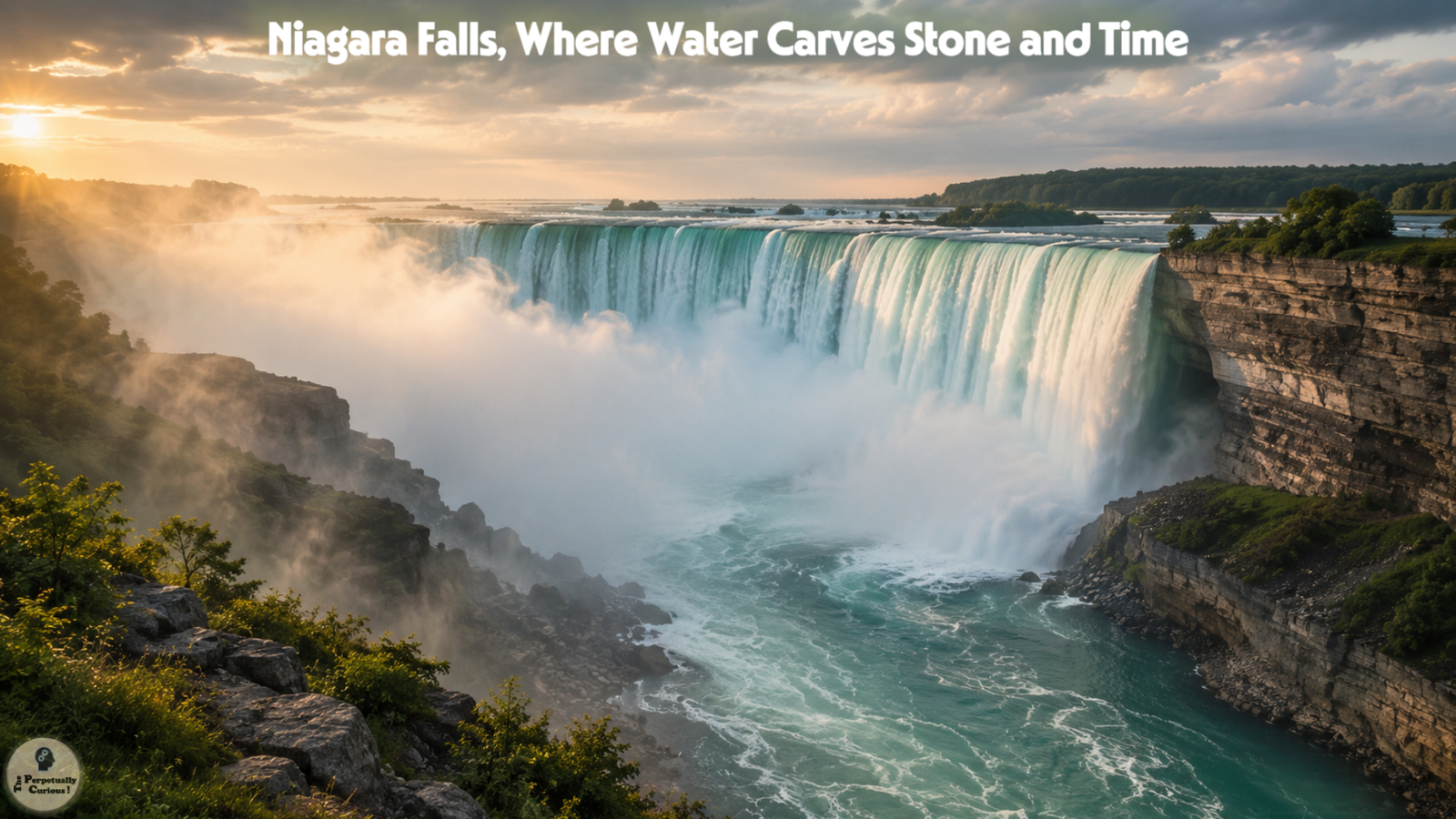
🌊 Niagara Falls, Where Thundering Waters Shape Time
From section: Frequently Asked Questions+How fast is the water moving just before it goes over the falls? The river accelerates through the upper rapids to speeds of about 25 miles per hour (about 40 kilometers per hour) before reaching the crest.
- The Perpetually Curious! › Canonical › Planet EarthArticle
🌊 Where the Waves Leave Their Footprints: Why Beaches Carry Sand
From section: ⛰️ The Birth of SandMuch beach sand begins its life as part of a larger rock. Mountains, cliffs, and ancient bedrock slowly break down through the combined effects of mechanical and chemical weathering. Mechanical weathering includes processes such as freeze‑thaw cycles, abrasion, and the grinding action of moving water. …
- The Perpetually Curious! › Canonical › Planet EarthArticle
🌐 How SONAR Uses Sound to Map the Hidden Ocean Depths
Beneath the surface, sound becomes a traveler, carrying stories through shifting layers of depth and distance. In its echoes, the ocean reveals shapes, histories, and quiet truths that light can never reach.
- The Perpetually Curious! › Archives › Planet EarthArticle
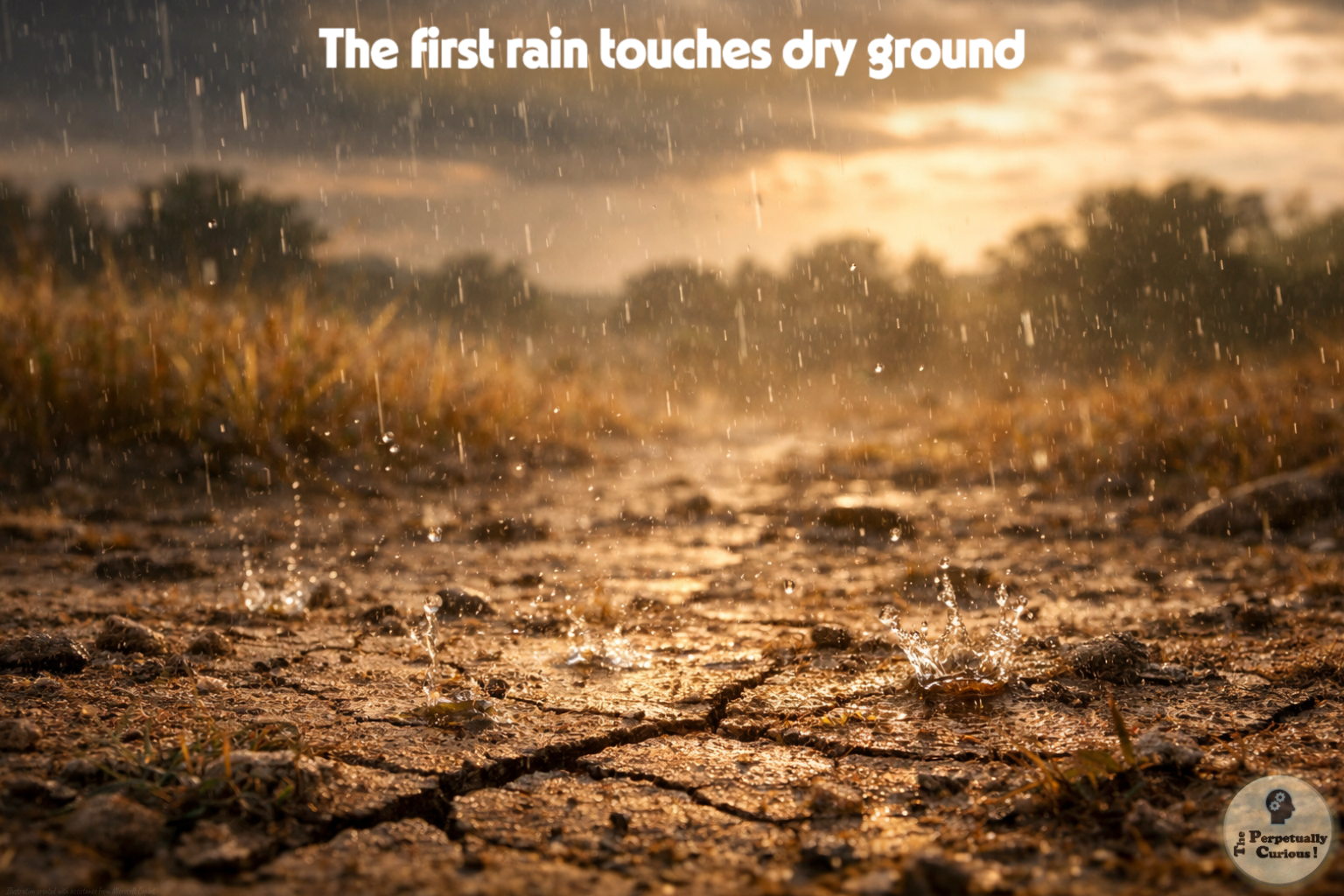
🌧️ Petrichor: How First Rain Lifts Earth’s Hidden Scent
From section: When raindrops become tiny scent liftersAs those pockets rise through the droplet and burst, they can release fine aerosol particles into the air.
- The Perpetually Curious! › Archives › Planet EarthArticle
🌊 Niagara Falls Facts: How Water Turns Stone Into Time
When Niagara Falls first appears through its mist, it can feel like a single spectacular drop. But the falls are better understood as a place where a much larger water system briefly becomes visible. The water is not arriving from nowhere.