Explore by topic, question, or idea. Find articles, reflections, videos, puzzles, and curiosity pathways gathered across the site.
Press Enter or select Search. A newly typed query starts globally; filters are applied only through the visible rail.
27 results for “through the ages the naming of the months in our calendar history art culture podcast tpc8”
- The Perpetually Curious! › Canonical › Planet EarthArticle
🌊 How Nor’easters Form: When the Coast Becomes a Storm Engine
From section: 🌡️ Where cold land air meets a milder oceanAs moist air rises, it cools, and cloud droplets or ice crystals can grow. Some of the cloud processes that form rain can also begin precipitation that reaches the ground as snow. Temperatures through the air below the clouds help determine what finally reaches a particular place.
- The Perpetually Curious! › Canonical › Planet EarthArticle
🌏 When the Pacific Breathes Warm: El Niño and the Changing Rhythms of Rain
From section: 💡 Did you know?🗓️ El Niño does not follow a fixed timetable. Events recur irregularly, generally every two to seven years. Many begin developing during Northern Hemisphere spring or summer, strengthen through autumn, and reach their greatest intensity during winter, but their duration and seasonal evolution vary.
- The Perpetually Curious! › Canonical › Planet EarthArticle
🌌 Sky in Slow Layers: Understanding Earth’s Atmospheric Structure
A quiet stillness rises through the layers, where drifting atoms meet the long reach of sunlight. The sky becomes a slow and patient frontier, shaped by warmth, motion and invisible tides. Above it all, Earth keeps its gentle hold, carrying every breath into the open dark.
- The Perpetually Curious! › Canonical › Planet EarthArticle
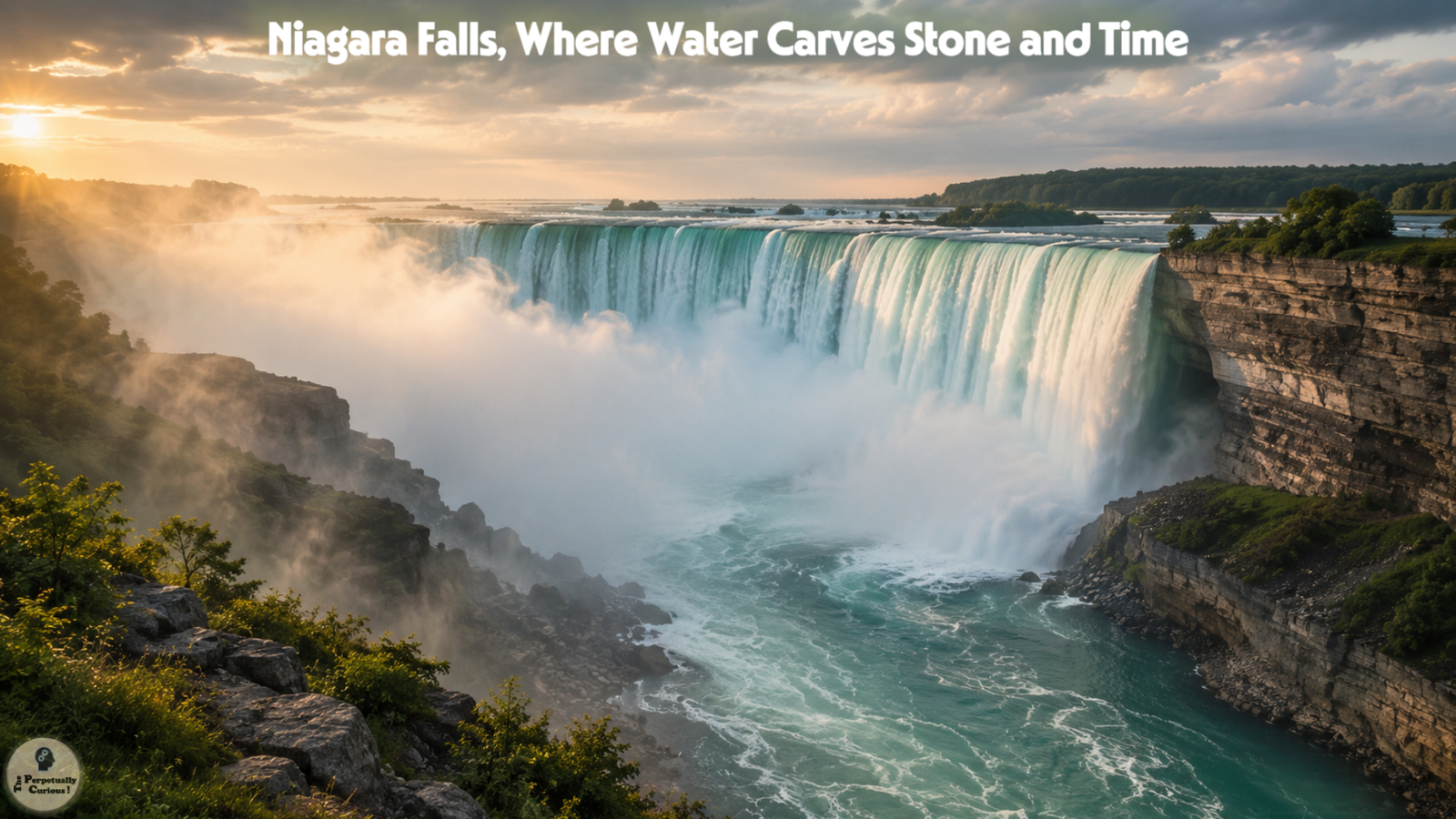
🌊 Niagara Falls, Where Thundering Waters Shape Time
From section: Frequently Asked Questions+How fast is the water moving just before it goes over the falls? The river accelerates through the upper rapids to speeds of about 25 miles per hour (about 40 kilometers per hour) before reaching the crest.
- The Perpetually Curious! › Canonical › Planet EarthArticle
🌇 When the Sky Becomes a Painting: Why Clouds Glow Red and Orange at Sunset on Earth
From section: 🌈 The three‑layer atmosphere modelThe layered behavior of Earth’s atmosphere becomes clearer when viewed as three interacting regions, each one shaping the color of the sky in a different way and each one responding to sunlight through its own physical processes.
- The Perpetually Curious! › Canonical › Planet EarthArticle
🌧️ When Earth Begins to Breathe: Why Rain Smells the Way It Does
From section: 🌍 A name for the smell of rain… These expressions show that the experience is widespread, even if the scientific term arrived only recently. The naming of petrichor prompted scientists to investigate its chemical origins, revealing that the smell is not simply “wetness,” but a complex blend of compounds shaped by soil, life, and atmosphere.
- The Perpetually Curious! › Canonical › Planet EarthArticle
🌊 Where the Waves Leave Their Footprints: Why Beaches Carry Sand
From section: ⛰️ The Birth of SandMuch beach sand begins its life as part of a larger rock. Mountains, cliffs, and ancient bedrock slowly break down through the combined effects of mechanical and chemical weathering. Mechanical weathering includes processes such as freeze‑thaw cycles, abrasion, and the grinding action of moving water. …
- The Perpetually Curious! › Archives › Planet EarthArticle
The Science of Snow Whiteness: A Journey Through Light and Ice ❄️
Introduction ❄️ Fresh snow transforms familiar landscapes into brilliant white canvases, whether from gentle flurries or powerful nor'easters, yet individual ice crystals begin as clear structures.
- The Perpetually Curious! › Archives › Planet EarthArticle
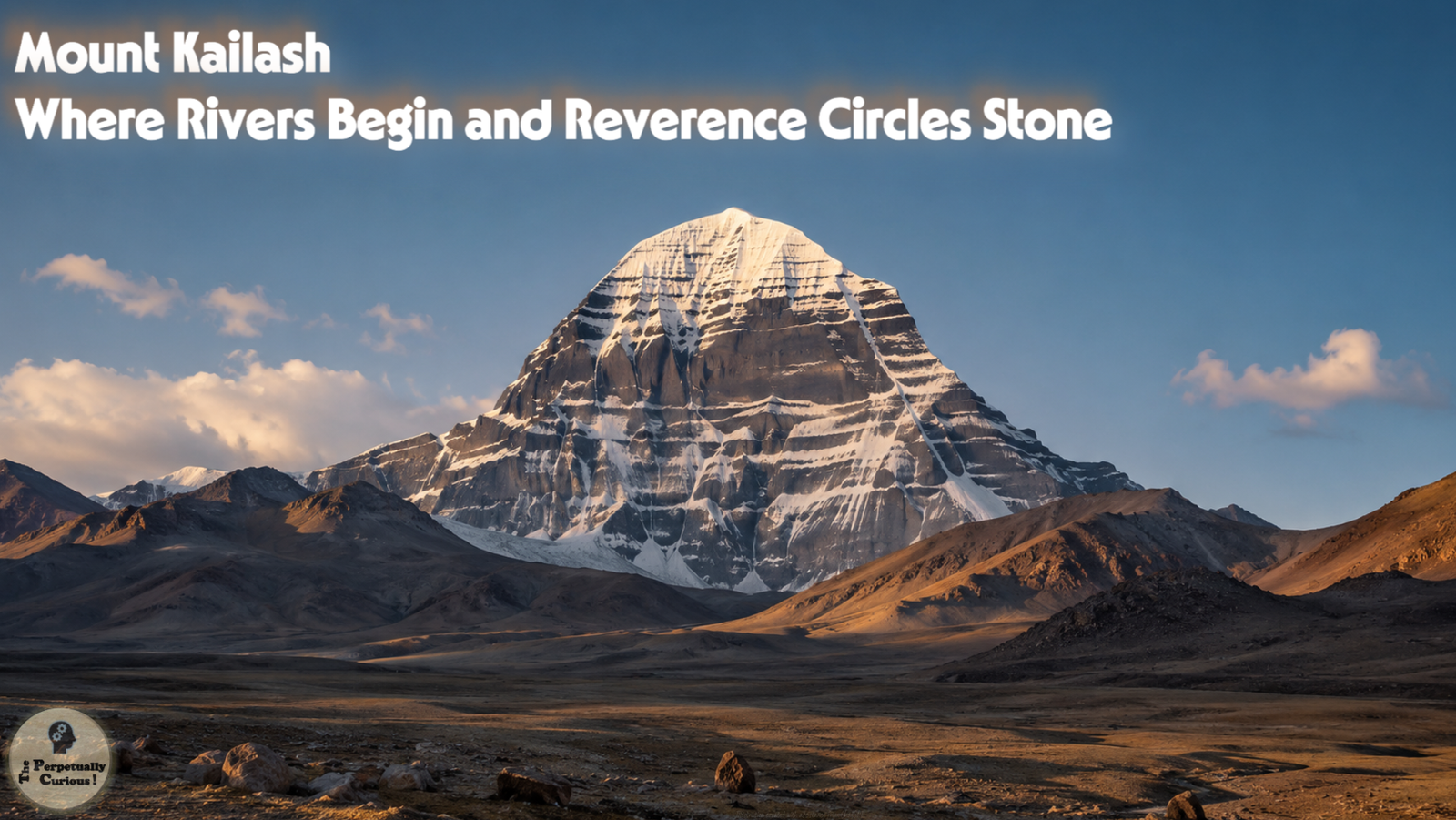
🏔️ Mount Kailash: Why a Sacred Summit Is Circled, Not Climbed
From section: Water moves outward, meaning gathers inwardThat cultural layer also connects with the broader History, Arts & Culture collection, where places are often shaped not only by terrain, but by memory, ritual, symbol, and inherited meaning.
- The Perpetually Curious! › Archives › Planet EarthArticle
🌊 Niagara Falls Facts: How Water Turns Stone Into Time
When Niagara Falls first appears through its mist, it can feel like a single spectacular drop. But the falls are better understood as a place where a much larger water system briefly becomes visible. The water is not arriving from nowhere.