Explore by topic, question, or idea. Find articles, reflections, videos, puzzles, and curiosity pathways gathered across the site.
Press Enter or select Search. A newly typed query starts globally; filters are applied only through the visible rail.
26 results for “two wasp approaches to securing the next generation builders vs infiltrators in nature”
- The Perpetually Curious! › Archives › Planet EarthArticle
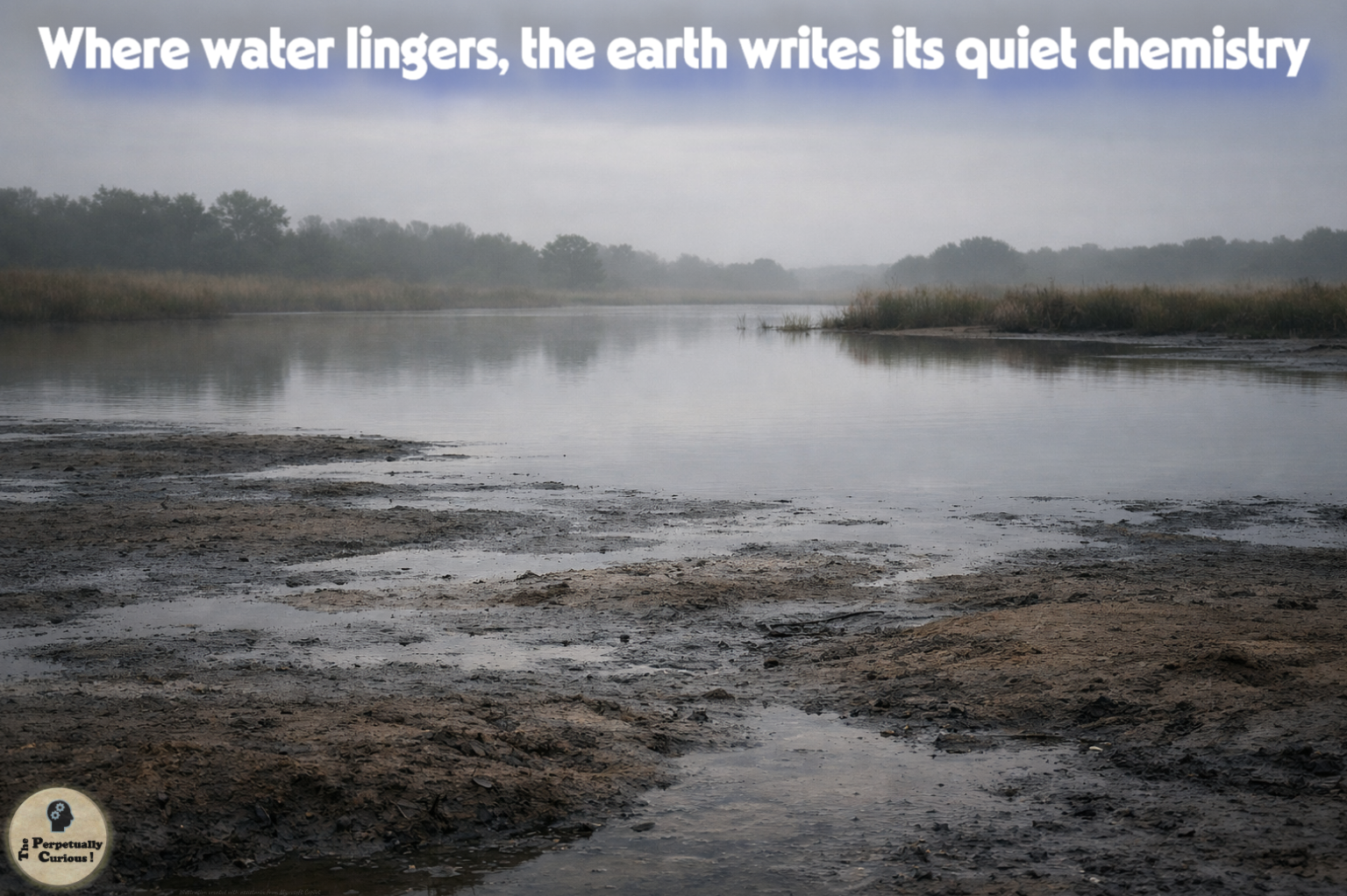
🌍 Why Mud Is Brown or Black: What Wet Soil Reveals
That visible deepening is separate from the slower chemical changes taking place below the surface, but the two effects often appear together in places where mud stays saturated.
- The Perpetually Curious! › Canonical › Planet EarthArticle
🌊 Niagara Falls, Where Thundering Waters Shape Time
From section: Frequently Asked Questions+What is the 1950 Niagara Treaty? It is a bilateral agreement between Canada and the United States that regulates the minimum volume of water flowing over the falls during daytime tourist hours and at night, balancing scenic preservation with hydroelectric power generation.
- The Perpetually Curious! › Archives › Planet EarthArticle
When Nature's Fury Spirals: Understanding the Science Behind Nor'easters 🌊
Few weather phenomena capture the raw power of nature quite like a nor'easter bearing down on the Eastern Seaboard. These massive storm systems, born from the collision of opposing air masses over the Atlantic, represent some of the most complex and fascinating atmospheric dynamics on Earth.
- The Perpetually Curious! › Archives › Planet EarthArticle
The Science of Snow Whiteness: A Journey Through Light and Ice ❄️
From section: Introduction ❄️Understanding why snow appears white illuminates not just winter phenomena, but the very nature of light itself.Read more »
- The Perpetually Curious! › Canonical › Planet EarthArticle
🌌 Sky in Slow Layers: Understanding Earth’s Atmospheric Structure
From section: 🌍 A thin blue veil around a rocky worldAlthough measurable atmospheric particles extend far beyond the familiar sky, most of the atmosphere’s mass remains concentrated close to the ground. Pressure and density generally decrease with altitude, and no sharp wall separates one atmospheric region from the next.
- The Perpetually Curious! › Canonical › Planet EarthArticle
🌧️ When Clouds Let Go: Why It Rains and How Raindrops Are Born
From section: ☁️ From invisible vapor to visible cloudsThis microscopic scale helps explain how clouds can drift overhead without immediately releasing rain. To understand why some clouds eventually produce precipitation while others do not, the next step is to follow how their droplets and ice particles grow beyond this suspended state.
- The Perpetually Curious! › Canonical › Planet EarthArticle
🌧️ When Earth Begins to Breathe: Why Rain Smells the Way It Does
From section: 🌍 A name for the smell of rain… They were studying the scent released when rain falls on dry soil, particularly in landscapes shaped by long dry seasons. The term combines two Greek roots: petra (stone) and ichor (the mythological fluid that flowed in the veins of the gods).
- The Perpetually Curious! › Archives › Planet EarthArticle
Where Earth's Temperate Logic Ends: Understanding the Arctic Circle 🌐
The Arctic Circle marks more than a line on our maps. At approximately 66.5 degrees north latitude (about 66°30′ N), this invisible boundary transforms how our planet receives light, how ecosystems function, and how humans experience the passage of time itself.
- The Perpetually Curious! › Canonical › Planet EarthArticle
🌊 How Nor’easters Form: When the Coast Becomes a Storm Engine
From section: 🕰️ What a long-lived storm reveals… As it slowed near the shore, its onshore winds and waves affected successive high tides. The episode shows how a coastal storm can do more than strike once: the sea may return to an already battered shoreline with the next tide.
- The Perpetually Curious! › Canonical › Planet EarthArticle
🌊 Where the Waves Leave Their Footprints: Why Beaches Carry Sand
An exploration of coastal sands and the quiet forces that shape them The shoreline often feels like a place where time slows and the world opens. Waves arrive in steady succession, each one shaping the edge of the land as if writing and rewriting a story that has no final draft.