Explore by topic, question, or idea. Find articles, reflections, videos, puzzles, and curiosity pathways gathered across the site.
Press Enter or select Search. A newly typed query starts globally; filters are applied only through the visible rail.
10 results for “vertical worlds the 14 lokas in ancient indian cosmology”
- The Perpetually Curious! › Canonical › Engineering & TechnologyArticle
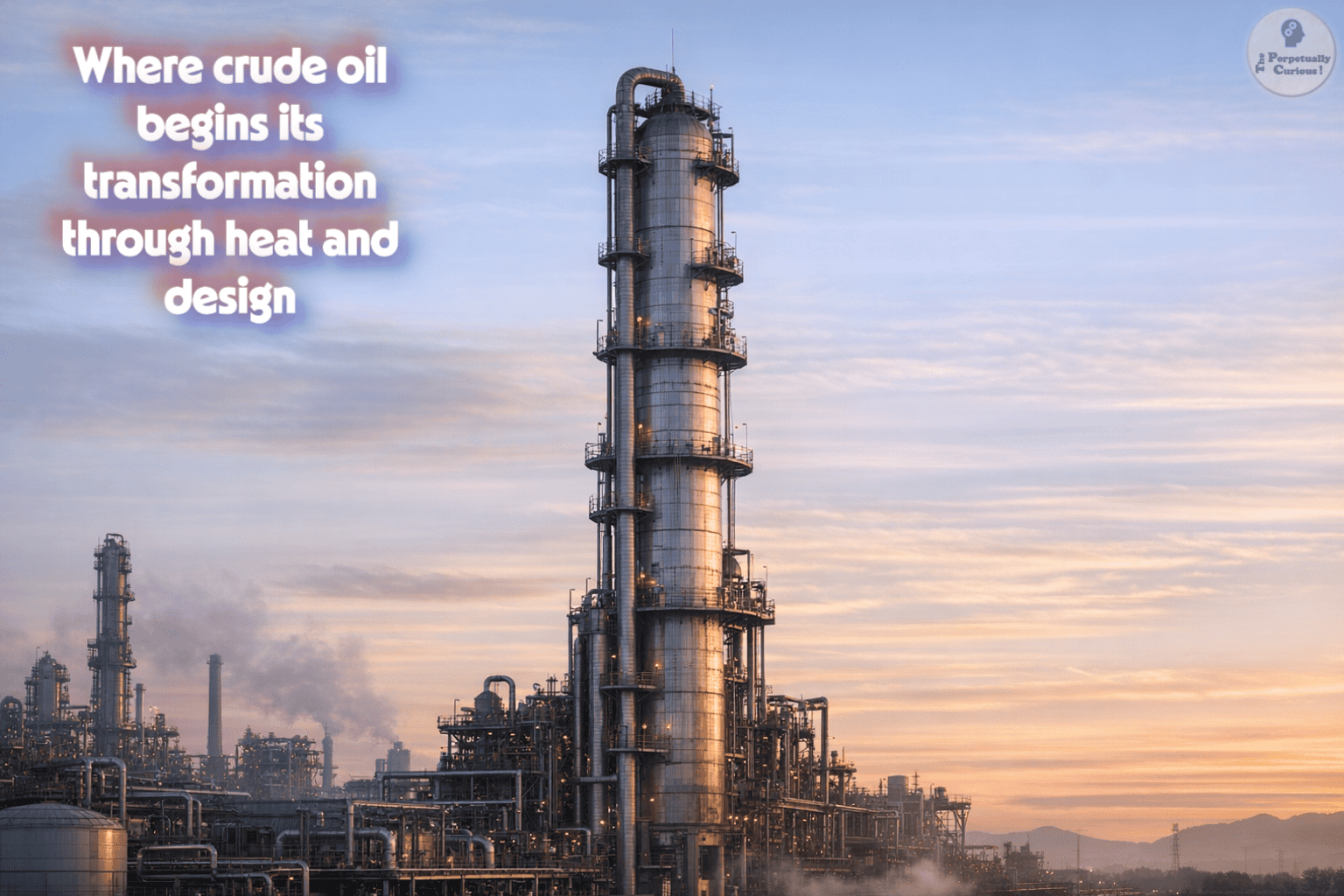
🏭 Petroleum Refining: The Process Behind Heat, Pressure, and Design
There is a quiet elegance in the way crude oil begins its transformation. It arrives as a dark, ancient liquid shaped by geological time, yet it enters the refinery as a material waiting to be understood.
- The Perpetually Curious! › Archives › Engineering & TechnologyArticle
🌬️ The Eternal Spin: How Wind Turbines Transform Ancient Wisdom into Modern Power
Wind begins with the sun. Uneven solar heating creates pressure differences as warm air rises and cool air rushes to fill the void. This planetary breathing, driven by Earth's rotation and geographic features, creates the rivers of air that have powered human ambition for millennia.
- The Perpetually Curious! › Archives › Engineering & TechnologyArticle
The Secret Life of Paper: From Forest Time to Human Memory 📜
From section: The Ancient Dance of Molecules 🌳The Ancient Dance of Molecules 🌳 Every sheet of paper begins as a conversation between sunlight and leaves, a decades-long accumulation of carbon drawn from air and woven into wood.
- The Perpetually Curious! › Canonical › Engineering & TechnologyArticle
🚆 Quiet Power on the Rails: Understanding Hydrogen Trains and Their Emerging Role
From section: 🌐 Where hydrogen trains are operating and developingGermany placed two pre-series Coradia iLint trains into regular passenger service in Lower Saxony in 2018 and introduced a 14-train regional fleet in 2022. That experience also illustrates that commercial deployment depends on more than the vehicle itself. …
- The Perpetually Curious! › Canonical › Engineering & TechnologyArticle
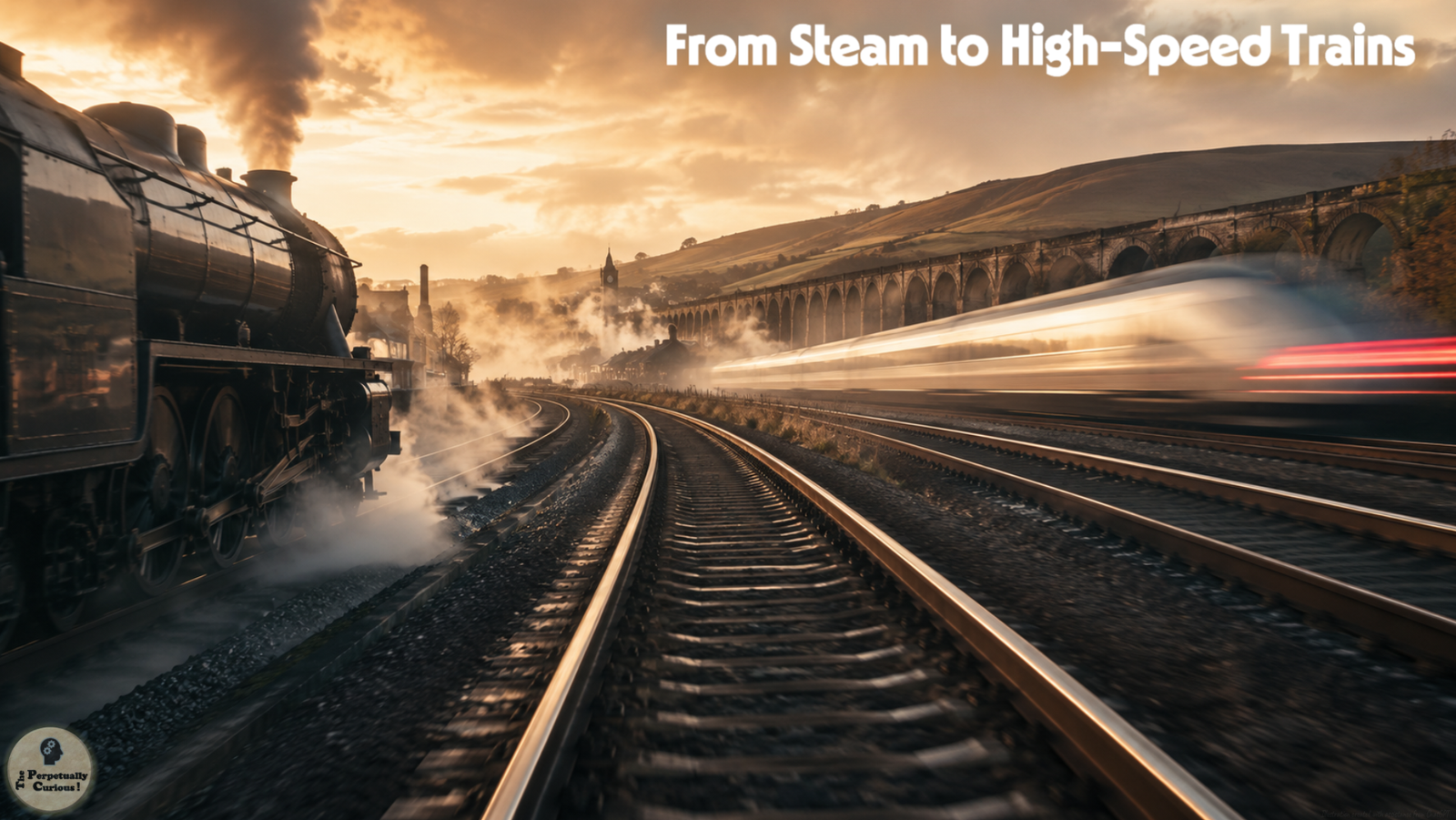
🚂 Echoes of Steam, Currents of Steel: Train Engines and the Rise of High-Speed Motion
From section: 💡 Did You Know?🚂 Some early and experimental steam locomotives used vertical boilers, which allowed compact designs before horizontal boiler layouts became more common in larger railway locomotives.
- The Perpetually Curious! › Canonical › Engineering & TechnologyArticle
🧪 The Making of Toothpaste: The Subtle Science Behind a Daily Ritual
From section: 📜 How early powders gradually became the pastes we know today… Evidence commonly cited in historical overviews places early Egyptian tooth‑cleaning powders around 3000–5000 BCE, and early dentifrices in several ancient cultures were dry powders made from crushed minerals, charcoals, or plant materials. …
- The Perpetually Curious! › Canonical › Engineering & TechnologyArticle
🖋️ Printing Ink: The Science and Living History Behind the Printed Page
From section: 📜 From soot to spectra: A cultural and scientific history… They were prized for permanence, although some formulations contributed to paper degradation over long periods. These early formulations reflect a broader tradition of materials experimentation, much like the centuries long evolution documented in the ancient art of glass.
- The Perpetually Curious! › Archives › Engineering & TechnologyArticle
The Journey Beneath Our Wheels: How Asphalt Roads Have Evolved Through the Ages 🛤️
The story of asphalt begins not in a laboratory or construction site, but in the ancient seeps of Mesopotamia, where natural bitumen bubbled to the surface like Earth's own industrial secret.
- The Perpetually Curious! › Archives › Engineering & TechnologyArticle
🚂 Train Engines: How Steam, Diesel, and Electricity Reach the Wheels
From section: 🔥 Fire, water, and the first self-moving railway machineIn many regions, coal supplied the concentrated heat, linking railway expansion to coal's formation from ancient plant matter across deep time.
- The Perpetually Curious! › Archives › Engineering & TechnologyArticle
🏭 Petroleum Refining: How Crude Oil Begins to Transform
From section: Why boiling range mattersThe vertical arrangement is useful because it gives the refinery a first map of what the crude can become.