Explore by topic, question, or idea. Find articles, reflections, videos, puzzles, and curiosity pathways gathered across the site.
Press Enter or select Search. A newly typed query starts globally; filters are applied only through the visible rail.
8 results for “why it rains and how raindrops are morning”
- The Perpetually Curious! › Canonical › Biology & HealthArticle
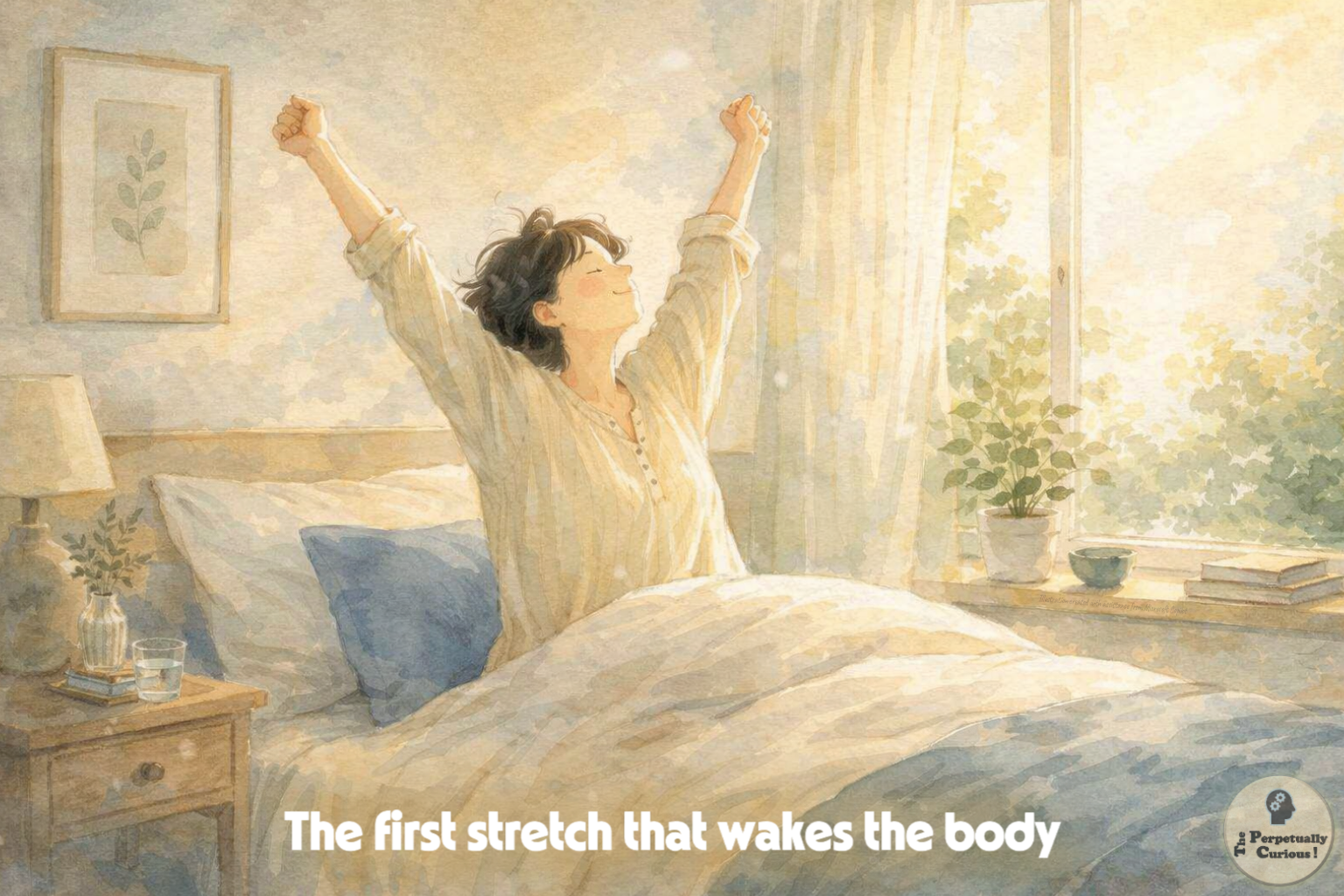
🌿 Why We Stretch When We Wake: The Quiet Reflex that Resets the Body
From section: 🌤 The sleep-wake transition and the rise of readinessThis shift unfolds gradually, like the slow brightening of early morning light, and pandiculation is one of the first gestures that marks the return to wakefulness.
- The Perpetually Curious! › Archives › Biology & HealthArticle
When Dreams Feel More Real Than Morning: The Science and Mystery of Our Sleeping Mind 🌙
You wake with your heart racing, certain you just spoke with your grandmother who passed away years ago. She stood in your childhood kitchen, wearing that familiar blue apron, but when she opened her mouth to speak, no words came.
- The Perpetually Curious! › Canonical › Biology & HealthArticle
☕ The Molecular Democracy: Why Coffee Affects People Differently
From section: 🧠 A quieter signal beneath wakefulnessThis can reduce sleepiness and increase alertness. It does not replace sleep or erase the physiological need for it. Meanwhile, the body's biological clocks contribute a separate rhythm to wakefulness and sleep, which helps explain why the same drink can meet a different nervous system in the morning and evening.
- The Perpetually Curious! › Canonical › Biology & HealthArticle
☀️ Sunlight, Skin, and the Quiet Alchemy of Vitamin D
From section: Frequently Asked Questions+… Around solar noon, the Sun is highest in the sky and its rays follow their shortest path through the atmosphere. More UVB can therefore reach the surface than during early morning or late afternoon. This describes a pattern in UVB availability rather than prescribing a particular exposure schedule.
- The Perpetually Curious! › Canonical › Biology & HealthArticle
🌫️ When the World Blurs for a Moment: Why We Sneeze
From section: 💡 Did you know?🌅 Morning sneezing is relatively common Some individuals sneeze more frequently in the morning, which may relate to changes in nasal congestion, humidity, or circadian rhythms.
- The Perpetually Curious! › Canonical › Biology & HealthArticle
😮💨 When A Breath Becomes a Yawn: Why We Yawn and What This Quiet Reflex May Reveal
From section: 🌗 Between tiredness and attention: yawning in daily experienceYawning also appears during transitions between sleep and wakefulness. Many people notice yawns shortly after rising in the morning or while preparing for rest at night. These transitions reflect the influence of the body’s biological clocks, which help regulate cycles of alertness and rest.
- The Perpetually Curious! › Archives › Biology & HealthArticle
The Symphony of Time: Understanding Our Body's Multiple Biological Clocks 🕰️
From section: Temporal Embodiment: We Are Made of Time ⏳This biological timekeeping extends far beyond the familiar experience of feeling drowsy at night or alert in the morning.
- The Perpetually Curious! › Archives › Biology & HealthArticle
🌅 Pandiculation: How the Waking Stretch Restores Body Awareness
From section: Why the reflex belongs to transitionsThe waking stretch is therefore not merely an ornament of morning.