

A mosquito settles on the skin, feeds, and disappears. The encounter may pass almost unnoticed. Yet when that mosquito carries dengue virus, the bite can begin a sequence that unfolds quietly over the following days. To understand dengue is to follow that sequence beyond the skin, into the cells where a virus multiplies, the immune responses that confront it, and the vessel walls that regulate movement between blood and surrounding tissues.
Dengue is a viral infection transmitted mainly by infected female Aedes mosquitoes. Many infections cause no symptoms or only mild illness, while some become severe. This wide range of outcomes makes dengue more than a story about a mosquito or a fever. It is a story about how a virus, its carrier, and the human body interact.
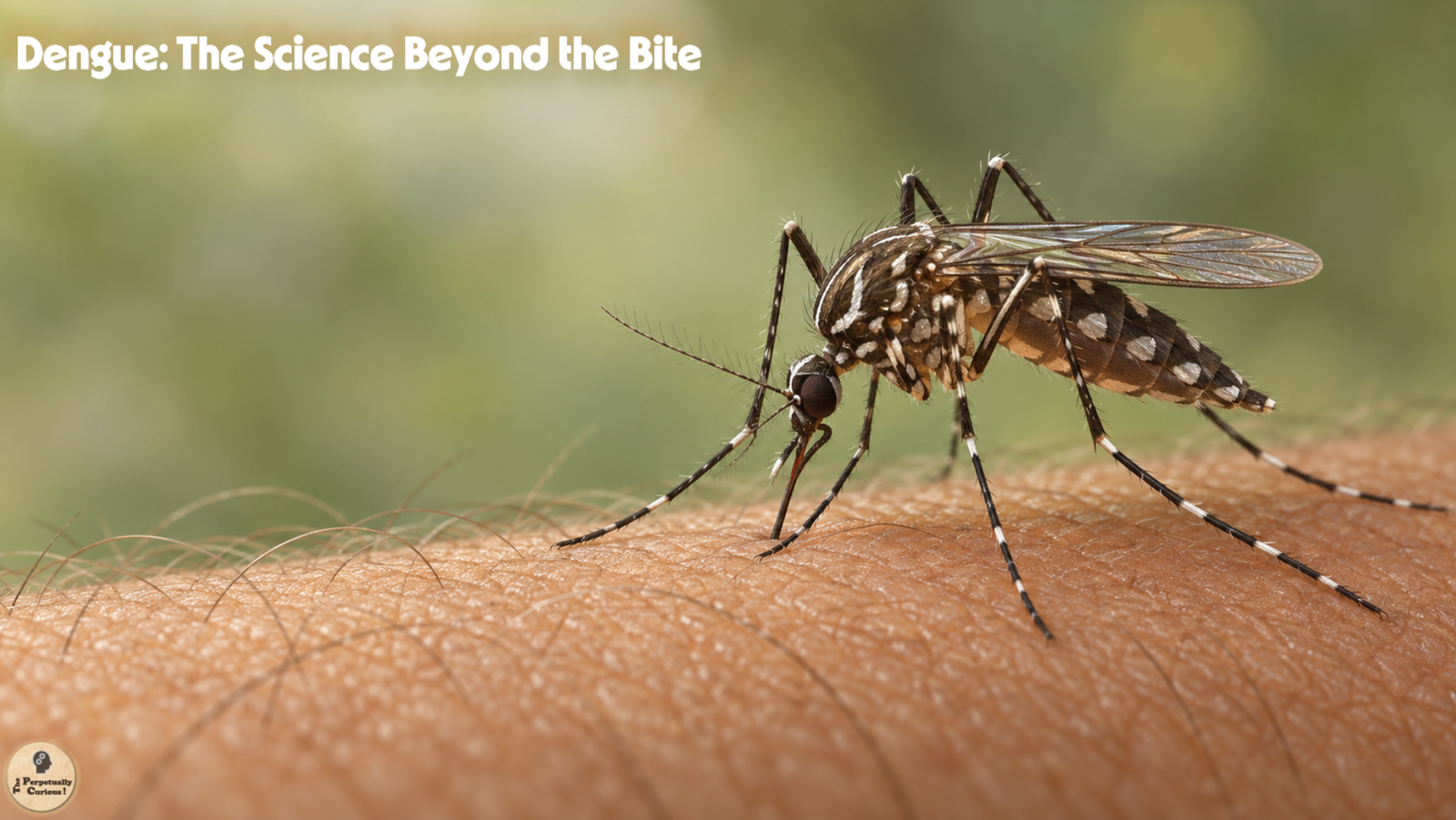
A small encounter can carry a story far beyond its moment, moving through the body in ways that remain unseen.
The quiet work of vessels and signals continues in the background, shaping what rises and what resolves.
In that hidden motion, the threads of the illness gather and disperse, leaving a deeper understanding of how much unfolds beneath the surface.
🔄 The journey passes through a mosquito before it reaches us
The principal carrier is Aedes aegypti, although Aedes albopictus can also transmit dengue. These mosquitoes can breed in water held by everyday containers, including buckets, plant saucers, and discarded tires. Their life cycle helps explain why dengue can circulate close to homes, including in towns and cities, rather than only in distant wetlands.
A mosquito can acquire the virus while feeding on a person whose blood contains it. Inside this living host, the virus multiplies and spreads to tissues that include its salivary glands. Once the mosquito becomes infectious, it can introduce the virus with its saliva during a later bite. Another mosquito may then acquire the virus from the newly infected person, continuing the cycle.
Dengue occurs mainly in tropical and subtropical regions, but local transmission has also occurred in parts of mainland Europe. Temperature, rainfall, mosquito habitat, human movement, and population immunity all influence where transmission becomes possible. The presence of a suitable mosquito alone does not mean that dengue is circulating locally; the virus must also enter and sustain that chain of infection.
That chain explains how dengue arrives. What happens next depends on its encounter with living cells.
🔬 The first changes unfold beneath the skin
Like other viruses, dengue virus must enter susceptible cells to reproduce. Among its targets are certain immune cells, including cells in the skin that normally help detect unfamiliar material and coordinate a response. The virus can use these cells to make new copies, while the body begins recognizing the infection and organizing its defenses.
There are four established dengue virus types, called serotypes: DENV-1, DENV-2, DENV-3, and DENV-4. All can cause dengue. Their differences matter because the immune system does not respond to every serotype as though it were exactly the same virus, a distinction that becomes especially important after an earlier infection.
As infection spreads beyond the skin, virus particles can enter the bloodstream. The presence of virus in the blood is called viremia. Immune responses help control the infection, while some of the signals they produce also contribute to symptoms. Fever and aches therefore reflect events throughout the body, rather than damage at the bite site alone.
🌡️ Fever makes an invisible process felt
When symptoms develop, they usually begin about four to ten days after an infectious bite. Fever may arrive abruptly, accompanied by headache, pain behind the eyes, muscle and joint aches, nausea, or a rash. The pattern varies, and these symptoms can overlap with those of other infections.
The sometimes intense aches explain dengue’s nickname, “breakbone fever,” which describes pain rather than literal fractures.
The fever commonly lasts about two to seven days. Many people then improve, but the temperature alone does not tell the whole story. In some patients, an important change begins around the time the fever settles. Understanding that apparent contradiction requires looking at the smallest blood vessels.
💧 When the fever falls, blood vessels can become more permeable
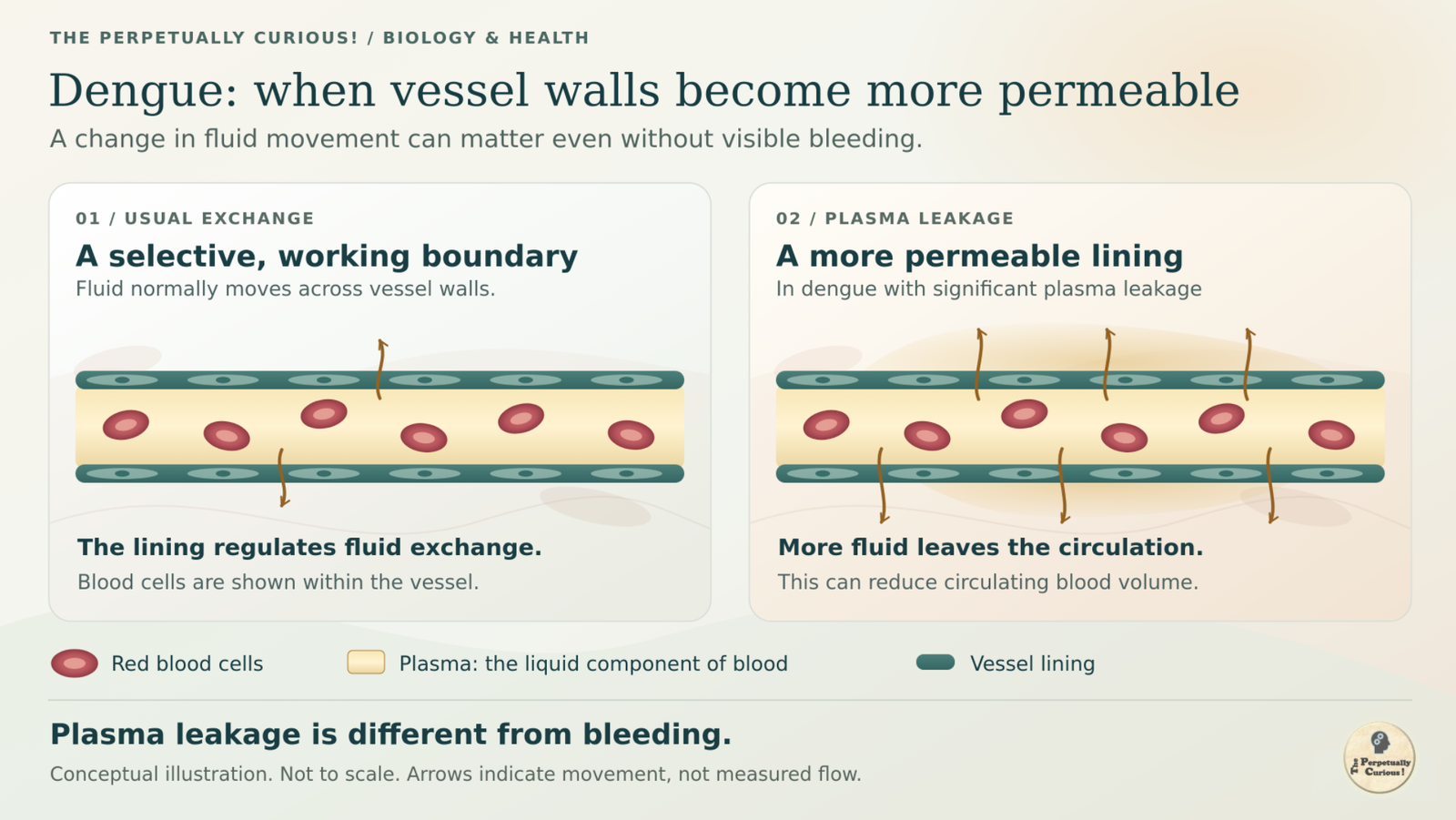
Blood vessels are lined by a thin layer of cells called the endothelium. Together with its surface coating and other structures, this lining helps regulate what passes between the circulation and surrounding tissues.
In dengue with significant plasma leakage, this barrier becomes temporarily more permeable. Plasma, the liquid component of blood, moves out of the circulation into surrounding tissues and body spaces. If enough escapes, the volume circulating through blood vessels falls, and organs may receive too little blood. This can lead to shock. Fluid accumulating around the lungs can also interfere with breathing.
The outward consequences are clearer than the complete chain of events behind them. Several processes appear to contribute: immune signals can alter vessel function, while laboratory studies show that a dengue protein called NS1 can disrupt parts of the vessel lining’s protective surface layer. These findings help explain possible mechanisms, but no single pathway fully accounts for every severe case.
The critical phase typically begins as fever resolves and lasts about 24 to 48 hours. Most patients improve around this period; a minority develop dangerous complications. Severe dengue can involve plasma leakage causing shock or breathing difficulty, severe bleeding, or severe organ impairment. Visible bleeding is not required for the illness to be severe.
Severe abdominal pain, persistent vomiting, bleeding, or unusual drowsiness can signal deterioration. In clinical care, these warning signs prompt urgent assessment. Severe dengue is a medical emergency.
This changing relationship between vessels and circulating fluid also explains why dengue cannot be understood through a single blood-test number.
🩸 Platelets tell part of the story
Platelets are small cell fragments that help limit bleeding. Their numbers often fall during dengue, a condition called thrombocytopenia. Several mechanisms may contribute, including temporarily reduced production in the bone marrow and increased activation, damage, or removal of circulating platelets.
A falling count is clinically important, but it is not a complete measure of severity. Bleeding also depends on platelet function, clotting processes, and the condition of blood vessels.
Clinicians therefore interpret platelet counts alongside symptoms, circulation, organ function, and other laboratory findings. One such measure is hematocrit, the proportion of blood volume occupied by red blood cells. It can rise when plasma leaves the circulation, although bleeding and administered fluids can alter that pattern.
Blood tests describe aspects of the present illness. To understand why a later dengue infection may unfold differently from an earlier one, the story also turns to immune memory.
🛡️ Immune memory can change a later encounter
After a dengue infection, protection against the same serotype is generally long-lasting. Protection against the other serotypes is less durable, so a person can experience dengue more than once.
Antibodies are proteins that recognize and bind to particular targets. Some can neutralize a virus, preventing it from establishing infection in a cell. During some later infections with a different dengue serotype, however, antibodies from an earlier encounter can bind to the new virus without blocking it effectively.
Under certain conditions, antibody-bound virus can enter particular immune cells more readily through receptors that bind antibodies. This process is called antibody-dependent enhancement.
Human studies support a relationship between certain pre-existing antibody levels and an increased risk of severe dengue. However, an earlier infection does not make a later one inevitably severe, and severe dengue can also occur during a first infection. The infecting serotype, other viral characteristics, age, underlying health, and the wider immune response can all influence the outcome.
Immune memory is therefore consequential, but it is not destiny. It helps explain why people exposed to dengue can follow different paths, while leaving clinicians to assess the illness actually unfolding in front of them.
🧪 Diagnosis follows evidence that changes with time
Because dengue resembles other febrile illnesses, diagnosis brings together symptoms, exposure history, and laboratory evidence. During the first week of symptoms, tests may detect viral genetic material or NS1 protein in the blood. Antibody tests examine the body’s response, which develops on an overlapping timetable. Antibodies called IgM often become detectable several days into the illness, so viral and antibody tests can provide complementary evidence.
This timing matters. A negative result from an early viral test does not always exclude dengue, and an antibody result needs interpretation in context. A blood sample captures one moment in a moving biological story.
The same attention to timing extends beyond diagnosis, because the body’s fluid needs can change as the illness progresses.
🩺 Recovery brings fluid balance back into focus
Care follows this changing biology. There is no specific antiviral treatment routinely available for dengue. Medical management supports the body through the illness, with attention to fluid balance, circulation, and complications. In severe disease, carefully monitored fluid treatment can be lifesaving, but fluid overload can develop, particularly as leaked fluid returns to the circulation.
In patients who have experienced plasma leakage, recovery brings a return toward normal vessel permeability and reabsorption of leaked fluid. Circulation stabilizes, and blood counts generally recover. Fatigue can persist for several weeks, so feeling fully well may take longer than the fever itself.
🧵 Beyond the fever, the hidden threads come together
The mosquito has long since disappeared, but understanding what follows changes how that brief encounter is seen. Fever, blood counts, and fatigue become clues to a process that moves through different stages, each with its own meaning.
Dengue reveals how much depends on the quiet work of boundaries, signals, and memory. Science makes those hidden relationships clearer, even where individual outcomes remain uncertain. The story begins at the skin, but its meaning lies in the connections beneath it.
Pass this article along to someone curious and let the learning travel.
💡 Did you know?
🥚 A dry container can still hold the beginning of another mosquito generation. Aedes mosquitoes lay eggs on surfaces near the waterline. These eggs can withstand drying for months, then hatch when water covers them. An apparently dry interval can therefore separate egg-laying from the emergence of aquatic larvae.
🔎 An infection can contribute to transmission without announcing itself. A person with dengue virus in the blood can infect a feeding mosquito even before symptoms appear, or without developing noticeable symptoms. The transmission cycle can therefore include infections that never become recognizable cases of dengue fever.
🧱 Blood-vessel barriers differ across the body. In the brain, tightly joined endothelial cells and controlled transport help form the blood-brain barrier, a particularly selective interface. This specialization adds another dimension to the vessel-wall story: passage depends on the tissue being served as well as the condition of the vessel.
Can dengue spread through ordinary contact with another person?
Dengue is not spread through ordinary social contact such as touching or sharing a meal. It does not spread through the air as measles does. Mosquitoes are the main route. Less common routes include transmission during pregnancy or around birth, and rare transmission through infected blood products or organ transplantation.
Is dengue a waterborne disease?
Dengue is not acquired by drinking water. Water matters because it provides places where mosquito larvae develop. The distinction is between a habitat that supports the carrier and the route by which the virus reaches a person.
Is plasma leakage the same as bleeding?
No. In plasma leakage, fluid and dissolved substances leave the circulation through more permeable vessel walls. Bleeding involves the escape of blood, including red blood cells. The distinction reflects the different components of blood and explains why significant leakage can occur without visible bleeding.
Is dengue the same as malaria?
No. Dengue is caused by viruses and is transmitted mainly by Aedes mosquitoes. Malaria is caused by Plasmodium parasites and is transmitted by infected female Anopheles mosquitoes. Both can cause fever, but their biology, diagnostic tests, and treatments differ.
Do the mosquitoes that transmit dengue bite only during daylight?
They are especially associated with daytime biting, but Aedes mosquitoes can also bite at night. Their activity is not confined to a strict daylight-only window.
Why can an antibody test be difficult to interpret?
Some antibodies reacting in dengue tests can also recognize related viruses, such as Zika. Antibodies called IgG may reflect an earlier infection and can already be present when another infection begins. A positive IgG result from a single sample therefore does not by itself establish that dengue is causing the current symptoms.
Are there vaccines against dengue?
Yes. Dengue vaccines have been authorized in some countries. Tetravalent formulations are designed to build protection against all four serotypes, although protection can vary by serotype and a person’s previous dengue exposure. That variation helps explain why use depends on the particular vaccine, age group, local approvals, and transmission setting. Vaccination can reduce future illness; it does not treat an infection already underway.
🌱 Let understanding travel a little farther
We kindly invite you to share this piece with your friends and colleagues and help us reach a wider audience. Your support in spreading the word is greatly appreciated. A question shared can open a conversation, and a clearer understanding can travel far beyond the page.
📚 Educational context
This article explores how dengue fever affects the body for educational purposes. It does not provide medical advice or personalized guidance about illness, diagnosis, prevention, or treatment. The biological processes described here explain how dengue infection unfolds in general terms and cannot be used to assess an individual’s health or predict the course of any illness. Questions about symptoms, medical conditions, or health decisions should be discussed with a qualified healthcare professional.
“Beyond the Bite: How Dengue Fever Affects the Body.” The Perpetually Curious!, September 2026.
https://www.theperpetuallycurious.org/articles/dengue-fever-body/Continue Exploring
For the curious mind: want to explore this theme through a few questions? Visit the Classic Quiz Studio, nestled under Explorations opens in a new tab ,and see where a few well-placed questions lead: Biology & Health Quizzesopens in a new tab
For what comes next
Site Updates gathers occasional notes, new additions, and ways to keep in touch. RSS brings new publications to your feed reader in chronological order.
Choose the path that speaks to you, and let the next curiosity find you wherever your wondering takes you.