Explore by topic, question, or idea. Find articles, reflections, videos, puzzles, and curiosity pathways gathered across the site.
Press Enter or select Search. A newly typed query starts globally; filters are applied only through the visible rail.
17 results for “animals meet the molecules around them”
- The Perpetually Curious! › Canonical › Botanical WondersArticle
🌱 Why Fruits Have Seeds: The Many Ways Plants Begin Again
A seed waits in its small chamber, carrying the quiet hope of another beginning.The fruit around it holds the memory of sunlight and rain, offering its sweetness to the world.In every journey from branch to ground, life moves forward in gentle, patient ways.
- The Perpetually Curious! › Canonical › Botanical WondersArticle
🍃 Bael Tree: Ecology, Sacred Groves, and Cultural History
In the stillness of their branches, the long memory of seasons gathers, held in leaf, flower, and fruit as a quiet record of the landscapes that shaped them.
- The Perpetually Curious! › Canonical › Botanical WondersArticle
🍊 The Citrus Family Tree: Tracing the Roots of Oranges, Lemons, Limes, and Grapefruit
In every bright peel lies a memory of ancient groves, carried forward through crossings of sweetness, fragrance, and form. Each fruit we meet today is a quiet echo of those first wild branches, still unfolding their lineage one season at a time.
- The Perpetually Curious! › Canonical › Botanical WondersArticle
🌱 Why Leaves Have Different Shapes: The Science Behind Nature’s Geometry
A leaf carries the memory of light, water, and wind in the quiet geometry of its form. Each outline is a small record of how life learns to meet the world with grace.
- The Perpetually Curious! › Canonical › Botanical WondersArticle
🌿 When One Tree Remembered a Greener Sahara: The Quiet Story of the Tree of Ténéré
From section: 🌡️ A landscape shaped by ancient climatesThe Tree of Ténéré was likely a remnant of that earlier environmental story. It did not stand in the desert because it had escaped ecology, but because ecology had changed around it. …
- The Perpetually Curious! › Canonical › Botanical WondersArticle
🌿 Trees That Drink the Sky: How Certain Species Shape Water and Land in South India
From section: 🌏 A landscape written in waterSome plants have shallow roots that rely on the upper layers of soil. Others develop deeper taproots that can extend to around 30 feet or more (about 9 meters) in many field settings, with exceptional depths reported under favorable geological conditions. …
- The Perpetually Curious! › Canonical › Botanical WondersArticle
🌲 When Trees Carry Time: Oldest Tree Species, Ancient Forests, and Sacred Trees
From section: 💡 Did You Know🌿 Some trees become ancient because people protect them. Sacred groves, temple trees, pilgrimage sites, and community taboos can allow particular trees or tree lineages to survive in landscapes that might otherwise change around them.
- The Perpetually Curious! › Canonical › Botanical WondersArticle
🍃 Pirandai (Cissus quadrangularis): Tradition, Botany, and Quiet Scientific Curiosity
… Its story moves through courtyards, kitchens, landscapes, and laboratories, where cultural memory, ecological adaptation, and scientific inquiry meet around a plant whose quiet geometry invites deeper attention.
- The Perpetually Curious! › Archives › Botanical WondersArticle
💧 Seasonal Ponds and Root Depth in South India
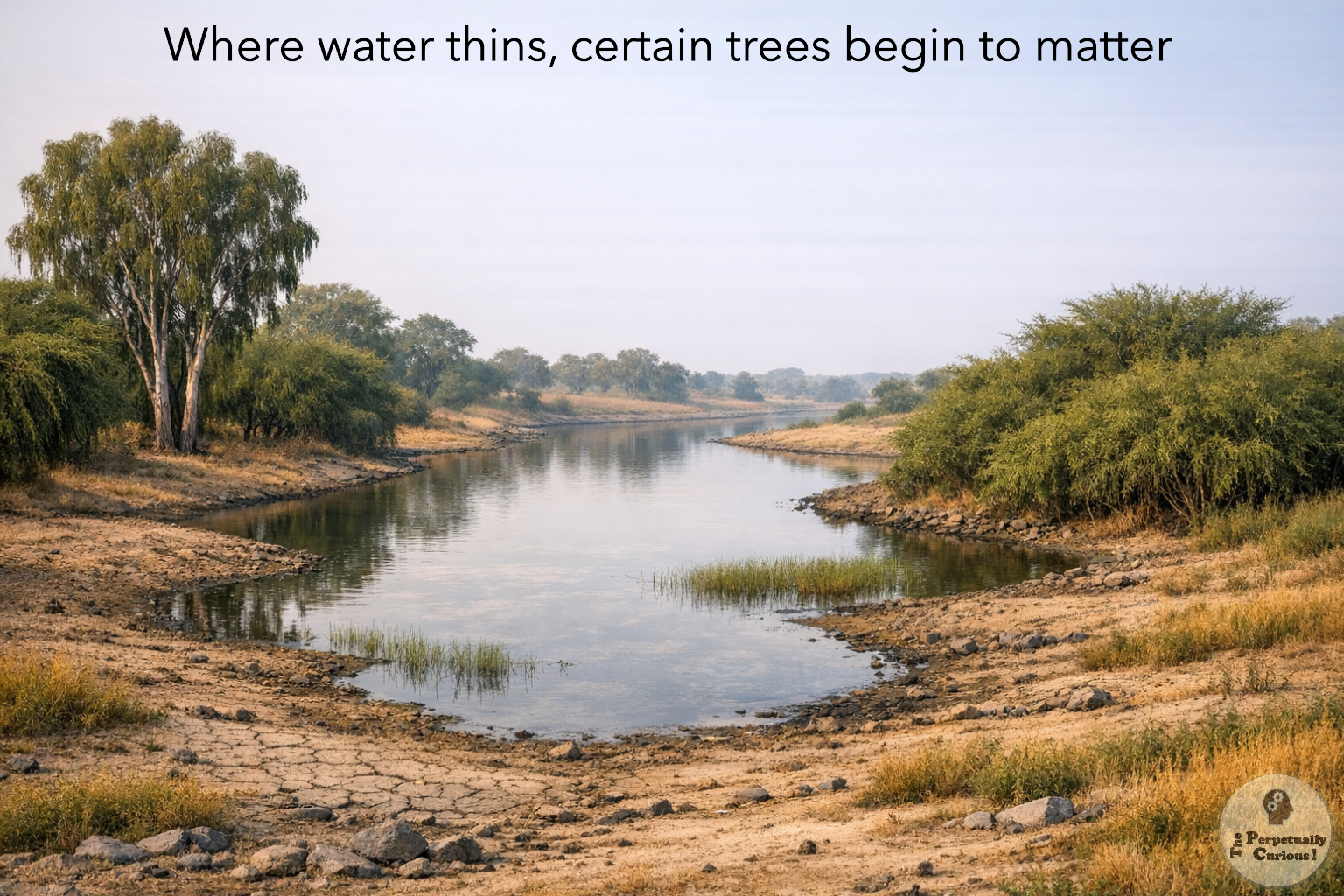
Seasonal ponds often look still from a distance, yet their edges can hold some of the most active negotiations in a dry landscape. In parts of South India, stored rainwater, shallow aquifers, dry soil, and plant roots meet in a narrow zone where each season leaves its mark.
- The Perpetually Curious! › Archives › Botanical WondersArticle
When Plants Became Predators: The Evolutionary Marvel of Carnivorous Flora 🌿
Picture the Venus flytrap's jaw-like leaves snapping shut, the sundew's glistening tentacles slowly curling around trapped prey, or the pitcher plant's elegant vase concealing a pool of digestive enzymes.