Explore by topic, question, or idea. Find articles, reflections, videos, puzzles, and curiosity pathways gathered across the site.
Press Enter or select Search. A newly typed query starts globally; filters are applied only through the visible rail.
14 results for “henna stain”
- The Perpetually Curious! › Canonical › History, Arts, and CultureArticle
🌿 When Color Touches Skin: The Story of Henna on the Fingertips
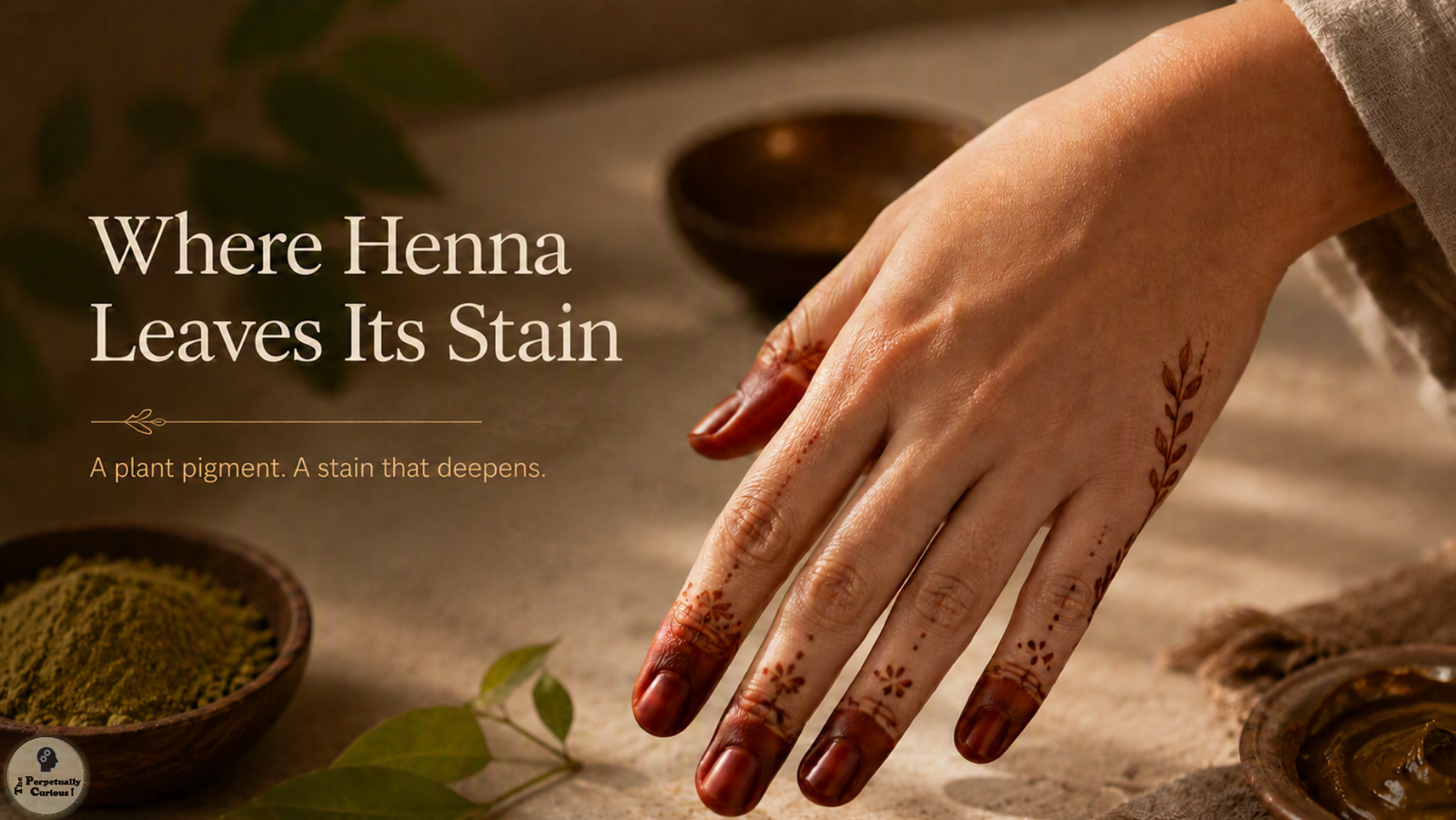
From section: Did You Know🟠 A natural henna stain does not begin dark brown. It usually appears orange when the paste is removed, then deepens toward reddish-brown or mahogany during the following 24 to 48 hours.
- The Perpetually Curious! › Archives › History, Arts, and CultureArticle
🌿 Why Henna Stains Fingertips More Deeply Than Other Skin
When dried henna paste is removed, the color beneath it can look almost modest: a clear orange tracing the fingertips and palm. By the following day, the same marks may have deepened toward reddish-brown.
- The Perpetually Curious! › Canonical › Biology & HealthArticle
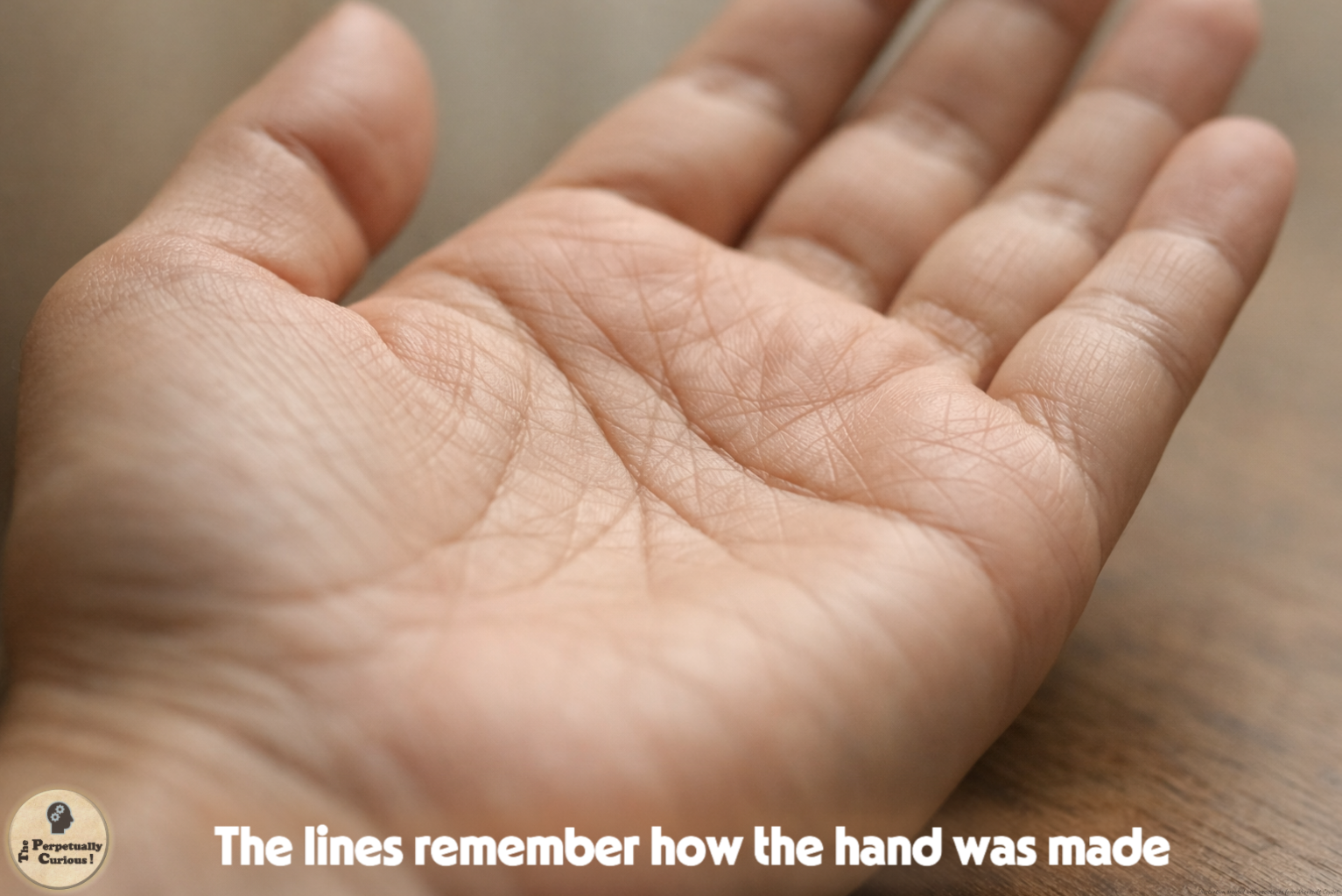
🌫️ The Quiet Maps in Our Hands: Why Palm Lines Form and What They Reveal About Development, Movement, and Meaning
From section: 🖐 How palm lines support movement and grip… Creases solve this problem by creating predictable folding points. Those same folds and ridges also shape how henna patterns appear across the hand, while darker henna stains on the palms and fingertips reflect the greater mass of keratinized tissue in their thicker outer layer.
- The Perpetually Curious! › Canonical › Biology & HealthArticle
🟤 Small Islands in the Skin: Why Moles Form and Why Most Stop Growing
From section: 💡 Did You Know🎨 Not every patch of color on the skin is produced in the same way. A mole contains a localized proliferation of melanocytic cells, while henna stains skin when lawsone from the plant interacts with keratin in the outer layers of the skin. …
- The Perpetually Curious! › CanonicalGateway
❉ Drawn at the Threshold: Why Kolam Returns Each Morning
A similar distinction appears in henna stains that fade while the practice continues. The lifespan of a material mark need not match the lifespan of a cultural tradition. The individual design may vanish, but the knowledge remains in hands, memories, and shared routines.
- The Perpetually Curious! › Canonical › Biology & HealthArticle
🌙 Little Moons at the Base of Our Nails: The Quiet Science of the Lunula
From section: 🌱 The foundation beneath the crescent: How the nail growsThe visible hard portion is the nail plate, a smooth sheet of keratin that protects the fingertip. Because this plate is rich in keratin, henna can stain fingernails, and the stained portion can remain visible as the nail grows outward. …
- The Perpetually Curious! › Archives › Biology & HealthArticle
✋ Palm Lines Explained: The Quiet Folds That Help the Hand Move
The lines in the palm are easy to overlook because they feel so ordinary. They cross the hand quietly, deepening when the fingers curl and softening when the palm opens. Yet those familiar folds are not random marks added by years of use. They begin much earlier, when the hand…
- The Perpetually Curious! › Canonical › Planet EarthArticle
🌍 Why Mud Is Brown or Black: Where Earth Turns to Quiet Ink
From section: 💡 Did You Know🟤 In some wetlands, dissolved organic compounds called humic substances can stain mud dark brown or nearly black, even when iron levels are low. These natural pigments come from the slow breakdown of plant material.
- The Perpetually Curious! › Archives › Planet EarthArticle
❄️ Antarctica: Southernmost Continent’s Frozen Symphony of Silence and Light
From section: ❓ FAQ… The crimson color comes from iron-rich brine that has been isolated for millennia to millions of years beneath Taylor Glacier. When this ancient water reaches the surface, the iron oxidizes (rusts) upon contact with oxygen, creating the blood-red stain. …
- The Perpetually Curious! › Canonical › Biology & HealthArticle
🧠 The Brain’s Guarded Border: How the Blood-Brain Barrier Protects Us and Complicates Treatment
Every heartbeat sends blood through a vast branching network, carrying oxygen, nutrients, hormones, medicines, and the chemical traces of life throughout the body. Yet when that circulation reaches the brain’s smallest vessels, the rules of passage change.