Explore by topic, question, or idea. Find articles, reflections, videos, puzzles, and curiosity pathways gathered across the site.
Press Enter or select Search. A newly typed query starts globally; filters are applied only through the visible rail.
203 results for “the quiet science of cooking oils”
- The Perpetually Curious! › Canonical › Engineering & TechnologyArticle
🏭 Petroleum Refining: The Process Behind Heat, Pressure, and Design
There is a quiet elegance in the way crude oil begins its transformation. It arrives as a dark, ancient liquid shaped by geological time, yet it enters the refinery as a material waiting to be understood.
- The Perpetually Curious! › Archives › Cosmic ExplorationArticle
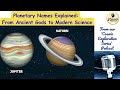
🌌 Planetary Names Explained: From Ancient Gods to Modern Science
💡 Have you ever wondered why the planets in our solar system bear such distinctive names? From swift Mercury to majestic Jupiter, these names reflect ancient traditions that connect cultural understanding with the science of the skies. Read more »
- The Perpetually Curious! › Canonical › Engineering & TechnologyArticle
🚆 Quiet Power on the Rails: Understanding Hydrogen Trains and Their Emerging Role
A train moves through the landscape with a calm purpose, carrying its quiet fire toward the horizon.In the stillness between stations, its light breath of water and warmth settles into the air.The rails continue forward, steady and patient, as new forms of motion find their place in the world.
- The Perpetually Curious! › Canonical › Environment & SustainabilityArticle
🌿 Liquid Trees: Microalgae Photobioreactors and the Quiet Art of Urban Breathing
A quiet green patience rises inside the glass as the city moves around it.Light settles into the water and becomes a small gesture of renewal.In this stillness the algae keep their gentle rhythm and offer the air a moment of calm.
- The Perpetually Curious! › Canonical › Botanical WondersArticle
🌿 When One Tree Remembered a Greener Sahara: The Quiet Story of the Tree of Ténéré
In the stillness of the Ténéré, one tree once held its place against time, carrying the memory of older rains in its quiet reach toward hidden water. Its branches are gone, yet the presence remains, a gentle reminder that endurance can leave a trace even when the landscape forgets. …
- The Perpetually Curious! › Canonical › Botanical WondersArticle
🌱 Why Leaves Have Different Shapes: The Science Behind Nature’s Geometry
A leaf carries the memory of light, water, and wind in the quiet geometry of its form. Each outline is a small record of how life learns to meet the world with grace.
- The Perpetually Curious! › Canonical › Cosmic ExplorationArticle
🌌 Why Space Looks Dark in a Universe Filled with Light: Understanding the Quiet Cosmos
Light moves through the quiet of space and waits for a surface to answer it. The rest remains open and unlit, a depth that holds its silence.
- The Perpetually Curious! › Archives › Food & LifestyleArticle
🍯 Liquid Gold: The Timeless Science and Wonder of Honey
🌻 Opening: The Ancient Sweetness In 1922, when archaeologists cracked open King Tutankhamun's tomb, they discovered ceramic jars containing honey among the treasures, still recognizable after three millennia though darkened with age. This wasn't merely preservation; it was alchemy.
- The Perpetually Curious! › Archives › Planet EarthArticle
When Nature's Fury Spirals: Understanding the Science Behind Nor'easters 🌊
Few weather phenomena capture the raw power of nature quite like a nor'easter bearing down on the Eastern Seaboard. These massive storm systems, born from the collision of opposing air masses over the Atlantic, represent some of the most complex and fascinating atmospheric dynamics on Earth.
- The Perpetually Curious! › Archives › Biology & HealthArticle
When Dreams Feel More Real Than Morning: The Science and Mystery of Our Sleeping Mind 🌙
You wake with your heart racing, certain you just spoke with your grandmother who passed away years ago. She stood in your childhood kitchen, wearing that familiar blue apron, but when she opened her mouth to speak, no words came.