Explore by topic, question, or idea. Find articles, reflections, videos, puzzles, and curiosity pathways gathered across the site.
Press Enter or select Search. A newly typed query starts globally; filters are applied only through the visible rail.
23 results for “the quiet science of cooking oils”
- The Perpetually Curious! › Canonical › Cosmic ExplorationArticle
✨ Constellations: Quiet Patterns, Shared Skies, and the Stories We Trace Together
From section: 🌱 A gentle closing reflectionIf this exploration of constellations has offered a moment of calm curiosity, you are welcome to pass it along to others who enjoy thoughtful science writing. Each shared reading may become a small moment of reflection under the same sky, whether in a city courtyard or a quiet rural field. …
- The Perpetually Curious! › Canonical › Cosmic ExplorationArticle
🌌 Why Space Feels Cold Among So Many Suns: The Quiet Physics of Cosmic Warmth
Space appears to hold a quiet paradox. Countless stars blaze at temperatures far beyond ordinary experience, yet the immense regions between them are often described as profoundly cold. The contrast becomes clearer once temperature is separated from the everyday sensation of cold air.
- The Perpetually Curious! › Archives › Cosmic ExplorationArticle
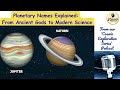
🌌 Planetary Names Explained: From Ancient Gods to Modern Science
💡 Have you ever wondered why the planets in our solar system bear such distinctive names? From swift Mercury to majestic Jupiter, these names reflect ancient traditions that connect cultural understanding with the science of the skies. Read more »
- The Perpetually Curious! › Canonical › Cosmic ExplorationArticle
🌌 Why Space Looks Dark in a Universe Filled with Light: Understanding the Quiet Cosmos
Light moves through the quiet of space and waits for a surface to answer it. The rest remains open and unlit, a depth that holds its silence.
- The Perpetually Curious! › Canonical › Cosmic ExplorationArticle
🌌 The Hunt for the Invisible: Understanding Dark Matter Through Science’s Greatest Detective Story
In the quiet architecture of the cosmos, unseen matter shapes the paths of galaxies and the stories they tell.Its presence is felt in every curve of starlight, a patient influence woven through the structure of space.We stand within this vast design, aware of only a fraction of what holds the universe together.
- The Perpetually Curious! › Canonical › Cosmic ExplorationArticle
🌙 Quiet Worlds, Vast Stories: Some Lesser-Known Moons of Our Solar System
This article begins with that sense of quiet wonder. Rather than listing facts in isolation, we will move through these worlds as if walking through a gallery of celestial objects. Each moon offers a different texture, a different history, and a different clue about how planetary systems evolve.
- The Perpetually Curious! › Videos & Podcasts › Cosmic ExplorationPodcast
🌌 Planetary Names Explained: From Ancient Gods to Modern Science | Cosmic Exploration Series Podcast
From section: Video context#PlanetNames #SolarSystem #Astronomy 🪐 Why are the planets named Mercury, Venus, Earth, Mars, Jupiter, Saturn, Uranus, and Neptune? This astronomy podcast explores the origins and meanings of the planet names in our solar system, revealing how ancient observation, mythology, language, culture, and modern science…
- The Perpetually Curious! › Canonical › Cosmic ExplorationArticle
🛰️ When Fire Meets Air: How Spacecraft Reenter Earth’s Atmosphere
High above Earth’s landscapes, spacecraft trace arcs through a realm where air gradually thins toward the quiet of orbit. Launch carries them outward through Earth’s layered atmosphere, but return brings the same atmospheric envelope into a very different role.
- The Perpetually Curious! › Canonical › Cosmic ExplorationArticle
🌍 When Earth First Took Shape: A Planet Born from Cosmic Dust
From section: 🌌 Looking back at a quiet beginning: A reflective closing… The planet beneath our feet is the product of ancient processes that unfolded long before any observer existed to record them. Through science, we can reconstruct this story and appreciate the quiet grandeur of a world that once was only dust.
- The Perpetually Curious! › Canonical › Cosmic ExplorationArticle
🌌 The Universe’s Ancient Whisper: Decoding the Cosmic Microwave Background
A gentle shimmer still moves across the sky, carrying the memory of a young universe finding its first calm.The same ancient light drifts through every quiet night, patient and unchanged.In its faint warmth, the earliest story continues to pass over us, steady and unhurried.