Explore by topic, question, or idea. Find articles, reflections, videos, puzzles, and curiosity pathways gathered across the site.
Press Enter or select Search. A newly typed query starts globally; filters are applied only through the visible rail.
22 results for “the science behind nature geometry”
- The Perpetually Curious! › Videos & Podcasts › Cosmic ExplorationPodcast
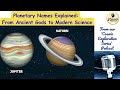
🌌 Planetary Names Explained: From Ancient Gods to Modern Science | Cosmic Exploration Series Podcast
From section: Video context#PlanetNames #SolarSystem #Astronomy 🪐 Why are the planets named Mercury, Venus, Earth, Mars, Jupiter, Saturn, Uranus, and Neptune? This astronomy podcast explores the origins and meanings of the planet names in our solar system, revealing how ancient observation, mythology, language, culture, and modern science…
- The Perpetually Curious! › Archives › Cosmic ExplorationArticle
🌌 Planetary Names Explained: From Ancient Gods to Modern Science
💡 Have you ever wondered why the planets in our solar system bear such distinctive names? From swift Mercury to majestic Jupiter, these names reflect ancient traditions that connect cultural understanding with the science of the skies. Read more »
- The Perpetually Curious! › Canonical › Cosmic ExplorationArticle
🌑 Shadows Across the Solar System: How Eclipses Unfold Beyond Earth
From section: 🔭 The geometry that shapes every eclipseThe Sun’s influence on eclipse geometry becomes clearer when considering its solar mass, which governs the structure of planetary orbits. Its radiance during an eclipse is shaped by its solar luminosity, which determines how strongly its light reaches distant worlds.
- The Perpetually Curious! › Canonical › Cosmic ExplorationArticle
✨ Constellations: Quiet Patterns, Shared Skies, and the Stories We Trace Together
From section: 🌌 What a constellation really isThis distinction reveals something important. Constellations are patterns of perception rather than structures of nature. They help astronomers describe where an object is located on the celestial sphere, much like neighborhoods on a map. Once this idea becomes clear, the rest of the story unfolds more naturally.
- The Perpetually Curious! › Canonical › Cosmic ExplorationArticle
The Cosmic Recipe: Understanding the Physical Criteria for Star Formation 🌟
In the vast expanse of our universe, where darkness stretches for light-years and cold reigns supreme, something extraordinary happens. Stars are born. This process, far from being a simple ignition, represents one of nature's most complex and beautiful phenomena.
- The Perpetually Curious! › Canonical › Cosmic ExplorationArticle
🌌 The Hunt for the Invisible: Understanding Dark Matter Through Science’s Greatest Detective Story
The universe is keeping a secret from us. About 85 percent of all matter by mass appears to be dark matter, a component that does not emit, absorb, or reflect enough electromagnetic radiation for us to detect it directly.
- The Perpetually Curious! › Canonical › Cosmic ExplorationArticle
🌌 Borrowing the Orbits of Giants: How Gravity Assists Carry Spacecraft into the Deep
From section: 🪐 The Core Idea of a Gravity AssistThe key is that the planet itself is moving. When a spacecraft approaches from behind a planet along its orbital path, the planet’s gravity pulls the spacecraft into a curved path and effectively drags it forward. The spacecraft leaves the encounter moving faster relative to the Sun than when it arrived. …
- The Perpetually Curious! › Canonical › Cosmic ExplorationArticle
🌌 The Universe’s Ancient Whisper: Decoding the Cosmic Microwave Background
From section: 🔬 Physics written in ancient light… When scientists arrange the temperature variations by angular scale, they obtain a power spectrum with a sequence of peaks and valleys. The positions and relative heights of those peaks constrain the geometry of space, the amount of ordinary matter, the amount of dark matter, and other cosmological parameters.
- The Perpetually Curious! › Canonical › Cosmic ExplorationArticle
🌌 Why Space Feels Cold Among So Many Suns: The Quiet Physics of Cosmic Warmth
From section: ☀️ Radiation, absorption, and why darkness does not mean coldA dark sky is therefore an optical condition, not a temperature reading. A surface in direct sunlight can reach a high temperature while the sky behind it remains visually dark. …
- The Perpetually Curious! › Archives › Cosmic ExplorationArticle
The Moon's Ancient Dance: Understanding Lunar Phases Through Science and Story 🌙
Every approximately 29.5 days, Earth’s sole natural satellite completes a shape-shifting performance that has captivated humanity since our species first gazed skyward.