Explore by topic, question, or idea. Find articles, reflections, videos, puzzles, and curiosity pathways gathered across the site.
Press Enter or select Search. A newly typed query starts globally; filters are applied only through the visible rail.
21 results for “seasonal ponds and root depth in south india”
- The Perpetually Curious! › Archives › Botanical WondersArticle
💧 Seasonal Ponds and Root Depth in South India
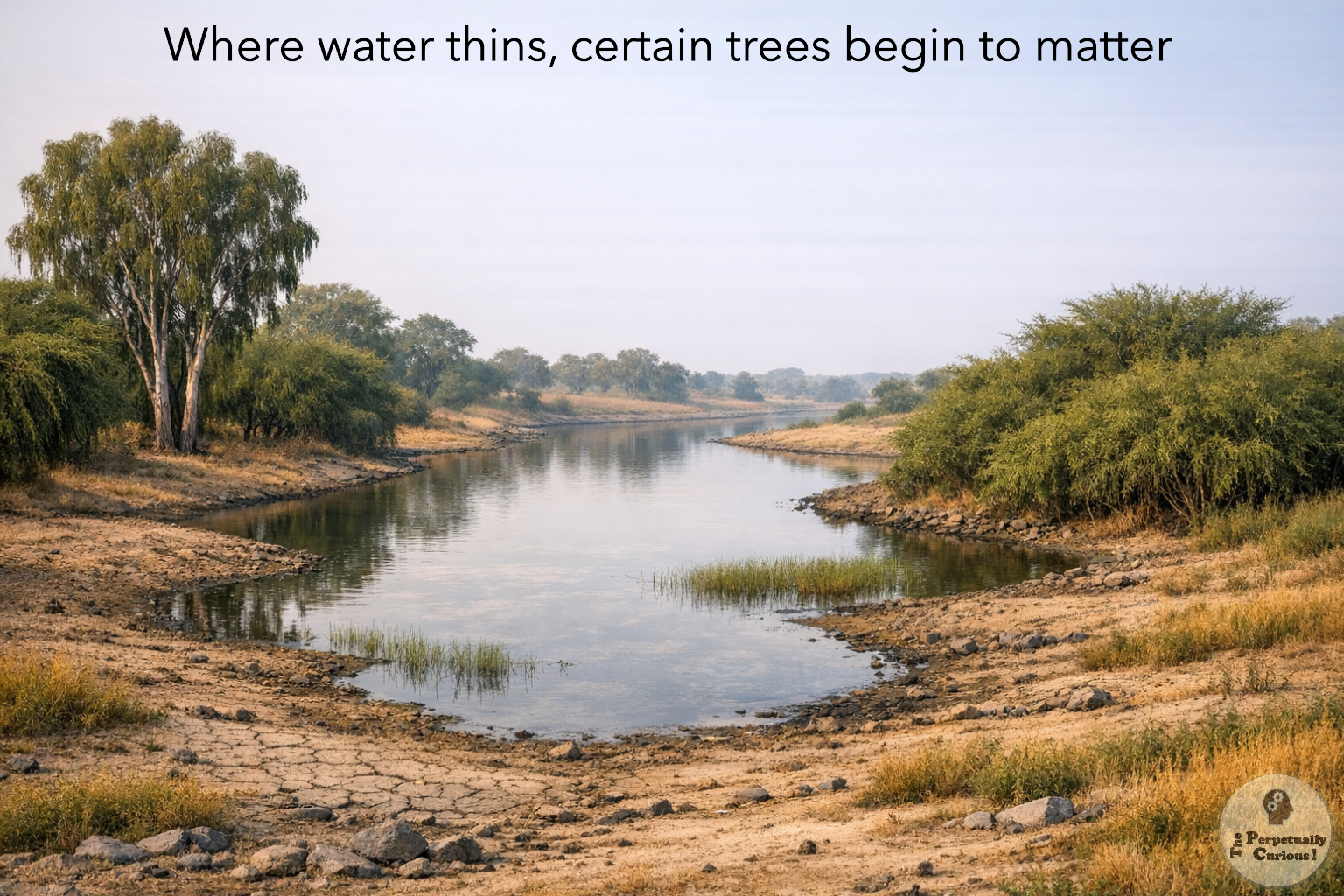
Seasonal ponds often look still from a distance, yet their edges can hold some of the most active negotiations in a dry landscape. In parts of South India, stored rainwater, shallow aquifers, dry soil, and plant roots meet in a narrow zone where each season leaves its mark.
- The Perpetually Curious! › Canonical › Botanical WondersArticle
🌿 Trees That Drink the Sky: How Certain Species Shape Water and Land in South India
The story of certain trees in South India is, at its core, a story about water. In dry and semi‑dry landscapes, water is not merely a resource. …
- The Perpetually Curious! › Canonical › Botanical WondersArticle
🍊 The Citrus Family Tree: Tracing the Roots of Oranges, Lemons, Limes, and Grapefruit
From section: 🍊 The mandarin line: mandarins, tangerines, clementines, and kamalaKamala orange, a regional name used in South India, usually refers to a mandarin type rather than a true sweet orange. These fruits are typically small, sweet, and easy to peel. …
- The Perpetually Curious! › Canonical › Botanical WondersArticle
🍃 Pirandai (Cissus quadrangularis): Tradition, Botany, and Quiet Scientific Curiosity
From section: Frequently Asked Questions+Is Pirandai used outside India? Pirandai is described in several traditional medical systems across South Asia and parts of Africa. It appears in ethnobotanical records from regions with warm, dry climates where succulent vines are common.
- The Perpetually Curious! › Canonical › Botanical WondersArticle
🌱 Why Leaves Have Different Shapes: The Science Behind Nature’s Geometry
From section: 🌤️ Climate, biomes, and the global sculpting of leaf formDeserts present a different challenge. In arid regions, including the Thar Desert in India, the Sahara in Africa, and deserts in North and South America, many plants reduce their leaves or transform them into spines. …
- The Perpetually Curious! › Canonical › Botanical WondersArticle
🍃 Bael Tree: Ecology, Sacred Groves, and Cultural History
From section: 🕉️ Sacred leaves and living traditionsBeyond its central role in Shaivite Hindu practice, bael also appears in broader South Asian spiritual and ceremonial contexts, and in local seasonal celebrations tied to the rhythms of the year. …
- The Perpetually Curious! › Archives › Botanical WondersArticle
🌱 Grafting: Where Science and Art Take Root
🌿 What is grafting? Grafting is the practice of joining two plants so they grow as one. The upper part, the scion, carries buds or shoots, and the lower part, the rootstock, provides the foundation and root system. When their tissues align and heal, the two plants merge into a single organism.
- The Perpetually Curious! › Canonical › Botanical WondersArticle
🌿 When One Tree Remembered a Greener Sahara: The Quiet Story of the Tree of Ténéré
From section: Did You Know🧭 Nomadic navigation relies on memory Tuareg travelers and caravan leaders often used landmarks, seasonal knowledge, route memory, and oral tradition to move through vast desert spaces. The Tree of Ténéré became part of that remembered geography.
- The Perpetually Curious! › Canonical › Botanical WondersArticle
🌲 When Trees Carry Time: Oldest Tree Species, Ancient Forests, and Sacred Trees
From section: 💡 Did You Know🌾 Fossilized root systems can reveal how ancient trees anchored themselves in early soils. Some Devonian forests had broad, shallow rooting patterns, reminding us that early forest floors were still developing into the deeper soils familiar today.
- The Perpetually Curious! › Canonical › Botanical WondersArticle
🍁 When Leaves Let Go: Why Autumn Colors Turn Red, Gold, and Brown
From section: 🍃 The green that begins to fadeDay length helps many trees keep seasonal time, while temperature, water availability, and species traits influence when the change begins and how it unfolds. Autumn color is one visible expression of plant timekeeping. As chlorophyll breaks down, its retreat makes another part of the leaf's palette easier to see.