Explore by topic, question, or idea. Find articles, reflections, videos, puzzles, and curiosity pathways gathered across the site.
Press Enter or select Search. A newly typed query starts globally; filters are applied only through the visible rail.
28 results for “small islands in the skin why moles form and why most stop growing”
- The Perpetually Curious! › Canonical › Biology & HealthArticle
🌫️ When the World Blurs for a Moment: Why We Sneeze
This journey begins in the nose, travels through the brainstem, and unfolds through a coordinated burst of muscular force. Along the way, it reveals how the body balances openness to the environment with the need to guard its most delicate passages. …
- The Perpetually Curious! › Canonical › Biology & HealthArticle
🧠 Where Awareness Takes Shape: Synapses, Brain Networks, and Consciousness
The question invites us down to the synapse, the place where one nerve cell influences another, and outward to the networks those cells form. Neuroscience can trace much of this activity. …
- The Perpetually Curious! › Canonical › Biology & HealthArticle
💧 Why We Cry: The Quiet Science of Tears, Sadness, and Grief
There is a moment, just before tears appear, when the world seems to hold its breath. The chest tightens, the throat gathers a quiet ache, and the eyes begin to shimmer as if carrying a small, unspoken truth.
- The Perpetually Curious! › Archives › Biology & HealthArticle
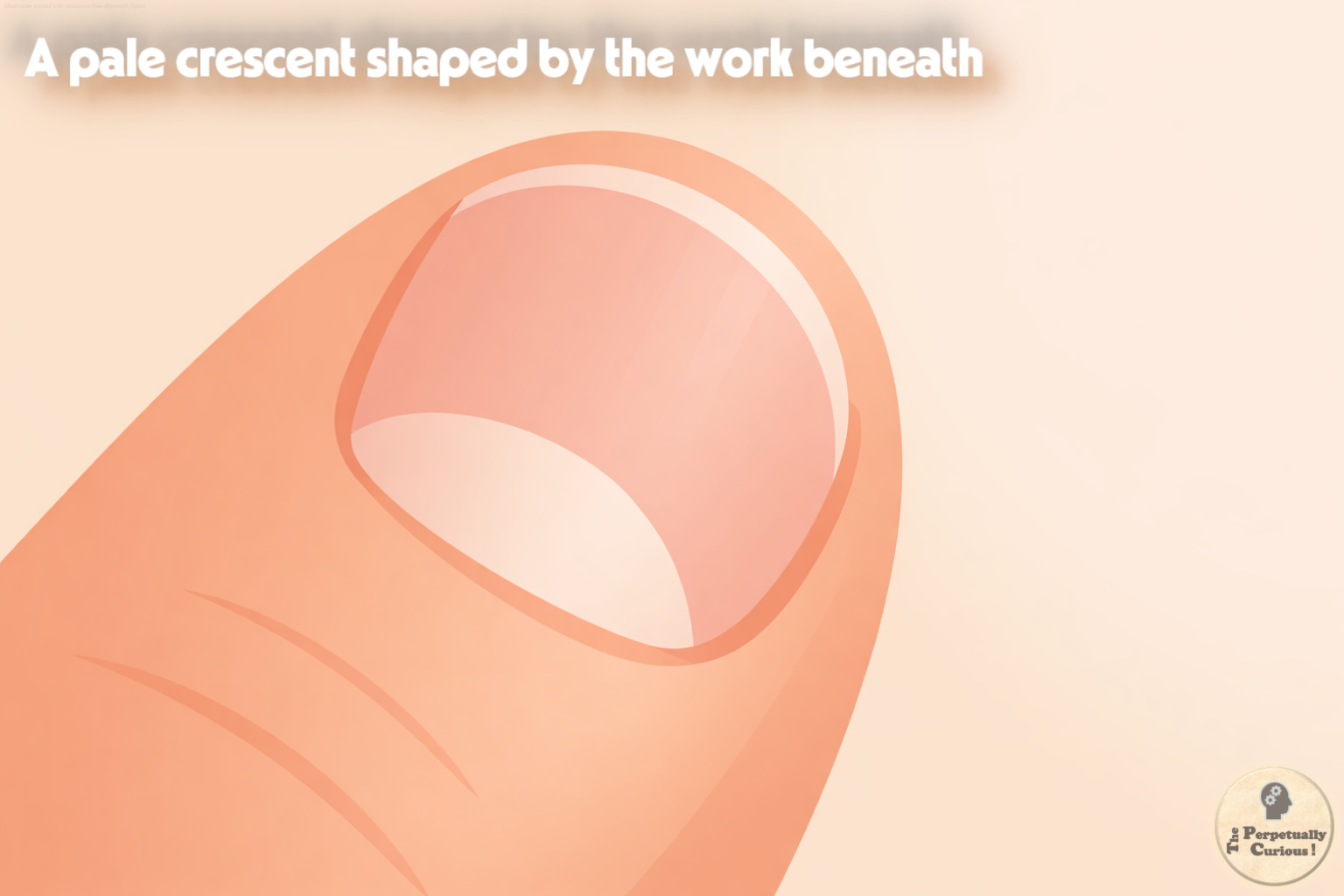
🌙 White Half Moon on Nails: The Quiet Growth Zone Beneath
At the base of some fingernails, a pale crescent appears like a small moon partly tucked under the skin. It may be broad and clear on the thumb, faint on another finger, or almost absent from view.
- The Perpetually Curious! › Canonical › Biology & HealthArticle
🧠 The Brain’s Guarded Border: How the Blood-Brain Barrier Protects Us and Complicates Treatment
From section: 🛡️ Why the brain needs this degree of controlThat combination of strength and selectivity is central to the barrier’s success. It is also why a medicine cannot be judged only by what it does to a cell in a laboratory dish. Before it can act inside the brain, it must first arrive at the right place in a usable form.
- The Perpetually Curious! › Canonical › Biology & HealthArticle
🧠 The Neural Symphony: How Neurons, Glia, and Networks Shape Human Experience
From section: 🌙 The temporal brain: neural rhythms across day and nightThe daily clock does not stop when consciousness fades. Instead, sleep reveals another form of coordinated neural activity.
- The Perpetually Curious! › Canonical › Biology & HealthArticle
🦠 Listening to the Hidden City Within: Understanding the Gut Microbiome
From section: 🧬 What the gut microbiome is, really… Current estimates place the number of bacterial cells in the human body in the tens of trillions, with most concentrated in the colon. Their importance comes not from their total weight, but from the many interactions they form with one another and with the body around them.
- The Perpetually Curious! › Canonical › Biology & HealthArticle
🌿 Why We Stretch When We Wake: The Quiet Reflex that Resets the Body
A quiet rise moves through the body as it returns to itself.The first motion after stillness carries the memory of rest and the promise of readiness.In that small awakening, the shape of being alive becomes clear again.
- The Perpetually Curious! › Canonical › Biology & HealthArticle
😮💨 When A Breath Becomes a Yawn: Why We Yawn and What This Quiet Reflex May Reveal
A yawn moves through the body like a small tide, rising from places we rarely notice. It gathers breath, thought, and a moment of quiet change before it fades again into the rhythm of the day. In that brief passage, the body reminds us that even the smallest gestures carry their own kind of wonder.
- The Perpetually Curious! › Canonical › Biology & HealthArticle
🌙 Night Voices: The Quiet Science of Snoring and the Hidden Life of Sleep
Snoring is one of the most familiar sounds of the night. It drifts through hallways, settles into the quiet corners of homes, and becomes part of family stories. Although it may seem simple, snoring is a layered acoustic signature shaped by airflow, anatomy, and the shifting landscape of sleep.