Explore by topic, question, or idea. Find articles, reflections, videos, puzzles, and curiosity pathways gathered across the site.
Press Enter or select Search. A newly typed query starts globally; filters are applied only through the visible rail.
161 results for “the art and science of bonsai crafting living harmony in miniature trees”
- The Perpetually Curious! › Canonical › Biology & HealthArticle
😮💨 When A Breath Becomes a Yawn: Why We Yawn and What This Quiet Reflex May Reveal
From section: 🌍 A gentle invitation to share and spread the wordBy sharing this piece with friends, colleagues, or anyone who enjoys thoughtful science and reflective storytelling, you help us reach a wider audience that may find wonder in the ordinary. …
- The Perpetually Curious! › Canonical › Wilderness & Homestead CreaturesArticle
🐾 Where the Wild Paths Divide: Wolves, Foxes, and Jackals in the Dog Family
From section: 💡 Did You Know🐾 The dog family includes about 35 living species, from wolves and foxes to African wild dogs and the maned wolf of South America.
- The Perpetually Curious! › Canonical › Biology & HealthArticle
🧠 Where Awareness Takes Shape: Synapses, Brain Networks, and Consciousness
From section: 🌙 What changing states reveal… Reports from REM sleep are often more vivid and story-like on average, although non-REM dreams can be detailed too. The science of dreaming shows how striking an inner scene can feel even when a person is largely disconnected from the outside world.
- The Perpetually Curious! › Canonical › Planet EarthArticle
🌊 Where the Waves Leave Their Footprints: Why Beaches Carry Sand
From section: Frequently Asked Questions+Can beach sand come from living organisms? Yes. In some tropical and reef environments, sand may include fragments of coral, shells, calcareous algae, or foraminifera rather than only weathered rock.
- The Perpetually Curious! › Canonical › Biology & HealthArticle
🌫️ The Quiet Maps in Our Hands: Why Palm Lines Form and What They Reveal About Development, Movement, and Meaning
From section: 🌌 A quiet conclusion in the palm of the handAround this anatomical foundation, cultures have woven narratives, reading character and future into the same creases that guide a grip. The science does not support those predictions, yet the stories themselves reveal something about human curiosity and the desire to find meaning in visible patterns.
- The Perpetually Curious! › Canonical › NatureArticle
🌅 The Quiet Geometry of Dawn: How Early Morning Light Shapes the Landscape
From section: 🌫️ The atmosphere of early morning: cool air and softened edges… Grass, leaves, and even metal railings can become coated with a fine layer of moisture. Mist or shallow fog may gather in low‑lying areas where cooler air pools, softening the outlines of trees and buildings.
- The Perpetually Curious! › Canonical › Wilderness & Homestead CreaturesArticle
🧫 Tides of Chemical Worlds: How Animals Meet the Molecules Around Them
Life moves through unseen tides of scent and signal that drift through every place it touches. In the quiet spaces between water and air, chemistry guides the living world along its hidden paths.
- The Perpetually Curious! › Canonical › Planet EarthArticle
🌐 How SONAR Uses Sound to Map the Hidden Ocean Depths
From section: 🗺️ Mapping the seafloor and hidden landscapes… They help reveal underwater mountains, canyons, and plains that shape the habitats of many marine organisms. This connection between physical structure and living communities provides a natural path toward understanding how acoustic tools are also used to study life in the ocean.
- The Perpetually Curious! › Canonical › Cosmic ExplorationArticle
✨ Constellations: Quiet Patterns, Shared Skies, and the Stories We Trace Together
From section: 📐 Modern astronomy and the 88 official constellationsWith this shared map in place, constellations continue to guide observers in practical ways, linking ancient patterns with modern science.
- The Perpetually Curious! › Archives › Environment & SustainabilityArticle
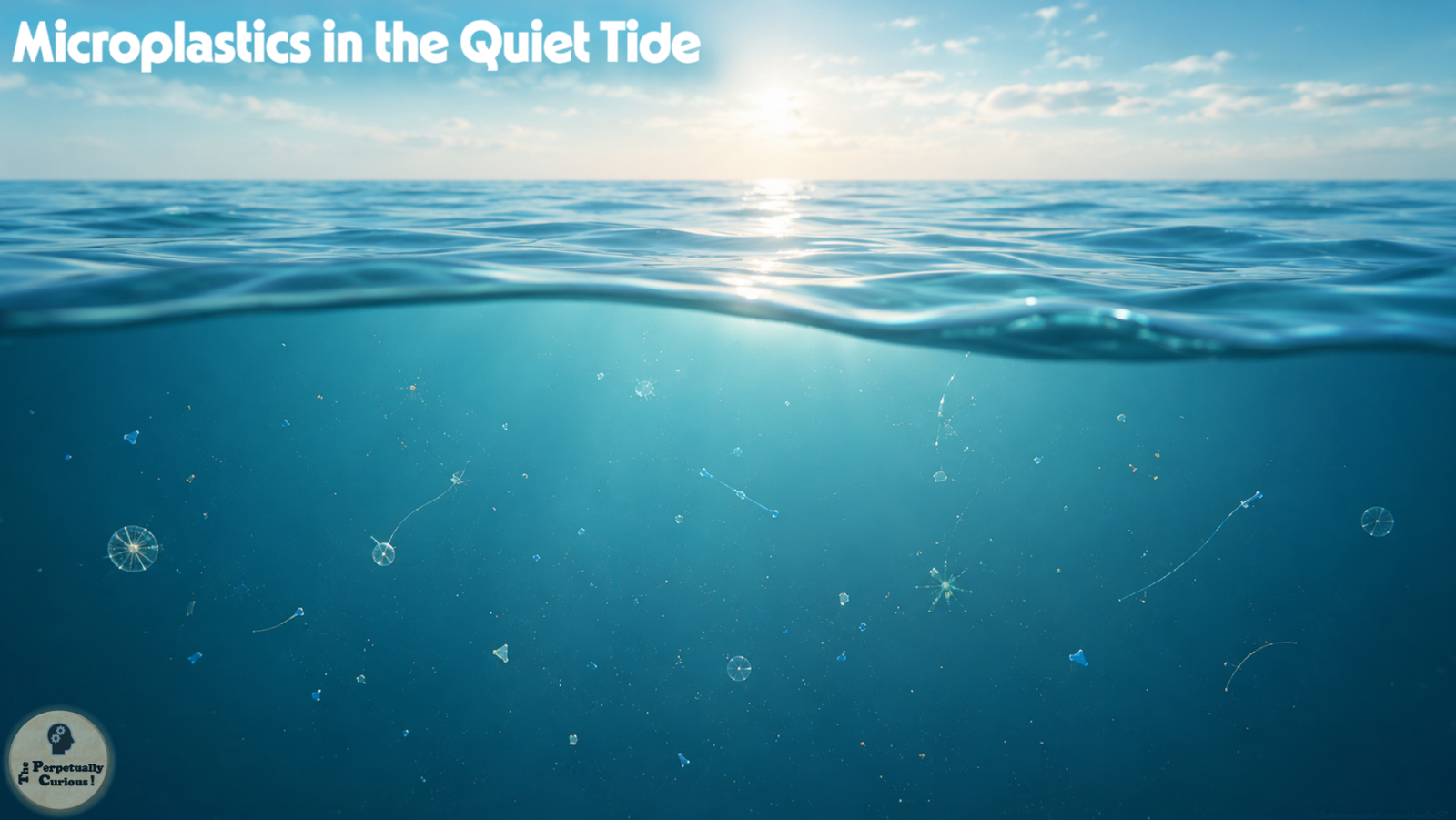
🌊 Microplastics in the Ocean: How Tiny Fragments Travel
Microplastics in the ocean are not only small pieces of plastic. They are mobile fragments, shaped by weathering, water movement, and the living systems they pass through.