Explore by topic, question, or idea. Find articles, reflections, videos, puzzles, and curiosity pathways gathered across the site.
Press Enter or select Search. A newly typed query starts globally; filters are applied only through the visible rail.
9 results for “when worlds shine why some planets outglow others in our night sky”
- The Perpetually Curious! › Canonical › Engineering & TechnologyArticle
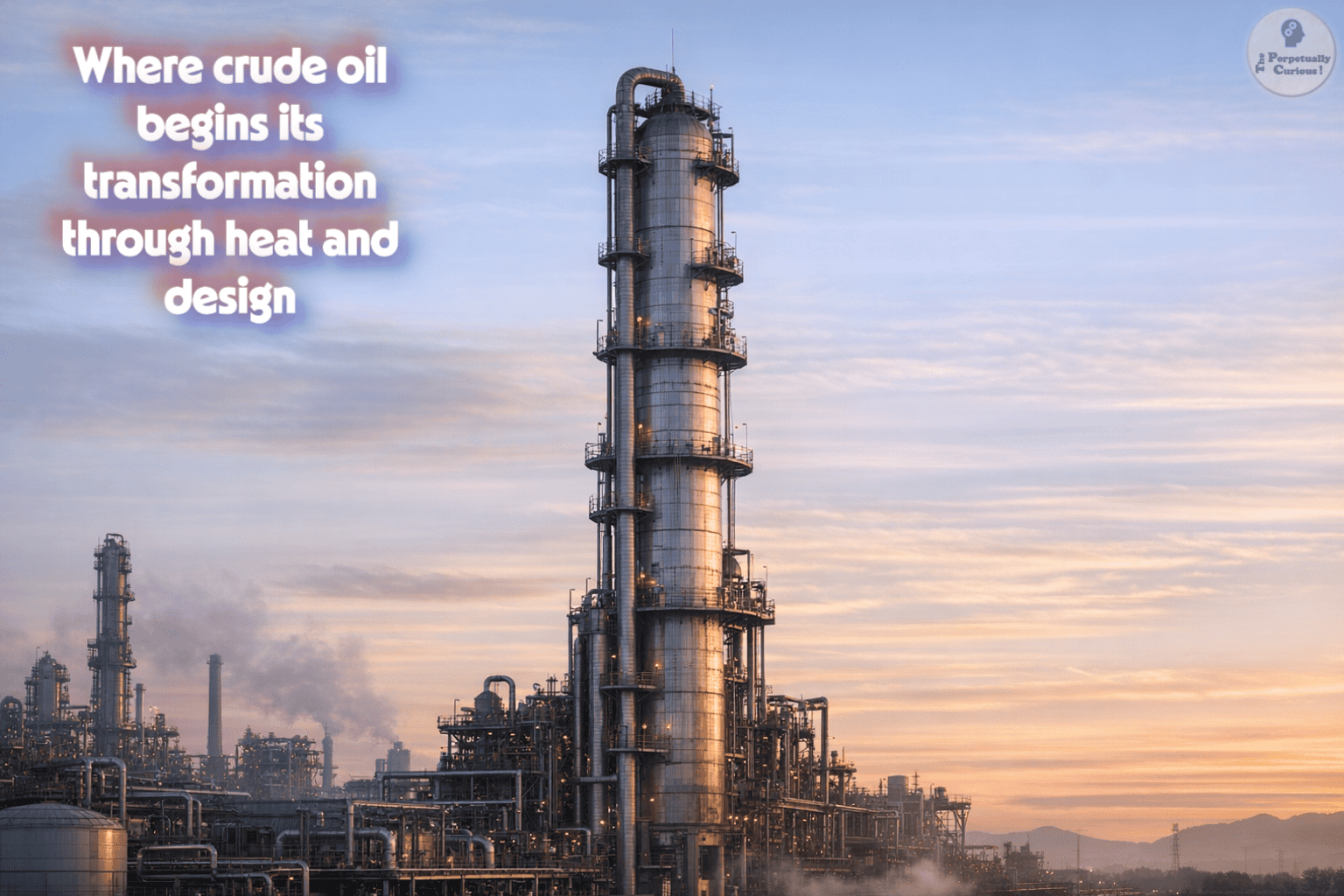
🏭 Petroleum Refining: The Process Behind Heat, Pressure, and Design
From section: 🌡️ Separation by boiling point: Atmospheric and vacuum distillationOnce the atmospheric column has collected all fractions that can vaporize under normal pressure, the remaining material requires a different approach. Some fractions are too heavy to boil at atmospheric pressure without cracking. To preserve their structure, they are routed to a vacuum distillation unit.
- The Perpetually Curious! › Canonical › Engineering & TechnologyArticle
🧪 The Making of Toothpaste: The Subtle Science Behind a Daily Ritual
From section: ⚙️ How manufacturing begins with a liquid base that sets the stageThe liquid base is mixed until it becomes uniform. Some manufacturers pre‑disperse thickeners in a portion of the humectant to help prevent clumping when the thickener later encounters water. Others may dry blend thickeners with powders before introducing them into the main vessel.
- The Perpetually Curious! › Canonical › Engineering & TechnologyArticle
🖋️ Printing Ink: The Science and Living History Behind the Printed Page
From section: ⏳ Ink and time: Lifespans, stability, and purposeInk is always designed with time in mind. Some marks are meant to last for only a day, while others are crafted to endure for centuries. Lifespan reflects both material choices and intended use.
- The Perpetually Curious! › Canonical › Engineering & TechnologyArticle
🧪 The Quiet Alchemy of Pencil Making: How an Everyday Tool Comes into Being
From section: Frequently Asked Questions+Why do some pencils feel harder or softer than others? The perceived hardness or softness usually depends on the ratio of graphite to clay in the core. More clay tends to produce a harder, lighter line, while more graphite tends to produce a softer, darker line.
- The Perpetually Curious! › Canonical › Engineering & TechnologyArticle
🚆 Quiet Power on the Rails: Understanding Hydrogen Trains and Their Emerging Role
From section: 🌐 Where hydrogen trains are operating and developingAs of July 2026, hydrogen rail does not represent one uniform stage of adoption. Some vehicles carry passengers on scheduled routes, while others remain in pilot operation, commissioning, demonstration, or specialized freight testing. …
- The Perpetually Curious! › Canonical › Engineering & TechnologyArticle
🚂 Echoes of Steam, Currents of Steel: Train Engines and the Rise of High-Speed Motion
From section: 🌍 Looking ahead: the future of guided motionEach approach reflects a different balance of speed, capacity, energy use, cost, geography, maintenance, and public need. Some regions will build new dedicated corridors, some will modernize existing routes, and others will combine conventional rail, semi-high-speed trainsets, and selective electrification. …
- The Perpetually Curious! › Archives › Engineering & TechnologyArticle
✈️ The Engineering Mastery Behind Airplane Washrooms: Innovation and Sustainability at High Altitudes
From section: ❓ FAQDo airplane toilets dump waste in the sky? No. Airplane toilets store all waste in secure, leak‑proof holding tanks. These tanks are emptied only after landing by trained ground crews following strict hygiene and environmental standards.
- The Perpetually Curious! › Archives › Engineering & TechnologyArticle
🏭 Petroleum Refining: How Crude Oil Begins to Transform
From section: Why separation is not the finishSome heavy fractions would need such high temperatures at normal pressure that they could crack or degrade before they were cleanly separated.
- The Perpetually Curious! › Archives › Engineering & TechnologyArticle
The Journey Beneath Our Wheels: How Asphalt Roads Have Evolved Through the Ages 🛤️
The story of asphalt begins not in a laboratory or construction site, but in the ancient seeps of Mesopotamia, where natural bitumen bubbled to the surface like Earth's own industrial secret.