Explore by topic, question, or idea. Find articles, reflections, videos, puzzles, and curiosity pathways gathered across the site.
Press Enter or select Search. A newly typed query starts globally; filters are applied only through the visible rail.
11 results for “lunar regolith the moon ancient chronicle written in dust”
- The Perpetually Curious! › Canonical › Biology & HealthArticle
🌙 Little Moons at the Base of Our Nails: The Quiet Science of the Lunula
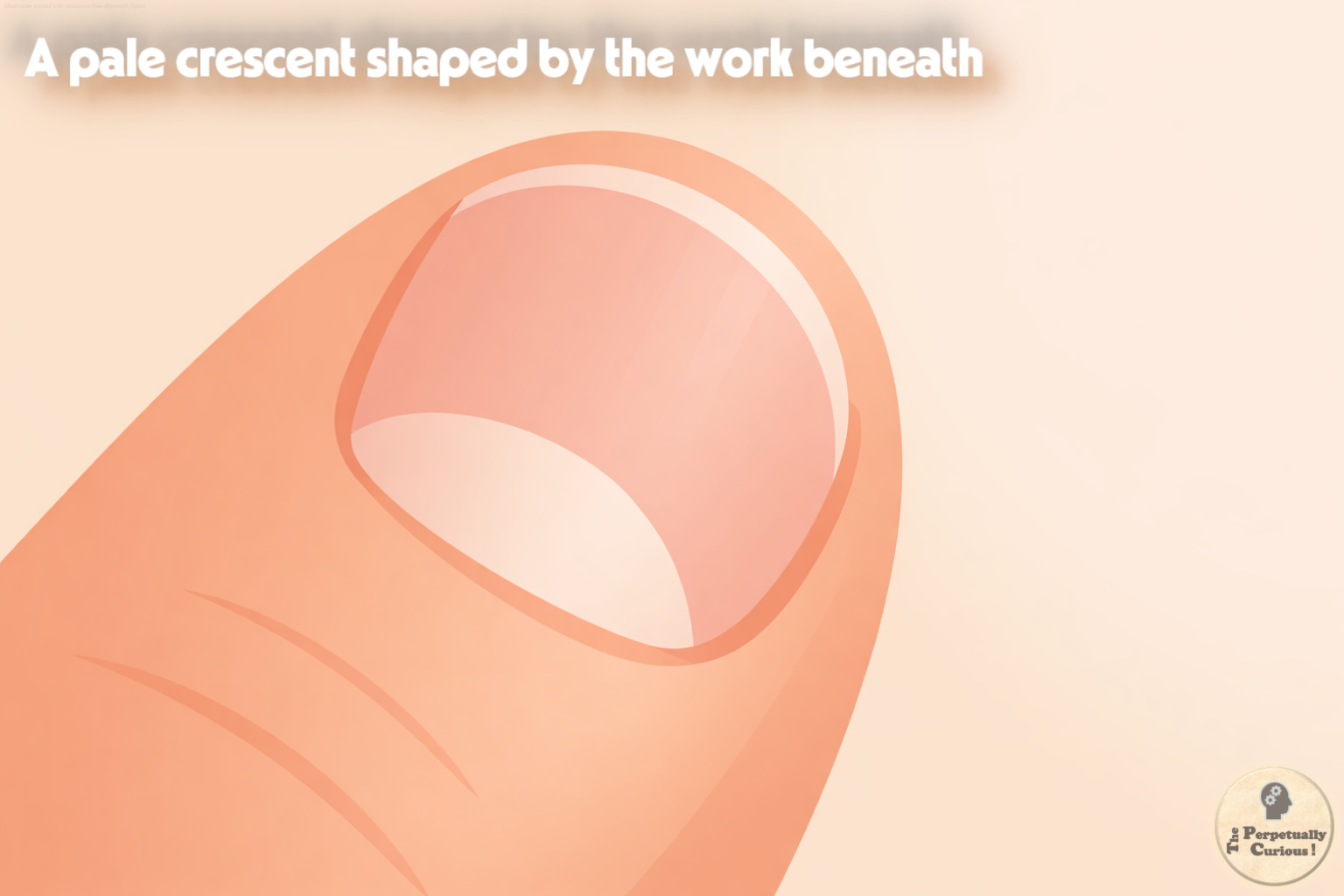
At the base of many fingernails lies a pale crescent, a small moon resting just beneath the cuticle. It is most visible on the thumbs, faint on the smaller fingers, and often hidden entirely on the toes. This quiet shape has invited curiosity for centuries.
- The Perpetually Curious! › Archives › Biology & HealthArticle
🌙 White Half Moon on Nails: The Quiet Growth Zone Beneath
That uneven visibility can make the white half moon on nails feel mysterious, as if it were a private code written into the body.
- The Perpetually Curious! › Canonical › Biology & HealthArticle
🌫️ When the World Blurs for a Moment: Why We Sneeze
From section: 👃 A reflex born in the noseWhen an irritant lands on this surface, sensory neurons belonging to branches of the trigeminal nerve transmit signals toward the brainstem. These neurons may respond to dust, pollen, smoke, or rapid shifts in airflow. …
- The Perpetually Curious! › Canonical › Biology & HealthArticle
☀️ Sunlight, Skin, and the Quiet Alchemy of Vitamin D
When sunlight reaches human skin, a subtle and ancient exchange begins. There is no visible shimmer or outward sign of change, yet a quiet transformation unfolds within the epidermis. There, a molecule waits for a particular kind of light.
- The Perpetually Curious! › Canonical › Biology & HealthArticle
🟤 Small Islands in the Skin: Why Moles Form and Why Most Stop Growing
From section: 🎨 Every mole carries a slightly different historyEach mole is therefore less like a drop of color placed onto the body and more like a small biological history written into it.
- The Perpetually Curious! › Canonical › Biology & HealthArticle
🌫️ Why We Get Hiccups: The Reflex Beneath Every Small “Hic”
… To understand why we get hiccups is to follow a thread that leads from the diaphragm to the brainstem, from everyday triggers to ancient rhythms, and from the earliest stages of life to the occasional interruptions of adulthood.
- The Perpetually Curious! › Canonical › Biology & HealthArticle
🌿 Why We Stretch When We Wake: The Quiet Reflex that Resets the Body
From section: 🐾 A reflex shared across species… A similar evolutionary thread appears in the reflex that produces goosebumps, which also reflects ancient patterns of physiological readiness.
- The Perpetually Curious! › Canonical › Biology & HealthArticle
😮💨 When A Breath Becomes a Yawn: Why We Yawn and What This Quiet Reflex May Reveal
From section: 💡 Did You Know🕰️ Yawning has very ancient vertebrate origins. Because yawning appears across all major vertebrate classes, including fish, amphibians, reptiles, birds, and mammals, researchers believe it may have roots that extend deep into vertebrate evolutionary history.
- The Perpetually Curious! › Canonical › Biology & HealthArticle
🌡️ When the Skin Remembers the Cold: Why We Get Goosebumps
From section: 🎶 Music, Stories, and the Chills of AweResearchers continue to explore why certain patterns in sound or story can activate ancient pathways, but the phenomenon suggests that goosebumps during awe may be an emotional echo of older survival responses.
- The Perpetually Curious! › Canonical › Biology & HealthArticle
🌫️ The Quiet Maps in Our Hands: Why Palm Lines Form and What They Reveal About Development, Movement, and Meaning
From section: 📜 How cultures have interpreted the palmAcross many cultures, the visible lines of the palm have invited interpretation. Traditions of palm reading, often grouped under the term palmistry, have appeared across many regions of the world, with ancient strands particularly associated with South Asian, Middle Eastern, East Asian, and Greco‑Roman traditions. …