Explore by topic, question, or idea. Find articles, reflections, videos, puzzles, and curiosity pathways gathered across the site.
Press Enter or select Search. A newly typed query starts globally; filters are applied only through the visible rail.
26 results for “where two soils part ways earth moon and the stories written in dust”
- The Perpetually Curious! › Canonical › Biology & HealthArticle
🌙 Little Moons at the Base of Our Nails: The Quiet Science of the Lunula
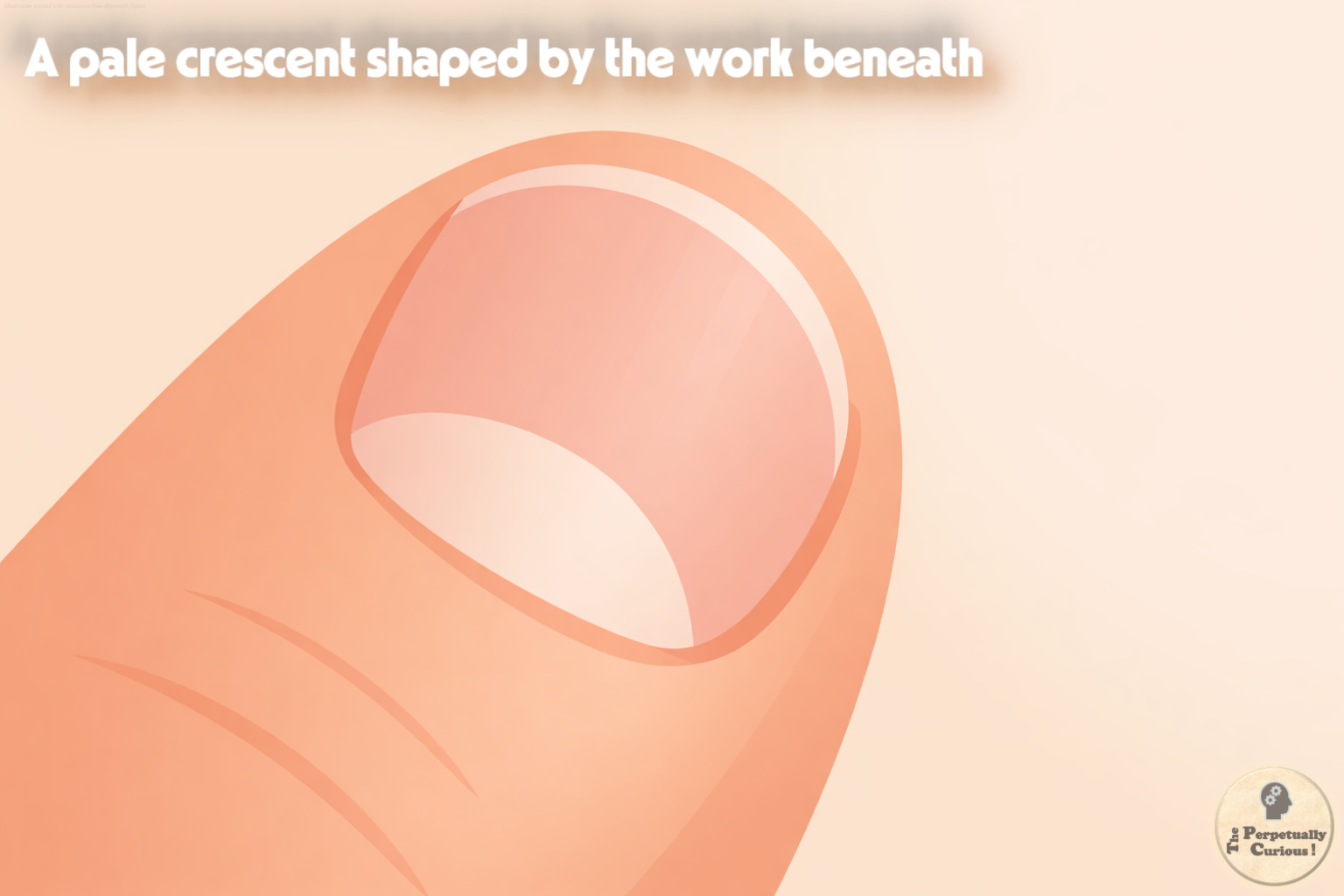
At the base of many fingernails lies a pale crescent, a small moon resting just beneath the cuticle. It is most visible on the thumbs, faint on the smaller fingers, and often hidden entirely on the toes. This quiet shape has invited curiosity for centuries.
- The Perpetually Curious! › Archives › Biology & HealthArticle
🌙 White Half Moon on Nails: The Quiet Growth Zone Beneath
That uneven visibility can make the white half moon on nails feel mysterious, as if it were a private code written into the body.
- The Perpetually Curious! › Canonical › Biology & HealthArticle
🌙 Night Voices: The Quiet Science of Snoring and the Hidden Life of Sleep
Snoring is one of the most familiar sounds of the night. It drifts through hallways, settles into the quiet corners of homes, and becomes part of family stories. Although it may seem simple, snoring is a layered acoustic signature shaped by airflow, anatomy, and the shifting landscape of sleep.
- The Perpetually Curious! › Canonical › Biology & HealthArticle
🟤 Small Islands in the Skin: Why Moles Form and Why Most Stop Growing
From section: 🎨 Every mole carries a slightly different historyTwo moles on the same person may differ in color, height, texture, and prominence. Part of that variation reflects where nevus cells are arranged within the architecture of the skin.
- The Perpetually Curious! › Canonical › Biology & HealthArticle
☀️ Sunlight, Skin, and the Quiet Alchemy of Vitamin D
From section: Did You Know🌟 The story behind solar luminosity unfolds across two very different timescales. Models estimate that energy generated in the solar core may take tens of thousands to hundreds of thousands of years to reach the photosphere. Once it emerges as sunlight, the journey to Earth takes about 8 minutes and 20 seconds.
- The Perpetually Curious! › Canonical › Biology & HealthArticle
🌫️ The Quiet Maps in Our Hands: Why Palm Lines Form and What They Reveal About Development, Movement, and Meaning
From section: 🌱 When palm lines first appear before birthThis developmental origin matters for two reasons. First, it explains why the main palm lines are already present at birth. …
- The Perpetually Curious! › Canonical › Biology & HealthArticle
🌡️ When the Skin Remembers the Cold: Why We Get Goosebumps
… From there, the story widens into the nervous system, the history of mammals, and the surprising ways in which art, awe, and memory can activate overlapping autonomic pathways that once helped our ancestors survive.
- The Perpetually Curious! › Canonical › Biology & HealthArticle
🦟 Beyond the Bite: How Dengue Fever Affects the Body
A small encounter can carry a story far beyond its moment, moving through the body in ways that remain unseen.The quiet work of vessels and signals continues in the background, shaping what rises and what resolves.In that hidden motion, the threads of the illness gather and disperse, leaving a deeper understanding of…
- The Perpetually Curious! › Canonical › Biology & HealthArticle
🧠 The Neural Symphony: How Neurons, Glia, and Networks Shape Human Experience
A gentle current moves through the living architecture of the mind, carrying traces of feeling and memory across its quiet distances.Each signal becomes part of a larger unfolding, shaped by time, rhythm, and the patient work of many unseen hands.In this still moment, the whole system seems to breathe, holding the…
- The Perpetually Curious! › Canonical › Biology & HealthArticle
🌫️ When the World Blurs for a Moment: Why We Sneeze
From section: 👃 A reflex born in the noseWhen an irritant lands on this surface, sensory neurons belonging to branches of the trigeminal nerve transmit signals toward the brainstem. These neurons may respond to dust, pollen, smoke, or rapid shifts in airflow. …