Explore by topic, question, or idea. Find articles, reflections, videos, puzzles, and curiosity pathways gathered across the site.
Press Enter or select Search. A newly typed query starts globally; filters are applied only through the visible rail.
132 results for “water softening”
- The Perpetually Curious! › Archives › Planet EarthArticle
🌊 Why Beaches Have Sand
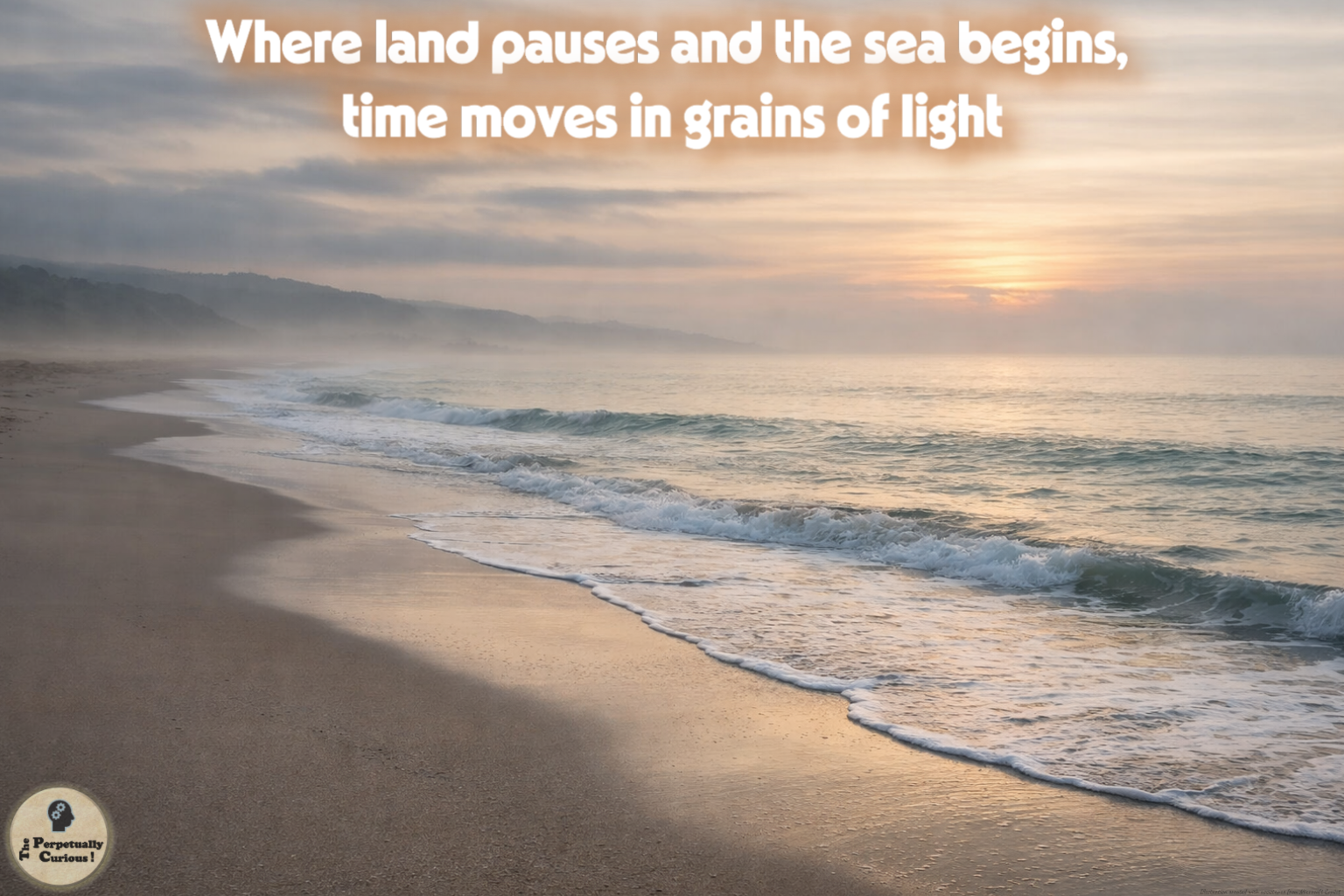
Beaches often appear simple at first glance. They seem like a narrow place where land and water meet. Yet the presence of sand along so many coastlines is the result of long journeys, slow transformations, and the combined work of rivers, weather, and waves.
- The Perpetually Curious! › Canonical › Planet EarthArticle
🌊 How Nor’easters Form: When the Coast Becomes a Storm Engine
From section: 🌊 A changing baseline at the water’s edgeWhere local sea level has risen, waves and storm-driven water begin from a higher baseline. That extra height can make coastal flooding more likely or extensive even if a nor’easter is no stronger than an earlier storm. …
- The Perpetually Curious! › Canonical › Engineering & TechnologyArticle
🚆 Quiet Power on the Rails: Understanding Hydrogen Trains and Their Emerging Role
A train moves through the landscape with a calm purpose, carrying its quiet fire toward the horizon.In the stillness between stations, its light breath of water and warmth settles into the air.The rails continue forward, steady and patient, as new forms of motion find their place in the world.
- The Perpetually Curious! › Canonical › Environment & SustainabilityArticle
🌿 Liquid Trees: Microalgae Photobioreactors and the Quiet Art of Urban Breathing
A quiet green patience rises inside the glass as the city moves around it.Light settles into the water and becomes a small gesture of renewal.In this stillness the algae keep their gentle rhythm and offer the air a moment of calm.
- The Perpetually Curious! › Canonical › Botanical WondersArticle
🌿 When One Tree Remembered a Greener Sahara: The Quiet Story of the Tree of Ténéré
In the stillness of the Ténéré, one tree once held its place against time, carrying the memory of older rains in its quiet reach toward hidden water. Its branches are gone, yet the presence remains, a gentle reminder that endurance can leave a trace even when the landscape forgets. …
- The Perpetually Curious! › Canonical › Cosmic ExplorationArticle
🌍 When Earth First Took Shape: A Planet Born from Cosmic Dust
From section: 🌊 From fire to water: Cooling, oceans, and early atmosphereThe presence of liquid water was a major turning point. It allowed chemical reactions to unfold in solution and began shaping Earth’s geology through erosion, sedimentation, mineral formation, and interaction with the crust. …
- The Perpetually Curious! › Canonical › Planet EarthArticle
🌫️ Mist Over Ancient Ridges: The Great Smoky Mountains as a Living, Breathing World
From section: 💧 Water and mist: streams, rainfall, and the “smoky” hazeThe abundance of water and mist creates cool, saturated habitats where life can persist in extraordinary variety. Streams, mossy stones, shaded soils, and humid forest floors all become part of the same living system, preparing the way for the Smokies’ remarkable biodiversity.
- The Perpetually Curious! › Canonical › Planet EarthArticle
🌍🌑 Where Two Soils Part Ways: Earth, Moon, and the Stories Written in Dust
From section: 🌾 How Earth Builds Soil Through Water, Air, and LifeEarth soil forms through a combination of physical, chemical, and biological processes that act over thousands to millions of years. Bedrock and sediments break down through freeze–thaw cycles, abrasion, and chemical reactions with water. …
- The Perpetually Curious! › Canonical › Biology & HealthArticle
🌫️ The Quiet Maps in Our Hands: Why Palm Lines Form and What They Reveal About Development, Movement, and Meaning
From section: ⏳ How palm lines change as we ageOccupational and environmental factors may also influence the surface of the skin. Repeated contact with tools, exposure to water or chemicals, or outdoor work may alter texture, callus formation, or minor markings. …
- The Perpetually Curious! › Canonical › Biology & HealthArticle
💧 Why We Cry: The Quiet Science of Tears, Sadness, and Grief
Emotion begins as a sequence of signals moving through deep neural pathways.A tear forms only when these precise impulses reach the circuits that guide the surface of the eye.In that small trace of water, the body reveals how feeling becomes visible.